7 Best Job Boards for Engineers to Supercharge Your Career in 2026

In today's competitive market, finding the right engineering role is more than just submitting applications; it's a strategic campaign for your career. With the average corporate job opening attracting hundreds of applicants, it is critical to target your efforts effectively. This guide moves past a simple list of websites. Instead, we will dissect the 7 best job boards for engineers, focusing on actionable insights to optimize your profile, prepare for interviews, and make choices that align with your long-term career progression.
We analyze each platform from a hiring manager’s perspective, giving you the inside track on what makes a candidate stand out. This guide is built to help you find the best platforms for your specific needs, whether you are a software developer, DevOps specialist, or a pioneering blockchain engineer. For each job board covered, you'll find:
- Actionable insights for creating a standout profile that gets you noticed.
- Direct links and screenshots to help you get started quickly.
- A breakdown of pros and cons from both a job seeker and hiring perspective.
- Specific tips for navigating each platform’s unique application and interview process.
This resource is designed to be your playbook for turning a broad job search into a series of targeted opportunities. We will show you how to identify the right platforms, tailor your approach for each one, and transform your job search into a definitive career move. By understanding which job boards excel for certain roles-from generalist sites like LinkedIn to specialized hubs like Blockchain Jobs and startup-focused platforms like Wellfound-you can invest your time where it counts most. Let’s get started.
1. LinkedIn Jobs: The Global Nexus for Engineering Talent
LinkedIn has evolved far beyond a simple professional network; it's the default digital arena for career management and the largest single marketplace for engineering talent. For any engineer, having a presence here is non-negotiable. Its primary advantage is its immense scale, hosting a high volume of roles spanning every discipline, industry, and seniority level, from internships at startups to principal engineering positions at FAANG companies.
More than just a job board, LinkedIn is where opportunities actively find you. Recruiters depend on LinkedIn Talent Solutions to pinpoint candidates with precision, filtering by skills, past employers, educational background, and even professional connections. This makes your profile a living, breathing resume that works for you 24/7. An outdated or sparse profile is a significant missed opportunity, as it can render you invisible to the very people you want to attract.
How to Maximize LinkedIn for Engineering Roles
Success on LinkedIn requires a strategic, active approach rather than passive browsing. It’s a platform for both applying to jobs and being discovered for them.
- Optimize Your Profile with Keywords: Treat your profile headline, summary, and experience descriptions like an SEO exercise. Identify keywords from job descriptions for roles you want (e.g., "Senior Software Engineer," "Go," "Kubernetes," "Distributed Systems") and integrate them naturally. The skills section is particularly important, as recruiters filter by these tags. Endorsements from colleagues add valuable social proof.
- Go Beyond "Easy Apply": The "Easy Apply" button is convenient, but it often sends your application into a crowded applicant tracking system (ATS). Whenever possible, use it as a starting point. After applying, find the hiring manager or a team member on LinkedIn and send a concise, professional message expressing your interest and highlighting a key qualification. This small step can make your application stand out from hundreds of others.
- Engage with the Community: Don’t just be a lurker. Share relevant technical articles, comment thoughtfully on posts from industry leaders, and join engineering-specific groups. This activity signals your passion and expertise, increasing your visibility to recruiters and potential future colleagues.
Key Insight: Your LinkedIn profile is not just a place to list your past jobs. It should be a forward-looking document that tells a story about where you want to go. Frame your experience and skills to align with the engineering roles you are targeting next.
Pros & Cons
| Pros | Cons |
|---|---|
| Unmatched Reach: Access to the largest pool of both active and passive engineering candidates. | High Volume of Applicants: Popular roles receive hundreds of applications, making it difficult to stand out. |
| Powerful Recruiter Tools: Skills-based filters allow hiring managers to find highly specific talent. | Opaque Pricing: Job slot and promotion costs are not publicly listed and require a sales consultation. |
| Integrated Networking: You can research companies, connect with employees, and get referrals all on one platform. | "Noisy" Applications: Without careful screening, the sheer volume can lead to many unqualified applicants. |
Website: https://linkedin.com/jobs
2. LinkedIn Jobs: The Global Nexus for Engineering Talent
LinkedIn has evolved far beyond a simple professional network; it's the default digital arena for career management and the largest single marketplace for engineering talent. For any engineer, having a presence here is non-negotiable. Its primary advantage is its immense scale, hosting a high volume of roles spanning every discipline, industry, and seniority level, from internships at startups to principal engineering positions at FAANG companies.
More than just a job board, LinkedIn is where opportunities actively find you. Recruiters depend on LinkedIn Talent Solutions to pinpoint candidates with precision, filtering by skills, past employers, educational background, and even professional connections. This makes your profile a living, breathing resume that works for you 24/7. An outdated or sparse profile is a significant missed opportunity, as it can render you invisible to the very people you want to attract.
How to Maximize LinkedIn for Engineering Roles
Success on LinkedIn requires a strategic, active approach rather than passive browsing. It’s a platform for both applying to jobs and being discovered for them.
- Optimize Your Profile with Keywords: Treat your profile headline, summary, and experience descriptions like an SEO exercise. Identify keywords from job descriptions for roles you want (e.g., "Senior Software Engineer," "Go," "Kubernetes," "Distributed Systems") and integrate them naturally. The skills section is particularly important, as recruiters filter by these tags. Endorsements from colleagues add valuable social proof.
- Go Beyond "Easy Apply": The "Easy Apply" button is convenient, but it often sends your application into a crowded applicant tracking system (ATS). Whenever possible, use it as a starting point. After applying, find the hiring manager or a team member on LinkedIn and send a concise, professional message expressing your interest and highlighting a key qualification. This small step can make your application stand out from hundreds of others.
- Engage with the Community: Don’t just be a lurker. Share relevant technical articles, comment thoughtfully on posts from industry leaders, and join engineering-specific groups. This activity signals your passion and expertise, increasing your visibility to recruiters and potential future colleagues.
Key Insight: Your LinkedIn profile is not just a place to list your past jobs. It should be a forward-looking document that tells a story about where you want to go. Frame your experience and skills to align with the engineering roles you are targeting next.
Pros & Cons
| Pros | Cons |
|---|---|
| Unmatched Reach: Access to the largest pool of both active and passive engineering candidates. | High Volume of Applicants: Popular roles receive hundreds of applications, making it difficult to stand out. |
| Powerful Recruiter Tools: Skills-based filters allow hiring managers to find highly specific talent. | Opaque Pricing: Job slot and promotion costs are not publicly listed and require a sales consultation. |
| Integrated Networking: You can research companies, connect with employees, and get referrals all on one platform. | "Noisy" Applications: Without careful screening, the sheer volume can lead to many unqualified applicants. |
Website: https://linkedin.com/jobs
3. Wellfound (formerly AngelList Talent): The Epicenter for Startup Engineering Roles
Originally known as AngelList Talent, Wellfound has carved out a distinct and critical niche as the premier job board for engineers aspiring to work in the startup ecosystem. While larger platforms cast a wide net, Wellfound is hyper-focused on early-stage and growth-stage companies, making it a goldmine for roles where engineers can have an outsized impact on a product's trajectory. Its reputation is built on connecting innovative companies with talent that thrives in fast-paced, high-ownership environments.
The platform is more than just a listing service; it's a dedicated talent marketplace designed with the startup ethos in mind. It provides rich company profiles that include funding information, team size, and key investors, giving engineers a transparent look into a potential employer's stability and growth potential. This level of detail is crucial when evaluating the risk and reward of joining a startup and is something generalist boards often lack.
How to Maximize Wellfound for Engineering Roles
Success on Wellfound hinges on signaling your fit for the startup world. Unlike corporate roles, startups often value adaptability, a product-oriented mindset, and a willingness to wear multiple hats over deep, narrow specialization.
- Build a Startup-Centric Profile: Your Wellfound profile should scream "startup-ready." Highlight projects where you took initiative, worked in a small team, or shipped features quickly. Emphasize your experience with modern tech stacks (e.g., React, Node.js, Python, Go) and cloud infrastructure (AWS, GCP). Mentioning any experience with agile methodologies or direct collaboration with product and design teams is a major plus.
- Use the Platform’s Unique Signals: Wellfound allows you to specify your salary expectations (cash and equity), preferred company size, and remote work preferences upfront. Be realistic but strategic. This transparency helps filter out mismatched opportunities early, saving time for both you and the recruiters. It also allows you to find companies that align with your financial and lifestyle goals.
- Go Direct to the Founders: One of Wellfound’s most powerful features is its direct line of communication. Many job posts are listed by founders or hiring managers themselves, not HR generalists. When you apply, you often have the chance to send a direct message. Use this to show you’ve done your research. A message like, "I saw your recent launch on Product Hunt and was impressed by the UX. My experience building scalable backends with Elixir could help you handle the next 10x in user growth," is far more effective than a generic cover letter.
Key Insight: On Wellfound, your resume is secondary to your profile and your story. Startups are betting on people. Use your profile to show not just what you've done, but what you are capable of building and learning in a dynamic environment.
Pros & Cons
| Pros | Cons |
|---|---|
| High-Quality Startup Roles: Access to curated engineering jobs at venture-backed startups and tech companies. | Niche Focus: Less ideal for traditional enterprise, government, or hardware engineering roles. |
| Transparent Company Data: Provides insights into funding, team size, and investors to help you vet opportunities. | Variable Role Quality: As a free platform, quality can vary; some listings may be from very early, unfunded companies. |
| Direct Access to Hiring Managers: Often allows you to message founders and key decision-makers directly. | Emphasis on Equity: Many compensation packages are heavily weighted towards equity, which may not suit all candidates. |
Website: https://wellfound.com
4. Hired: The Marketplace That Flips the Script
Hired operates on a marketplace model that inverts the traditional job search dynamic. Instead of engineers applying to endless job postings, companies apply to you. It’s a curated platform where pre-vetted candidates create a profile detailing their skills, experience, and, most importantly, their desired salary. Employers then send interview requests to candidates who match their needs, complete with an upfront compensation offer. This structure makes it one of the best job boards for engineers who are tired of cold outreach and low-signal applications.

The platform is focused on high-demand tech roles, primarily in software development, data science, DevOps/SRE, and security. By requiring salary transparency from the first point of contact, Hired eliminates the lengthy and often frustrating dance around compensation, ensuring alignment before the first interview even begins. Its emphasis on bias-reduction tools, which can hide names and photos, also helps promote a more equitable evaluation process based purely on skills and experience.
How to Maximize Hired for Engineering Roles
Success on Hired is about presenting a clear, compelling, and realistic profile that attracts the right kind of interview requests. The platform is designed to reward clarity and self-awareness.
- Be Specific with Your Preferences: The core of your Hired profile is what you want. Be explicit about your target roles (e.g., "Senior Backend Engineer," "Site Reliability Engineer"), preferred tech stack, and ideal company size. Most critically, set a realistic and well-researched salary expectation. An inflated number will deter requests, while an undervalued one will sell you short.
- Highlight Quantifiable Achievements: When companies review your profile, they are looking for evidence of impact. Instead of simply listing responsibilities, quantify your accomplishments. For example, change "Managed a microservices-based system" to "Reduced API latency by 30% and improved system uptime to 99.99% for a critical microservices-based payment gateway."
- Respond Quickly to Requests: Hired's algorithm favors active and responsive candidates. When you receive an interview request, aim to accept or decline it within 24-48 hours. A prompt response signals to the platform and to employers that you are a serious and engaged candidate, which can increase your profile’s visibility to other companies.
Key Insight: Hired is most effective when you are actively looking and ready to interview. Use the platform in focused, two-to-four-week sprints. Update your profile to "Actively Looking" when you are prepared to field requests and schedule interviews, then switch it back to "Not Looking" when you've accepted an offer or need a break.
Pros & Cons
| Pros | Cons |
|---|---|
| Upfront Salary Transparency: Eliminates compensation guesswork and ensures alignment from the start. | Niche Focus: Smaller volume of roles compared to generalist boards; primarily for software and adjacent tech roles. |
| High-Signal Marketplace: Companies actively pursue you, leading to more relevant and serious interview opportunities. | Opaque Employer Pricing: The costs for companies to use the service are not publicly listed, requiring a sales consultation. |
| Reduced Application Fatigue: Reverses the traditional apply-and-wait model, saving you time and energy. | Requires an "Active" Mindset: Less suited for passive browsing; most effective when you are ready to interview immediately. |
Website: https://hired.com
5. Dice: The Veteran Hub for U.S. Tech Roles
Dice has been a mainstay in the tech recruiting world for decades, cementing its reputation as one of the original and best job boards for engineers in the United States. It is a go-to resource for companies, from large enterprises to specialized staffing firms, looking to hire for software, data, cloud, and IT infrastructure positions. Its long history gives it a deep-rooted presence, particularly for roles requiring specific, established tech stacks.
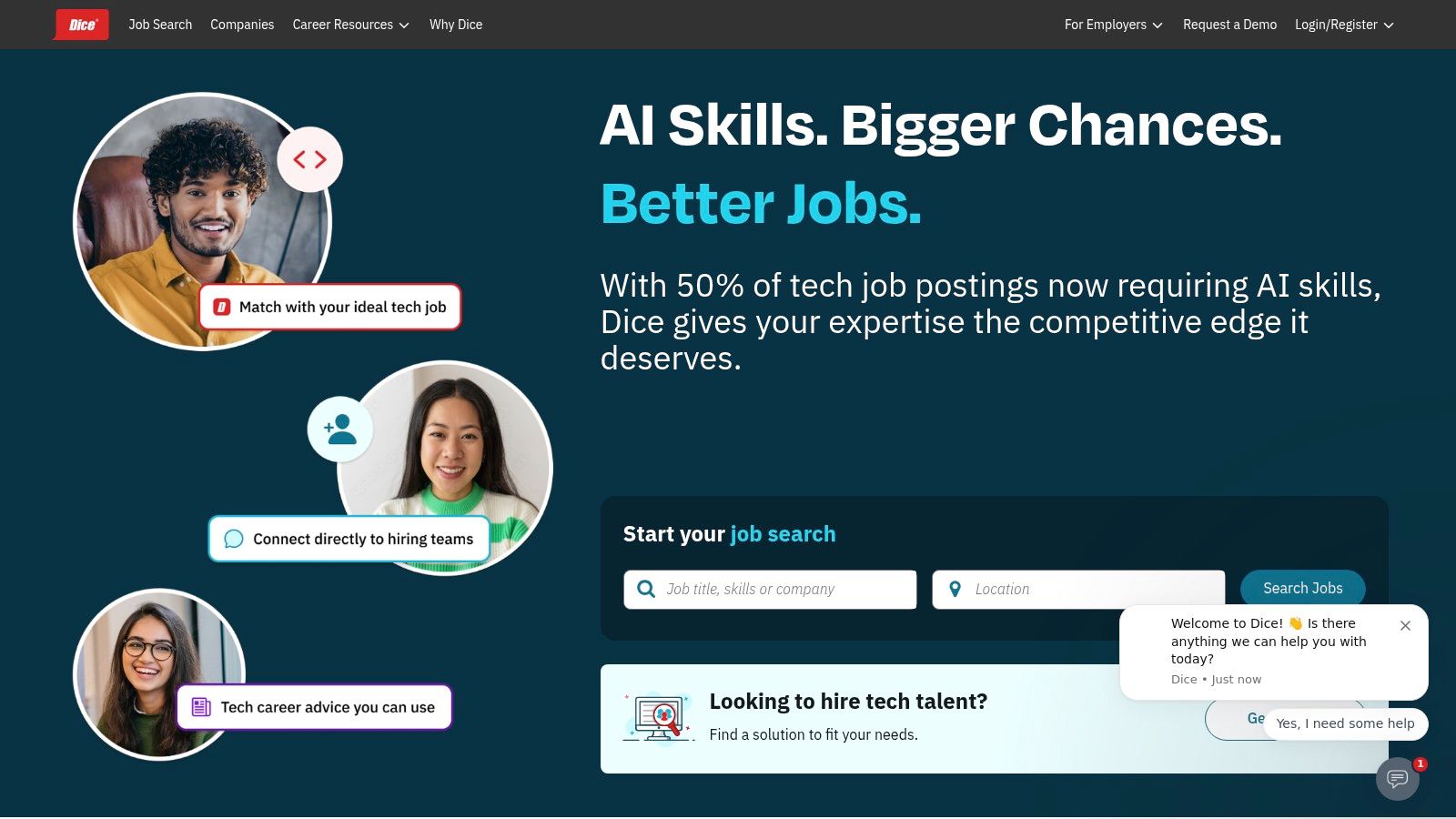
While it may not have the social networking flash of LinkedIn, Dice’s strength lies in its focused, no-nonsense approach to connecting tech talent with employers. It maintains an active and extensive resume database that recruiters mine for candidates. The platform has also recently incorporated AI-driven tools, such as candidate match scoring and job description generators, to help employers identify the right engineers more efficiently. This focus makes it an important channel, especially for mid-career and senior engineers with specialized skills.
How to Maximize Dice for Engineering Roles
Success on Dice depends on creating a detailed and keyword-rich profile that can be easily found by recruiters using its database search tools. It’s less about community engagement and more about discoverability.
- Build a Granular Profile: Unlike a standard resume, your Dice profile should be exhaustive. List every programming language, framework, cloud platform, and database you've worked with. Recruiters on Dice often search for very specific skill combinations (e.g., "Java," "Spring Boot," "AWS," and "Kafka"). The more detailed your profile, the more searches you will appear in.
- Target Cleared and Government Roles: Dice has a strong foothold in the government and defense contracting sectors. If you hold or are eligible for a security clearance (like Secret or Top Secret), be sure to highlight this prominently on your profile. The platform is a primary source for recruiters filling these specialized and often high-paying engineering positions.
- Keep Your Resume Fresh: Recruiters can filter candidates by the "last updated" date of their resume. Periodically log in and make a small update to your profile or re-upload your resume, even if nothing significant has changed. This signals that you are an active candidate and bumps you to the top of recruiter search results.
Key Insight: Treat your Dice profile as a technical inventory, not a career narrative. Recruiters on this platform are often executing very specific searches for technical skills, so a comprehensive, keyword-dense profile is more effective than a compelling story.
Pros & Cons
| Pros | Cons |
|---|---|
| Deep U.S. Tech Candidate Pool: Strong database of engineers with skills in both legacy and modern technologies. | Mixed Candidate Quality: The open nature of the platform means recruiters must use tight filters to avoid irrelevant applications. |
| Excellent for Cleared Roles: A primary hiring source for government, defense, and aerospace engineering jobs. | Opaque Pricing: Job posting and resume database access costs are not public and require a sales consultation. |
| Focused Tech Environment: The platform is dedicated solely to technology professionals, reducing noise from other industries. | U.S.-Centric Focus: Far fewer opportunities for engineers located outside of the United States. |
Website: https://www.dice.com
6. Built In: Where Tech Culture and Careers Connect
Built In is more than a simple job aggregator; it's a community-centric platform that combines a job board with rich editorial content focused on the tech and startup ecosystem. For engineers who care as much about a company's culture, mission, and tech stack as they do about the role itself, Built In offers a unique window into what it’s actually like to work there. It primarily serves major U.S. tech hubs-and now a growing remote workforce-making it a go-to for software, data, and product roles in high-growth environments.
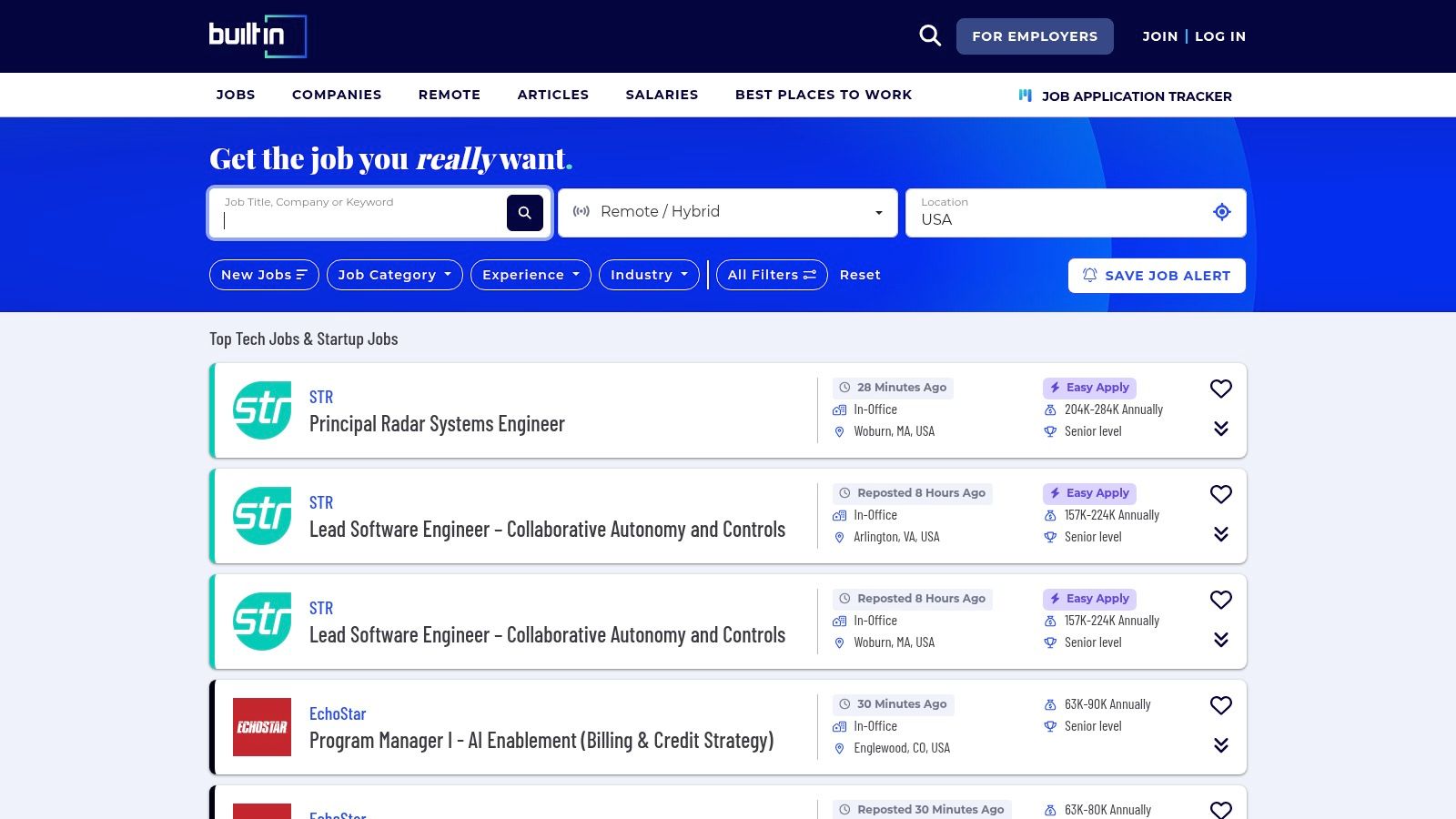
The platform’s standout feature is its deep integration of employer branding. Companies don't just post jobs; they build detailed profiles showcasing their team, benefits, engineering challenges, and office life through articles, interviews, and "Best Places to Work" awards. This narrative-driven approach gives engineers a powerful tool for pre-interview research, allowing you to gauge cultural fit and technical alignment before you even apply.
How to Maximize Built In for Engineering Roles
Success on Built In involves using its content to your advantage, turning the job search into a well-informed, targeted effort. It's a place to find roles where you’ll genuinely belong.
- Read Beyond the Job Description: Before applying, dive into the company’s profile page. Look for articles they've published, employee spotlights, or details on their tech stack. Mentioning a specific project or cultural value you admire from their profile in your cover letter or first interview shows genuine interest and sets you apart from candidates who only read the job listing.
- Use the “Best Places to Work” Lists Strategically: These annual awards aren't just for show. Filter these lists by your city (or "Remote") to discover companies that are independently recognized for their great culture and benefits. This is an excellent way to find high-quality, pre-vetted employers that you might not have discovered otherwise.
- Filter with Precision: Built In’s filters are tailored to the tech industry. Use them to narrow your search by specific engineering disciplines (e.g., "DevOps," "Data Science"), seniority level, and whether a company is a startup, mid-size, or enterprise. Its remote filters are particularly effective for finding roles that align with your lifestyle.
Key Insight: Built In gives you the tools to vet a company’s culture just as much as they are vetting your technical skills. Use the employer profiles and articles to formulate insightful questions for your interviews, such as "I read about your recent migration to microservices; what was the biggest challenge the team faced?"
Pros & Cons
| Pros | Cons |
|---|---|
| Rich Employer Profiles: Provides deep insights into company culture, tech stack, and benefits. | Package-Based Pricing: Less accessible for companies wanting to post a single job, as it's built around employer branding packages. |
| Curated for Tech Hubs: Excellent coverage of major U.S. markets like Austin, NYC, and SF, plus a strong remote section. | Limited for Traditional Engineering: Focus is on tech and startups; less relevant for civil, mechanical, or industrial engineering roles. |
| Strong Narrative-Led Content: Helps engineers identify roles where they will be a strong cultural and technical fit. | US-Centric: Primarily focused on the United States market, with limited international job listings. |
Website: https://builtin.com/jobs
7. Y Combinator – Work at a Startup: The Fast Track to High-Growth Roles
For engineers driven by the prospect of building products from the ground up and having a direct impact on a company's trajectory, Y Combinator's "Work at a Startup" platform is an essential resource. It serves as a centralized, high-signal hiring channel exclusively for startups funded by the prestigious accelerator. This isn't a generalist job board; it's a curated ecosystem of ambitious, early-stage to growth-stage companies actively seeking engineering talent to solve hard problems.
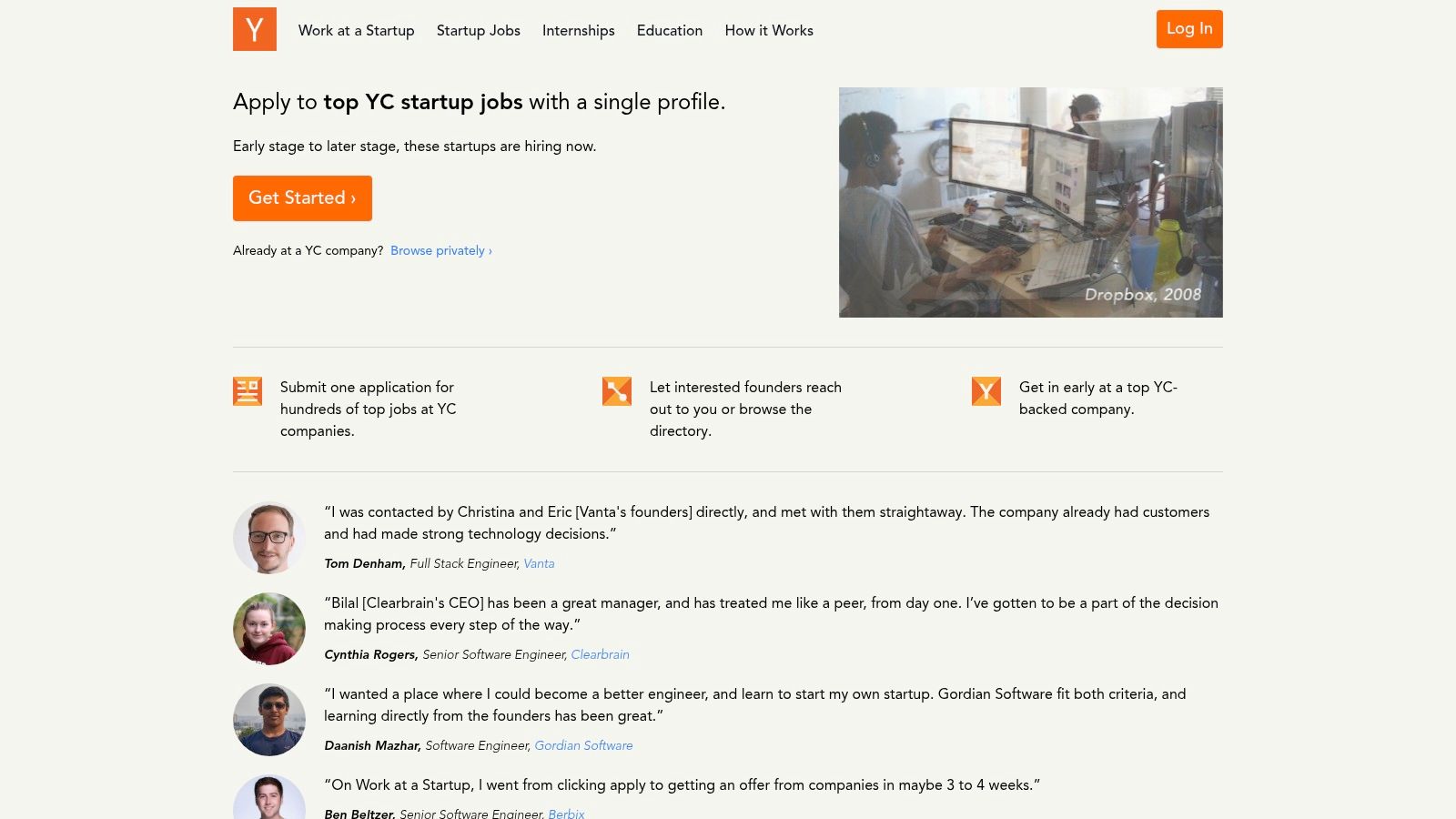
The platform’s core strength lies in its concentration of engineering-first cultures. Many YC founders are technical themselves, meaning they prioritize and respect the engineering function. This makes it one of the best job boards for engineers who want to join teams where their work is central to the mission. The experience is designed for efficiency; you create one profile and can apply to hundreds of vetted startups, often engaging directly with founders or early team members, bypassing multiple layers of recruiting bureaucracy.
How to Maximize YC's Work at a Startup
Success on this platform requires a profile that clearly communicates your value to a time-strapped founder. Think less about corporate buzzwords and more about what you can build.
- Create a Founder-Focused Profile: Your profile should immediately answer the question, "What can this person do for my startup?" Lead with your strongest technical skills and quantifiable achievements. For instance, instead of "developed backend services," try "Built and scaled a real-time data ingestion pipeline using Go and Kafka to handle 100,000 events per second."
- Filter with Intent: Use the filters for role, company stage (Seed, Series A, etc.), and equity to zero in on opportunities that match your risk tolerance and career goals. Targeting a seed-stage company offers high-impact potential and significant equity, while a growth-stage startup might provide more structure and proven product-market fit.
- Attend YC Hiring Events: YC regularly hosts online and in-person hiring events, mixers, and "talent days." These are invaluable opportunities to meet founders face-to-face (or screen-to-screen), make a personal impression, and learn about companies that may not even have a public job posting yet. It’s a chance to get on the inside track.
Key Insight: Founders on Work at a Startup are not just hiring for a skill set; they are looking for partners in building a business. Frame your interest in a company around their mission and problem space, showing you've done your homework and are genuinely excited about what they are creating.
Pros & Cons
| Pros | Cons |
|---|---|
| High Density of Quality Roles: Direct access to vetted, high-growth startups with an engineering-first mindset. | Limited to the YC Ecosystem: You will not find roles at large enterprises, non-profits, or non-YC startups. |
| Direct Founder Access: Streamlines the application process by often connecting you directly with decision-makers. | Hiring Volume is Cyclical: Job availability can ebb and flow with VC funding cycles and startup hiring freezes. |
| Efficient Single Profile: Create one detailed profile to apply to hundreds of relevant opportunities quickly. | Primarily for Software Roles: Less ideal for mechanical, civil, or other non-software engineering disciplines. |
Website: https://www.workatastartup.com
Top 7 Job Boards for Engineers — Comparison
| Platform | 🔄 Implementation complexity | ⚡ Resource & speed | ⭐ Expected outcomes | 💡 Ideal use cases | 📊 Key advantages |
|---|---|---|---|---|---|
| Blockchain Jobs | Low — niche posting flow, simple dashboard | Moderate — targeted audience; pricing via sales | High relevance for Web3 roles, moderate volume | Hiring for DeFi, NFTs, cross‑chain, crypto-native teams | Specialized Web3 audience; fresh feed; visible employer roster |
| LinkedIn Jobs | Medium — ATS integrations and campaign setup | High — ad budget and recruiter effort; very fast reach | Broad reach; high applicant volume but noisier | Large-scale engineering hiring and employer branding | Massive targeting; “Apply with LinkedIn”; recruiter tools |
| Wellfound (AngelList) | Low — free posts, straightforward employer tools | Low to moderate — free entry, paid sourcing optional | Strong fit for startup-minded candidates, U.S.-heavy | Early-stage and growth startup engineering/product hires | Startup-native audience; free posting; AI sourcing option |
| Hired | Medium — marketplace workflow and matchmaking | Moderate — paid access; faster screening via salary signals | High-quality, responsive candidates; higher acceptance rates | Mid‑to‑senior software, data, SRE, security roles | Salary transparency; curated matches; bias-reduction tools |
| Dice | Medium — resume DB + employer tools; some setup | Moderate — paid postings; good U.S. distribution; steady speed | Large pool of U.S. tech candidates; mixed quality | Enterprise IT, cloud, infrastructure, cleared roles | AI match scoring; resume database; partner distribution |
| Built In | Medium–High — package-based branding and content work | Higher — investment in employer-brand packages; targeted speed | Strong engagement where culture matters; fewer one-offs | Storytelling-led hires for startups/scale-ups in U.S. hubs | Employer-brand content, SEO, awards and multi-role campaigns |
| Y Combinator – Work at a Startup | Low — single profile, simple apply flow | Low — free channel; speed varies with YC hiring cycles | High signal for YC portfolio roles; limited breadth | Candidates targeting YC-funded startups and founders | Direct access to YC startups; filters for equity/stage; events |
From Application to Offer: Building Your Strategic Job Search Engine
Your job search is more than a series of applications; it's a strategic campaign for your career. The platforms we've explored, from broad-reach giants like LinkedIn to specialized hubs like Blockchain Jobs, are not just repositories of listings. They are the components of your personal "job search engine," a system you build and refine to find the perfect engineering role. Moving from a passive applicant to an active strategist is the most critical shift you can make in your professional journey.
This means abandoning the "spray and pray" method of sending out generic resumes. Instead, you must adopt a multi-channel approach where each job board serves a distinct, calculated purpose in your overall strategy.
Synthesizing Your Platform Strategy
The true power of these tools is unlocked when you use them in concert. Think of it as assembling a high-performance team where each player has a unique strength. Your goal is to combine their capabilities for maximum impact.
- For Brand Building & Networking (LinkedIn): Use LinkedIn not just to apply, but to build your professional identity. Share project updates, write articles on technical challenges you've solved, and engage with posts from engineers at companies you admire. Your profile is your digital handshake; a strong network turns cold applications into warm introductions.
- For High-Growth Startup Access (Wellfound & YC's WaaS): These platforms are your direct line to the startup ecosystem. They value demonstrated skills and a builder's mindset over corporate polish. Tailor your profile to highlight specific projects, GitHub contributions, and your ability to work with autonomy and speed.
- For Market Value Assessment (Hired): Hired reverses the traditional dynamic, giving you a powerful signal of your market worth. Use the interview requests and salary details you receive to calibrate your expectations and strengthen your negotiating position, even for opportunities you find on other boards.
- For Niche & Specialized Roles (Dice & Built In): When you need to go deep into specific sectors like government contracts, fintech, or local tech scenes, Dice and Built In provide the necessary focus. Their specialized filters and community-centric content help you find roles that align perfectly with your unique expertise.
Key Insight: The most effective job searches are not conducted on a single platform. A successful strategy involves creating a feedback loop between them. Use the salary data from Hired to negotiate an offer from a startup found on Wellfound. Use the network you built on LinkedIn to get an internal referral for a role you discovered on Built In.
From Application to Interview: Activating Your Strategy
Knowing which platforms to use is only half the battle. Executing your strategy with precision is what separates a frustrating search from a successful one. The best job boards for engineers reward proactivity and personalization.
- Create Platform-Specific Profiles: Your LinkedIn summary should read differently from your Wellfound bio. LinkedIn is your professional narrative, while Wellfound is a direct pitch to founders and hiring managers. Highlight different skills and projects based on the platform's audience.
- Document Your Process: Use a simple spreadsheet or a tool like Trello to track your applications. Note the platform used, the date applied, any contacts made, and the status. This prevents duplicate applications and helps you identify which channels are yielding the best results.
- Personalize Every Outreach: For every application, invest 15 minutes to find the hiring manager or a team member on LinkedIn. A brief, personalized message referencing the role and a specific company project or value can dramatically increase your visibility. Mentioning that you found the role on a specialized board like Blockchain Jobs shows genuine interest in the space.
Ultimately, these platforms are tools, and their effectiveness depends entirely on the skill of the person using them. By thoughtfully selecting your boards, tailoring your approach for each one, and actively managing your process, you transform the job hunt from a draining numbers game into a deliberate, targeted, and successful career move. You are not just looking for a job; you are engineering your next great opportunity.
Ready to find high-signal roles in the most exciting field in tech? Blockchain Jobs is the premier, curated job board specifically for Web3 and crypto professionals, connecting top engineering talent with pioneering companies. Start exploring opportunities that match your specific skills and career goals today on Blockchain Jobs.