10 Open Source Python Projects to Boost Your Career in 2026
You ship Python at work, then open a Web3 job post and hit the same wall. It asks for production experience with blockchain infrastructure, visible open source work, and proof that you can operate inside a real codebase. The missing piece usually is not skill. It is evidence other engineers can inspect.
Open source gives you that evidence in public. A hiring manager can read the issue you triaged, the regression test you added, the docs you corrected, and the pull request discussion where you defended a trade-off. The 2025 State of Python survey says 33% of Python developers actively contribute to open source, and 78% of those contributions are code. That lines up with how strong candidates get evaluated. Public work lowers the guesswork.
I see the same mistake often. Candidates choose projects because the name looks impressive on a resume, then contribute something too small or too detached from the core system to tell a hiring manager much. Good portfolio projects do more than signal enthusiasm. They show that you can read unfamiliar code, follow maintainers' standards, handle review, and ship a change that survives contact with production concerns.
This list focuses on Python projects that map cleanly to hiring outcomes. Each one can become a portfolio piece that answers common interview questions. Can you work with RPCs and contract ABIs? Can you reason about distributed systems, task queues, data pipelines, or model training workflows? For blockchain teams hiring for roles like a senior blockchain engineer focused on production systems, those signals carry more weight than a weekend demo app.
Some projects in this list prove protocol depth. Others prove backend discipline, data engineering judgment, or ML maturity. For Web3 candidates, that mix matters because many teams want engineers who can do more than write contracts. They need people who can support indexers, analytics jobs, transaction services, monitoring, and internal tooling with the same level of care.
1. Web3.py
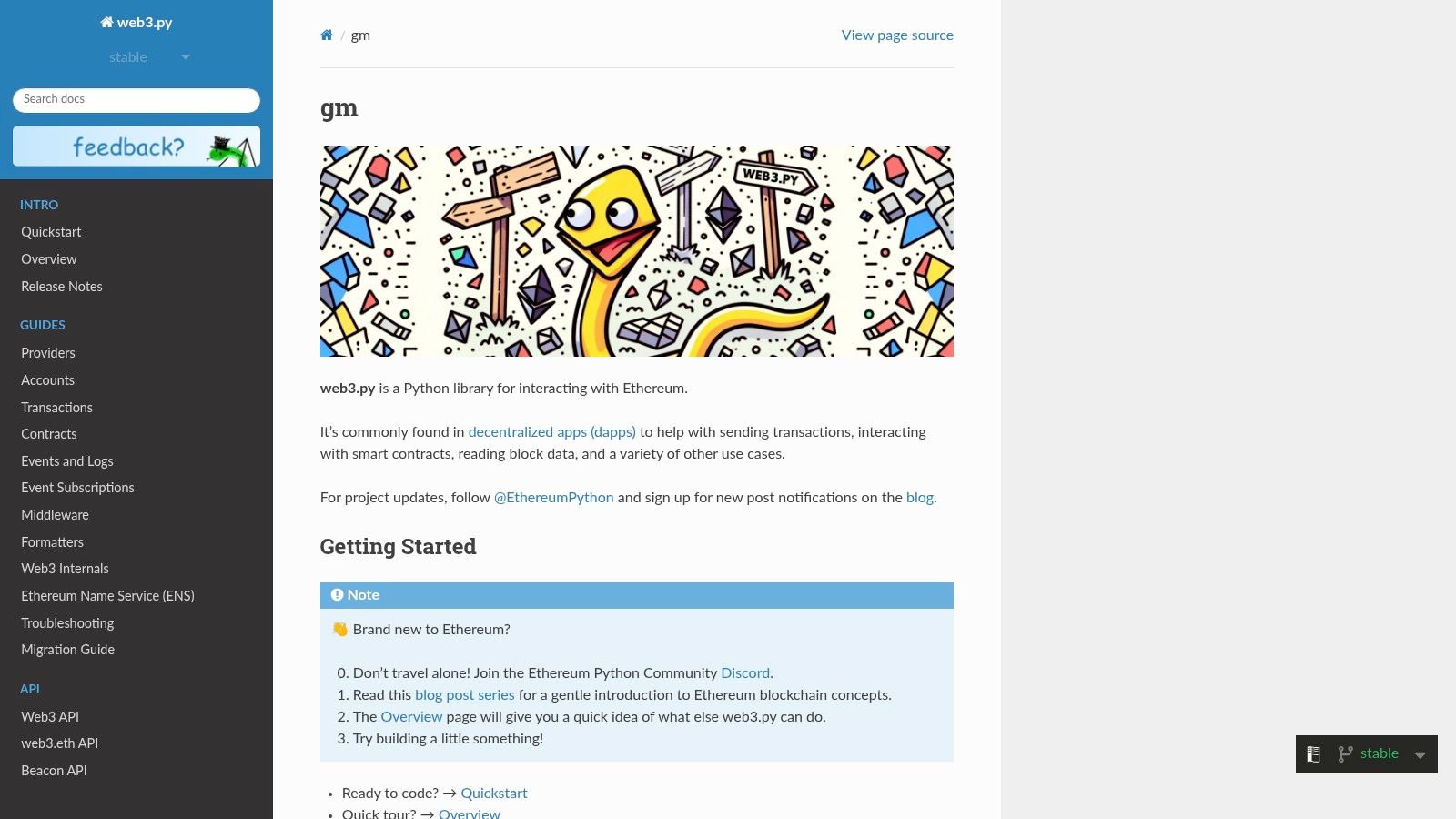
Web3.py documentation is the first Python project I'd point most Web3 candidates toward. It sits right at the boundary between backend engineering and blockchain protocol usage. If you want to show you can build services that read contracts, decode events, submit transactions, and handle node connectivity, this project does that better than almost anything else in Python.
The strongest portfolio value here comes from practical contributions. Good issues are rarely glamorous. They're usually around RPC edge cases, middleware behavior, contract interaction patterns, docs gaps, and test coverage. That's good news for candidates because those are exactly the kinds of details interviewers ask about.
What it proves in interviews
A meaningful contribution to Web3.py tells a hiring manager that you understand more than wallet demos.
- RPC literacy: You can work with JSON-RPC calls, provider quirks, retries, and event filters.
- ABI fluency: You know how contracts are encoded, called, and decoded in real systems.
- Backend judgment: You can think about idempotency, polling, and error handling instead of only happy-path scripts.
Practical rule: If your contribution touches tests and documentation along with code, it carries more hiring weight than a feature-only pull request.
There's a trade-off. Web3.py is Ethereum-first. That's perfect for EVM hiring, but it won't make you look multi-chain by itself. Its async story also takes more care than many JavaScript-first stacks, so be ready to explain why you chose sync or async patterns in your contribution.
If you're applying for Ethereum infrastructure or backend roles, pair your GitHub work with a role description like this Senior Blockchain Engineer opening. It helps you align your contribution story with the job's actual expectations.
2. Ape Framework
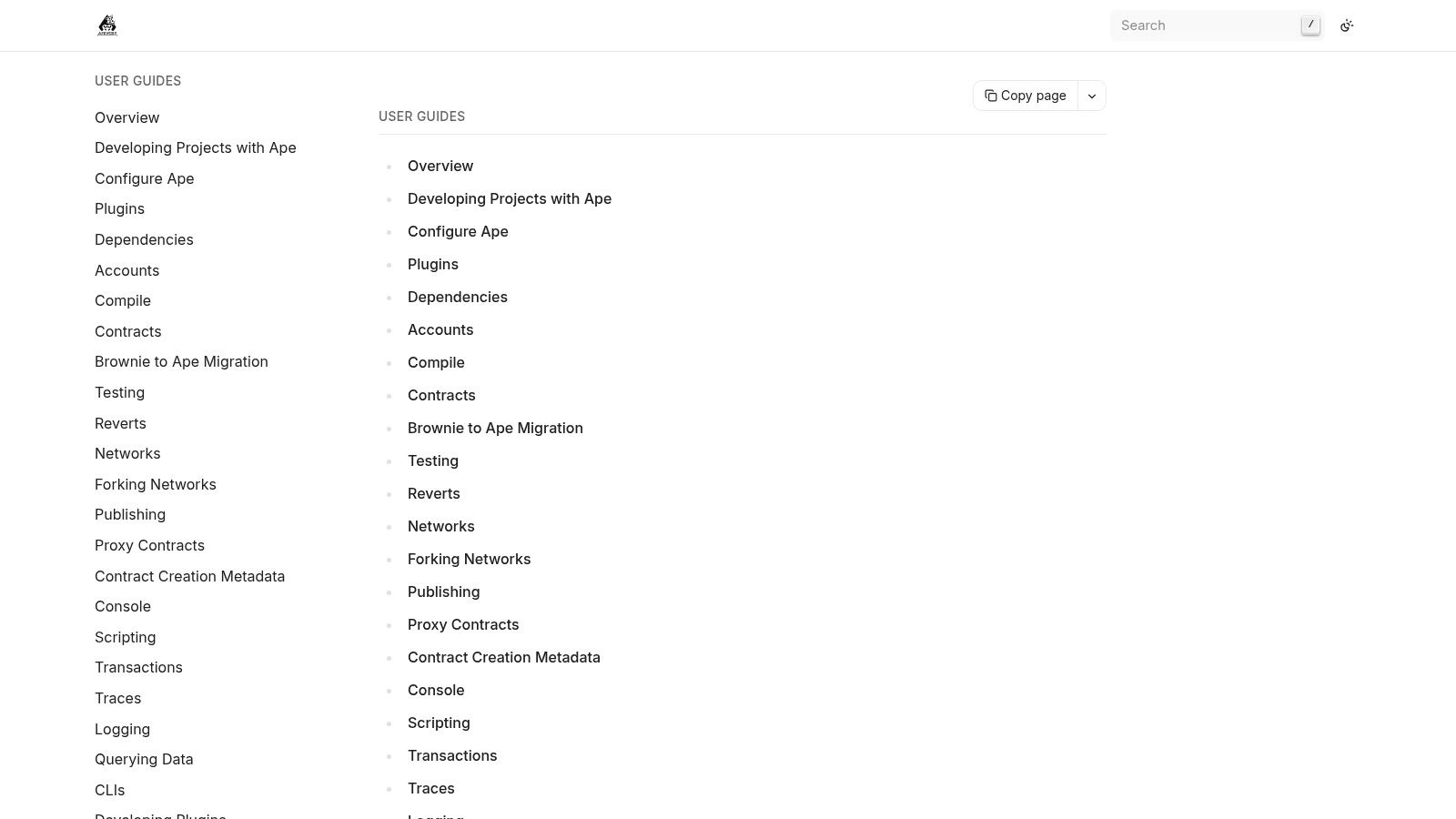
Ape Framework documentation is a strong choice if you want to stay Python-native while still doing serious smart contract work. It's built for testing, scripting, deployment, and project management around EVM development, and that makes it useful for candidates who want to show they can bridge app engineering and contract workflows.
Ape stands out because the contribution surface is broad. You can work on CLI behavior, pytest integrations, providers, plugin support, docs, or examples. That variety matters in hiring because it lets you target your weak spots. If you're light on tooling work, contribute to CLI or dependency handling. If you need stronger testing credibility, focus on pytest and local network workflows.
Best use for career progression
Ape is one of the better open source Python projects for demonstrating developer-experience thinking. Companies building internal blockchain tooling care about that.
- Tooling mindset: You're not just writing app code. You're improving workflows other engineers rely on.
- Testing maturity: Contributions tied to pytest or forking support signal real engineering discipline.
- Plugin awareness: Work in extension points shows you can reason about architecture, not just scripts.
The downside is ecosystem size. Ape is polished, but its ecosystem is smaller than the biggest JavaScript smart contract stacks. That means some plugins evolve quickly and you may hit occasional rough edges. From a portfolio perspective, that's not a problem if you explain what broke, how you debugged it, and what compatibility decisions you made.
For Web3 hiring, that explanation often lands better than a polished toy dApp.
3. Py-EVM
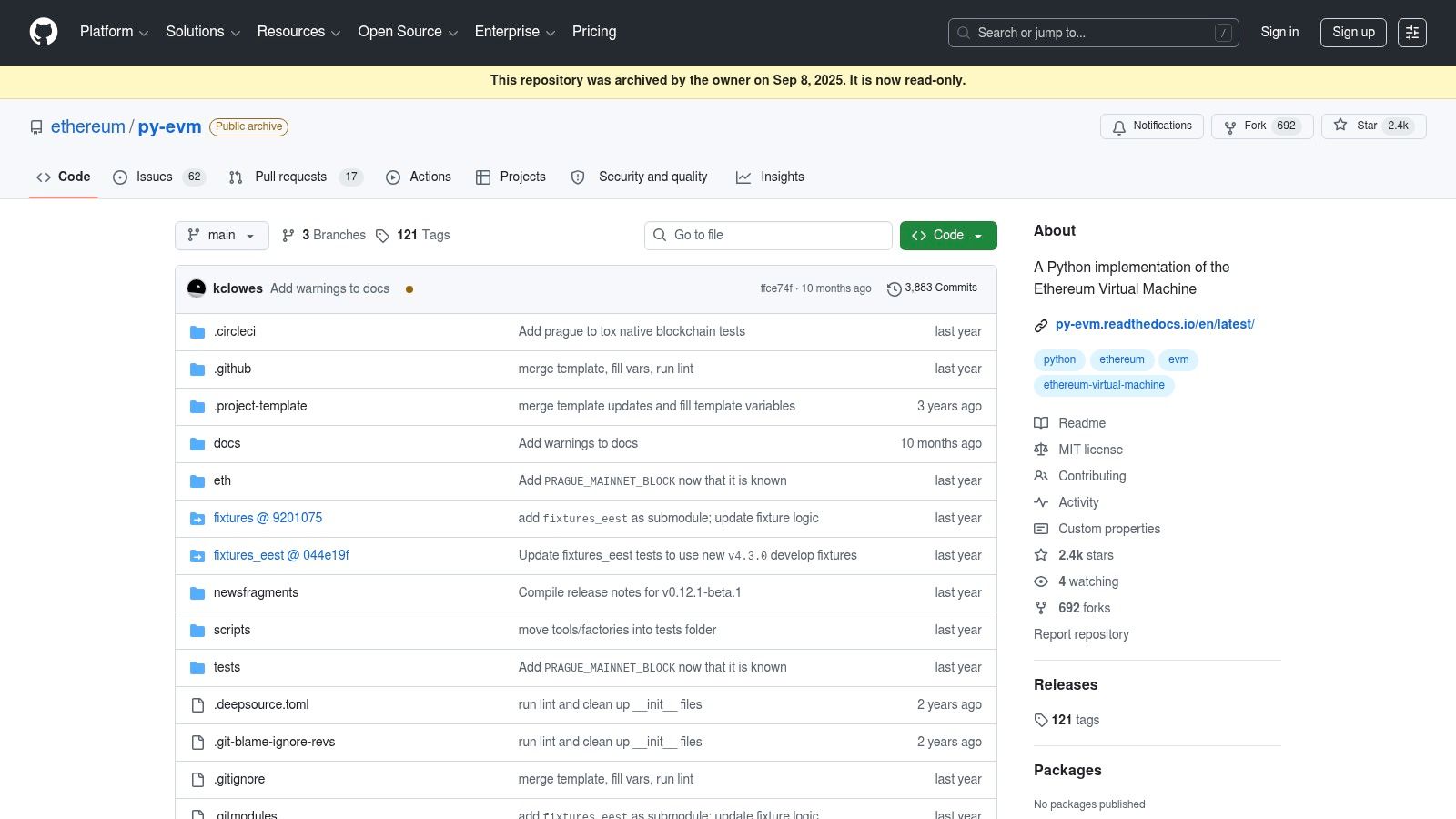
Py-EVM on GitHub is not the easiest project on this list, and that's exactly why it can be valuable. If Web3.py shows that you can consume blockchain infrastructure, Py-EVM shows that you can reason closer to protocol mechanics.
This is the kind of contribution that gets attention from senior engineers, protocol teams, and research-heavy employers. The code is readable enough for serious study, but the concepts are dense. That means the barrier is intellectual, not just procedural.
Who should choose it
Py-EVM is best for candidates targeting protocol engineering, execution-layer research, client testing, or deep infra roles.
Work on Py-EVM if you want interviewers to ask you about EVM semantics instead of generic backend questions.
Useful contribution areas include fixture handling, test alignment, spec-related behavior, and developer-facing clarity in internals. A small, well-reasoned fix in a complex area often says more than a big feature in a simpler repo.
The trade-off is obvious. Py-EVM isn't where you go to show production node operations or maximum runtime performance. It's slower than clients written in Go or Rust, and it isn't meant to be your flagship production node. But that limitation also makes your narrative cleaner. You can frame your work as protocol understanding, correctness, and experimentation.
For hiring managers, that's compelling when the role involves execution logic, simulation, testing, or chain-specific research.
4. python-bitcoinlib
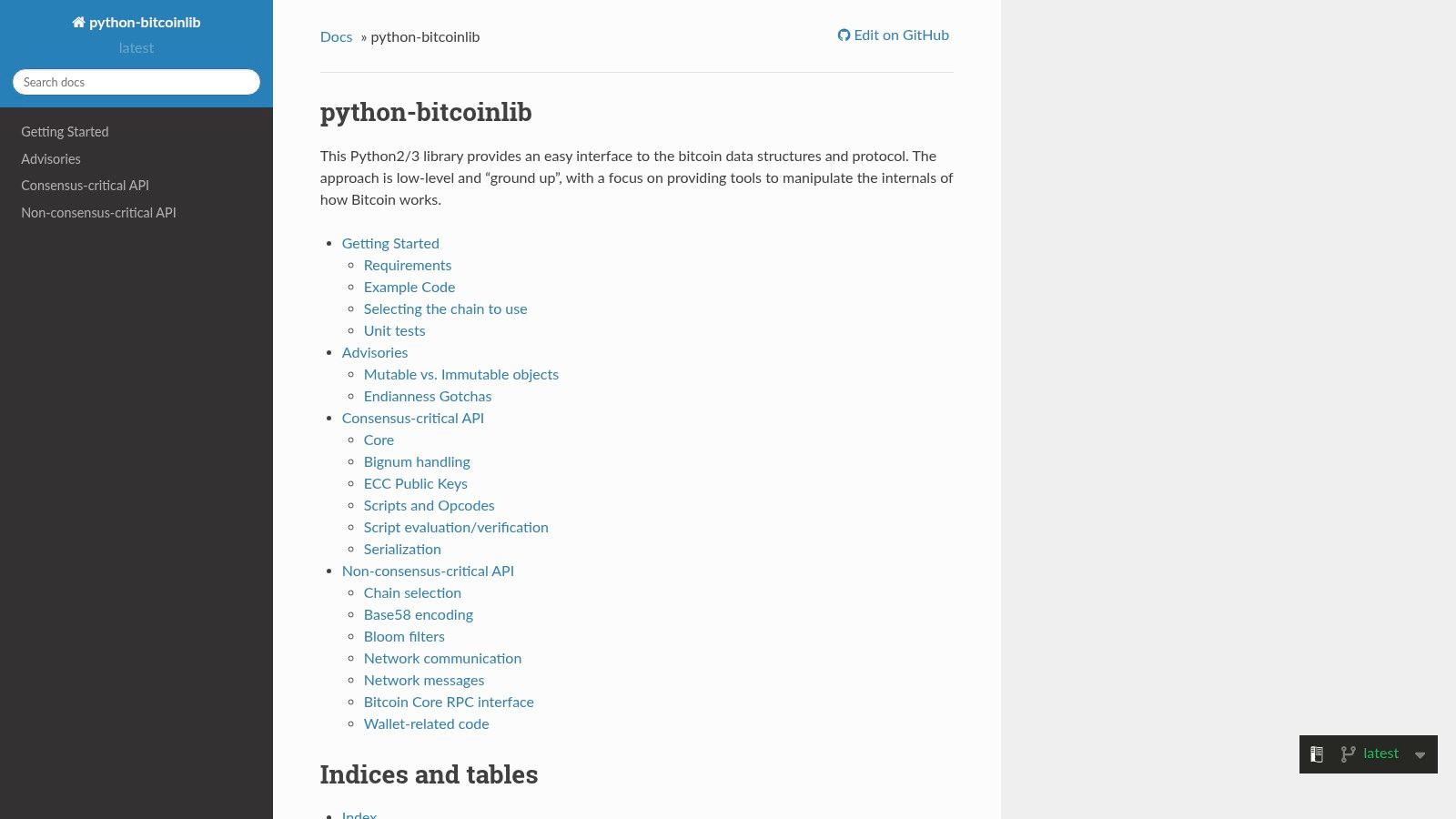
python-bitcoinlib documentation gives you a different signal from Ethereum tooling. It's lower level, closer to transaction construction, scripts, keys, and Bitcoin Core interaction. If you want to prove that you understand blockchain primitives instead of only SDK ergonomics, this is a strong project.
Candidates often underestimate how useful low-level Bitcoin work is in interviews. Even when the employer isn't Bitcoin-native, this kind of contribution demonstrates carefulness. Bitcoin code tends to punish vague thinking.
Why hiring managers notice it
A contribution here can show that you know how to work with exact data structures and protocol rules.
- Transaction reasoning: You understand serialization, signing flow, and construction details.
- Security awareness: Key handling and script logic force you to think carefully.
- RPC integration: Work involving Bitcoin Core ties protocol knowledge to operational systems.
The main downside is accessibility. The API is low level, and the docs assume some prior background. That's not ideal for beginners who want fast momentum. If you're early in your open source journey, start with documentation, examples, or test improvements before touching sensitive internals.
That path still counts. In hiring, a candidate who improved examples around transaction building can often explain the system more clearly than someone who rushed into a difficult code change without understanding the flow.
5. Electrum
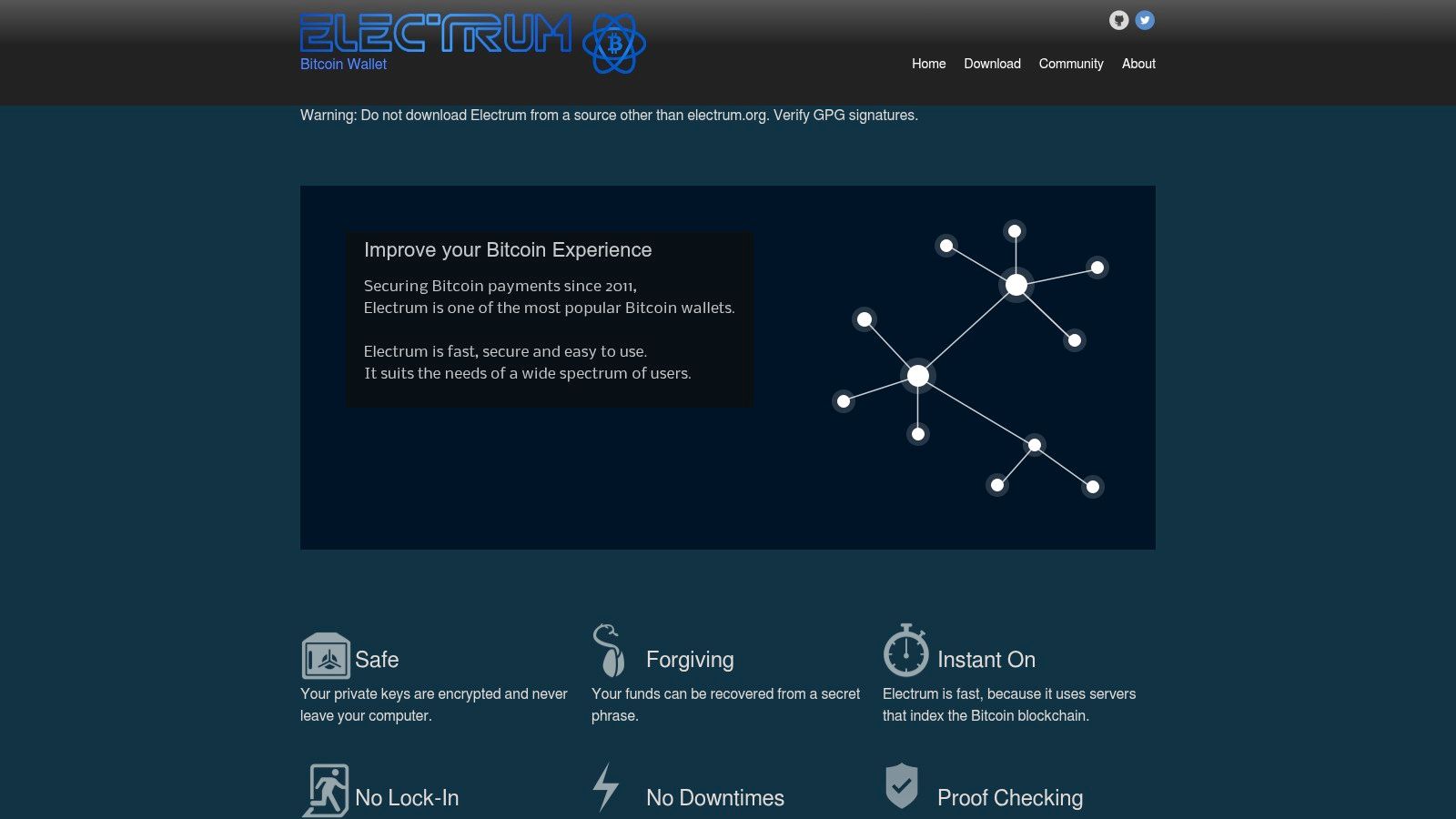
Electrum is one of the best open source Python projects if you want your portfolio to show operational realism. Wallet software sits at the intersection of UX, security, automation, and user trust. Contributing here demonstrates that you can think beyond pure protocol code.
Electrum is especially useful for engineers interested in wallet infrastructure, custody workflows, CLI tooling, and Bitcoin operations. Its daemon and command-line modes make it relevant to people building internal tools, automation, or support systems, not just desktop applications.
Where it helps your portfolio
Electrum contributions often create better interview stories than raw algorithm work because they connect to real user risk.
- Product judgment: Wallet behavior has direct user consequences, so small changes matter.
- Operational awareness: Daemon and automation work maps to infrastructure and support tooling.
- Security discipline: Any discussion around keys, signing, and verification gets attention fast.
Hiring lens: In wallet-related interviews, I'd rather hear a careful explanation of one small Electrum fix than a flashy side project that hand-waves key management.
The limitation is scope. Electrum is Bitcoin-only, so it won't directly show multi-chain breadth. Advanced features also demand real care around key handling and operational safety. That's a good thing for your portfolio if you treat it seriously. Don't overstate what you changed. Explain the risk model, the user impact, and the validation steps you took.
That level of restraint reads as professional maturity.
6. FastAPI
A Web3 startup posts a backend role, and the interview loop quickly shifts from Python syntax to production questions. How do you validate payloads from unreliable clients? What breaks when async code hits real traffic? How do you document an API that partners and internal teams can use? FastAPI documentation is a practical place to build answers that show up clearly on your GitHub profile.
FastAPI fits the kind of backend work many blockchain teams ship: API gateways in front of indexers, auth and policy services, webhook receivers for exchange or wallet events, admin tooling, and inference endpoints. It also maps well to roles that sit close to platform and infrastructure work, including senior DevOps engineer roles in blockchain Kubernetes environments, where application behavior and deployment behavior meet.
Strong contribution targets
FastAPI is most useful as a portfolio piece when your contribution proves that you understand boundary design, not just route handlers.
- Validation and schema design: Work around Pydantic models, request parsing, or response validation shows that you can define contracts and catch bad data early.
- Async and lifecycle behavior: Fixes tied to concurrency, startup and shutdown hooks, dependency injection, or background tasks demonstrate backend judgment under real operating conditions.
- Docs and OpenAPI accuracy: High-signal documentation work shows that you can make an API easier to integrate, test, and maintain.
Hiring managers recognize FastAPI quickly, which is both the advantage and the trap. Plenty of candidates list it. Fewer can explain why one validation rule belongs at the schema layer, why an async dependency can create performance or testing problems, or how automatic OpenAPI generation can drift from actual behavior if nobody checks edge cases.
That is where contribution quality matters.
A small FastAPI pull request can answer common interview questions before anyone asks them. If you improved request validation, explain the failure mode and the contract you tightened. If you fixed async behavior, explain what happened under load and how you verified the change. If you clarified docs, show that the work reduced ambiguity for other engineers. That reads like someone ready to ship production APIs in a Web3 stack, not someone who only built tutorials.
7. Apache Airflow
Apache Airflow is the practical choice for candidates aiming at data platform, infra, or compliance-heavy blockchain work. If a team has to ingest on-chain data, reconcile records, trigger reporting, or run scheduled workflows across multiple systems, Airflow often enters the conversation.
A good Airflow contribution tells employers that you can think in DAGs, dependencies, failure states, retries, and observability. Those skills transfer well to Web3 companies dealing with indexers, treasury reporting, or internal data products.
What works and what doesn't
Airflow is strongest when your portfolio needs evidence of orchestration and operational ownership.
- Operator or provider work: This signals ecosystem familiarity and integration skill.
- Scheduler or execution fixes: Strong proof that you can reason about reliability.
- UI and monitoring improvements: Useful when the role touches internal platform usability.
What doesn't work is treating Airflow like a fancy cron replacement in your resume story. Senior reviewers know the difference. Airflow has real operational complexity, including the scheduler, metadata database, and worker model. If your contribution involved that complexity, say so clearly.
For candidates targeting platform and infrastructure roles, compare your experience against a role like this Senior DevOps Engineer position. It helps frame Airflow work as production operations, not just Python scripting.
8. pandas
pandas documentation remains one of the most practical open source Python projects for career growth because so many teams depend on it, directly or indirectly. The same Python survey noted earlier says data exploration and processing is the top use case among surveyed developers, and pandas is one of the core libraries in that workflow.
For Web3, pandas becomes relevant the moment someone needs to clean event logs, join address-level activity, reconcile token transfers, or prepare datasets for downstream storage and reporting.
Why pandas contributions carry weight
Contributing to pandas shows a kind of engineering maturity that hiring managers often trust.
- API judgment: You have to think carefully about backward compatibility and user expectations.
- Data correctness: Small bugs can affect many downstream workflows.
- Performance awareness: Even docs or test work often requires understanding vectorized behavior and edge cases.
The challenge is the codebase surface area. pandas is powerful, but it can feel intimidating because there's so much of it. That's not a reason to avoid it. Start with issue reproduction, docs examples, warning clarity, or narrow bug fixes around indexing, I/O, or time series behavior.
A modest pandas fix with a good regression test often looks stronger than a personal analytics project with no review history.
That's especially true if you're applying for data engineering or analytics roles inside blockchain companies.
9. PyTorch
PyTorch is the right project on this list if your career plan touches fraud detection, recommendation systems, NLP, agent tooling, or any ML-heavy product inside crypto. It's also one of the clearest bridges between Python open source work and compensation.
According to FutureLearn's Python jobs overview, Python skills are required in over 11,000 active job advertisements worldwide on Glassdoor. For compensation, Motion Recruitment's Python salary breakdown says Machine Learning Engineers earn the highest range, at $145,000 to $180,000 annually, followed by Data Scientists at $130,000 to $160,000 and Software Engineers at $110,000 to $150,000.
Best way to use PyTorch for hiring
Don't try to compete with core maintainers on giant internals unless that's already your background. Instead, look for contribution paths that prove applied ML engineering.
- Docs and examples: Strong if they clarify training, inference, export, or debugging paths.
- Ecosystem tooling: Useful if you can improve workflows around model usage and deployment.
- Testing and bug fixes: Excellent for showing careful engineering in a complex system.
PyTorch has a steep infrastructure side. GPU environments, distributed setups, and version alignment can get messy fast. That's part of the value. If you can explain one messy ML engineering problem clearly, you become much more credible for applied AI roles in Web3.
For that path, a role like this Senior Machine Learning Engineer opening gives you a concrete target to optimize your portfolio against.
10. Celery
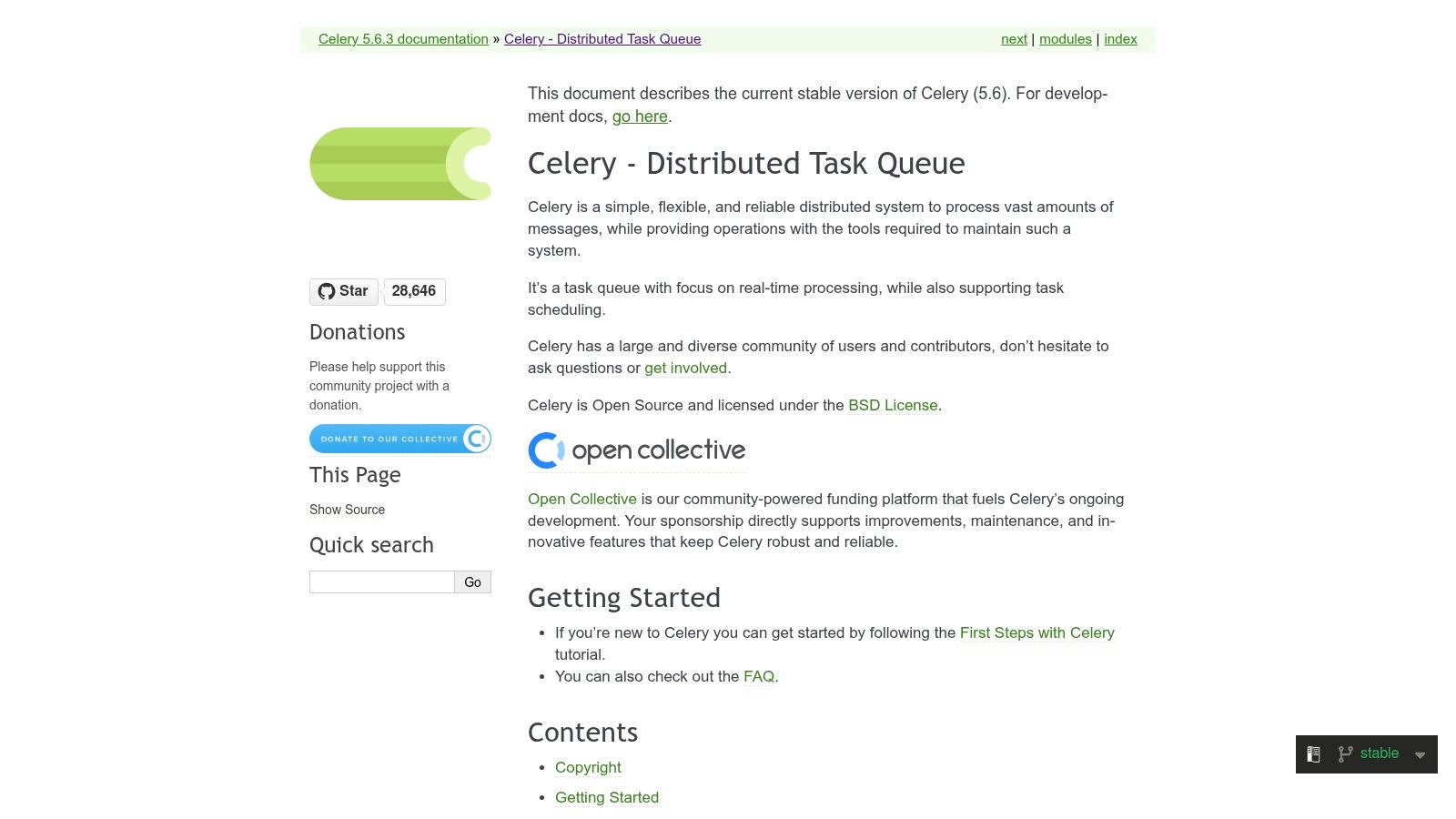
Celery documentation is one of the most underrated portfolio builders for backend candidates. Web3 systems constantly need background jobs: process webhooks, fan out notifications, enrich data, retry chain interactions, run periodic reconciliation, and handle queues without blocking request paths.
Contributing to Celery shows that you understand asynchronous work where reliability matters. That's a much stronger hiring signal than saying you've “used queues before.”
Where Celery shines
Celery contributions are useful when you want to prove production backend thinking.
- Task reliability: Retries, acknowledgements, and idempotency are real engineering topics.
- Broker awareness: RabbitMQ or Redis integration work shows infrastructure understanding.
- Framework integration: Connecting Celery to web stacks demonstrates system design thinking.
The downside is operational complexity. Celery isn't just a Python package you import and forget. You're also dealing with brokers, workers, result backends, and observability. That's why it's so useful in interviews. If you can talk about failure modes in asynchronous task processing, you sound like someone who has run systems, not just coded features.
That matters for nearly every serious backend role in crypto.
Top 10 Open-Source Python Projects, Feature Comparison
| Tool | Core Use | Key Features | Quality ★ | Value 💰 | Audience / USP 👥✨ |
|---|---|---|---|---|---|
| Web3.py | Ethereum Python SDK for on-chain interactions | JSON‑RPC, ABI contract calls, middleware, node provider support | ★★★★☆ Stable, well‑documented | 💰 Free OSS, high dev velocity | 👥 Backends & data pipelines · ✨ EVM‑first, widely adopted · 🏆 Large community |
| Ape Framework (ApeWorX) | Smart contract dev, testing & deploy (Python) | CLI & scaffolding, pytest forks, pluggable providers, compilation | ★★★☆☆ Active, growing docs/plugins | 💰 Free OSS, fast local iteration | 👥 Python‑native devs · ✨ Python alternative to JS tooling |
| Py‑EVM | Reference EVM implementation for research & testing | Spec‑aligned EVM, official test fixtures, building blocks | ★★★☆☆ Research‑grade, transparent | 💰 Free OSS, research focus (not prod node) | 👥 Researchers & client devs · ✨ Spec‑aligned, readable code |
| python‑bitcoinlib | Bitcoin primitives & Core RPC helpers | Tx/script build/sign, RPC client helpers, examples | ★★★★☆ Battle‑tested abstractions | 💰 Free OSS, low‑level building blocks | 👥 Wallet/tool builders · ✨ Tight Bitcoin Core integration |
| Electrum | Non‑custodial Bitcoin wallet (CLI & daemon) | Deterministic wallets, HW/watch‑only, Lightning support | ★★★★☆ Mature, secure releases | 💰 Free OSS, production‑grade wallet code | 👥 Ops & wallet teams · 🏆 Long track record, hardware support |
| FastAPI | High‑performance API framework for Web3 backends | Type hints & validation, ASGI support, auto OpenAPI docs | ★★★★★ Fast, excellent DX & docs | 💰 Free OSS, low development cost | 👥 API/webhook services · ✨ Auto docs + strong dev experience |
| Apache Airflow | Workflow orchestration for ETL & on‑chain pipelines | DAGs in Python, UI monitoring, scalable schedulers & providers | ★★★★☆ Enterprise‑proven | 💰 Free OSS, higher infra/ops cost | 👥 Data engineers · 🏆 Huge operator ecosystem |
| pandas | Data analysis & ETL for on‑chain data | DataFrames, joins/reshaping, CSV/Parquet/SQL I/O | ★★★★★ Standard for data work | 💰 Free OSS, in‑memory limits at scale | 👥 Analysts & data engineers · ✨ Rich API & ecosystem |
| PyTorch | Deep learning framework for ML use‑cases | Dynamic graph, GPU accel, Torch ecosystem & model zoo | ★★★★★ Industry standard for ML | 💰 Free OSS, requires GPU infra | 👥 ML engineers/researchers · 🏆 Abundant pretrained models |
| Celery | Distributed task queue for background processing | Async tasks with brokers, scheduling, result backends | ★★★★☆ Mature, well understood | 💰 Free OSS, needs broker infra (Redis/RabbitMQ) | 👥 Backend & ops teams · ✨ Reliable async patterns |
Final Thoughts
A hiring manager opens your GitHub before the first interview and sees a merged fix in Web3.py, a test improvement in FastAPI, or a docs change that clarified a rough edge in Airflow. That profile reads very differently from a repo full of half-finished side projects. Public contribution history shows how you work with existing systems, other maintainers, and real constraints.
That proof is valuable because open source already sits deep inside commercial software. The open source software market report says open source accounted for 77% of internal code composition across global commercial codebases in 2024, and it projects the market to grow from USD 45.86 billion in 2025 to USD 190.14 billion by 2034. Companies build on these tools. They also look for engineers who can improve them without breaking production assumptions.
For career growth, the strongest project is usually the one that makes your skills legible. A Web3.py contribution can help answer interview questions about JSON-RPC, ABI handling, and Ethereum transaction flow. Work in Ape Framework or Py-EVM signals smart contract testing, local chain behavior, and EVM internals. FastAPI, Celery, and Airflow contributions show backend judgment that Web3 teams need around APIs, jobs, ingestion, retries, and operational reliability.
Visibility is not about stars alone. The better signal is active use and healthy contribution flow. The Scarf guide to open source business metrics argues that unique issues, merges, commits, and forks say more than vanity metrics, and that continued activity from users over time is a better sign of production viability. Hiring managers often read projects the same way. A small, thoughtful patch to an active codebase usually carries more weight than passive interest in a famous repository.
This is especially true if you are trying to move from user to contributor. Many Python developers get stuck at that boundary. They read project lists, star repos, and wait for a perfect first issue that never arrives. One practical summary of that friction appears in this overview of open source Python projects and contribution friction. The pattern is familiar. READMEs rarely tell you which bug is reproducible in under an hour, which test is flaky, or which maintainers are likely to review quickly.
Start smaller than your ambition.
Pick one project from this list based on the job you want, not the project with the loudest brand. If you want a Web3 backend role, FastAPI plus Web3.py is a strong pairing. If you want protocol or infra credibility, Ape Framework, Py-EVM, python-bitcoinlib, or Electrum gives you better interview material. Then reproduce one bug, add or fix one test, write a clean pull request, and keep notes on the trade-offs you made.
That last part often decides whether the work helps your career. In interviews, strong candidates can explain the original problem, why they chose one fix over another, what review feedback changed, and what they learned about compatibility, performance, or developer experience. Each merged contribution becomes a portfolio piece tied to a specific hiring question.
For interview prep around that story, tools like the ParakeetAI interview assistant can help you rehearse the explanation. The main advantage comes from the contribution itself. Public work gives you evidence that you can ship code, accept review, and earn trust in systems other people rely on.
If you're ready to turn open source work into your next role, Blockchain Jobs is a practical place to start. It's built for Web3 hiring, so you can match your Python, backend, data, DevOps, or ML contribution history to real crypto roles instead of forcing a generic tech resume into a specialized market.