KYC Analyst Jobs Remote: Your Roadmap to Get Hired in 2026
You're probably doing one of three things right now. You're scanning job boards and finding a messy mix of fraud ops, onboarding, AML, and KYC roles all labeled differently. You're trying to figure out whether your current compliance background is enough for a fully remote move. Or you've noticed that the best-paying remote KYC work often sits inside crypto and Web3 companies, but most advice online never explains what those teams want.
That gap matters.
Remote KYC hiring is no longer a side lane for junior admin work. The strongest openings are built around judgment, documentation quality, escalation discipline, and the ability to work across jurisdictions without constant supervision. Hiring managers don't want someone who can only tick boxes. They want someone who can spot risk, defend a decision, and write a case note another reviewer can trust.
If you're targeting KYC analyst jobs remote in 2026, especially in Web3, your search strategy, resume, interview style, and skill positioning need to be sharper than generic compliance advice. That's where most candidates lose ground.
The Growing Demand for Remote KYC Analysts
Remote KYC work used to be constrained by security concerns, local office policies, and old assumptions about who could access sensitive systems. That changed. Cloud security infrastructure, global fintech regulation, and DeFi compliance needs have pushed KYC into a remote-first model, with 132,537 total remote KYC jobs listed across aggregated platforms as of 2026 according to Naukri's remote KYC listings.
That number tells you something more important than scale. It tells you this isn't a temporary hiring wave.
KYC analysts sit at the point where onboarding, risk assessment, identity verification, sanctions concerns, transaction context, and ongoing monitoring all meet. In traditional finance, that work supports regulated growth. In fintech, it protects onboarding velocity without letting standards slip. In Web3, it often decides whether a company can scale globally without inviting avoidable regulatory trouble.
Why remote hiring expanded
Companies didn't lower the bar to make these roles remote. They changed the operating model.
A remote KYC analyst today is expected to handle structured workflows, collaborate asynchronously, write clear rationales, and escalate edge cases without waiting for someone to sit beside them. That's why experienced applicants tend to do better than generalist job seekers trying to pivot in with broad operations backgrounds.
Remote compliance teams work when analysts can explain risk clearly in writing. If your notes aren't defensible, your experience won't look senior.
The strongest growth is also tied to digital asset businesses. Crypto exchanges, stablecoin companies, wallet infrastructure providers, and blockchain-native financial platforms all need KYC talent that understands both regulation and online risk patterns. That's one reason remote work and compliance now overlap so heavily in Web3 hiring.
For professionals exploring this path, it helps to understand how remote-first hiring is evolving across blockchain more broadly. This overview of remote blockchain jobs gives useful context on how distributed teams are structuring work beyond engineering.
What makes this career path attractive
Three things stand out:
- Stability: Compliance remains a core function even when firms cut elsewhere.
- Transferability: Strong KYC skills move across banking, fintech, payments, and Web3.
- Upside: Specialized crypto-native roles can pay materially more than general operations work.
That last point matters because many people still underestimate the value of niche compliance expertise. The market doesn't reward “familiar with onboarding.” It rewards people who can assess source of funds questions, review complex identity evidence, handle enhanced due diligence, and document decisions in a way regulators and internal audit can live with.
Mastering the Essential Skills and Certifications
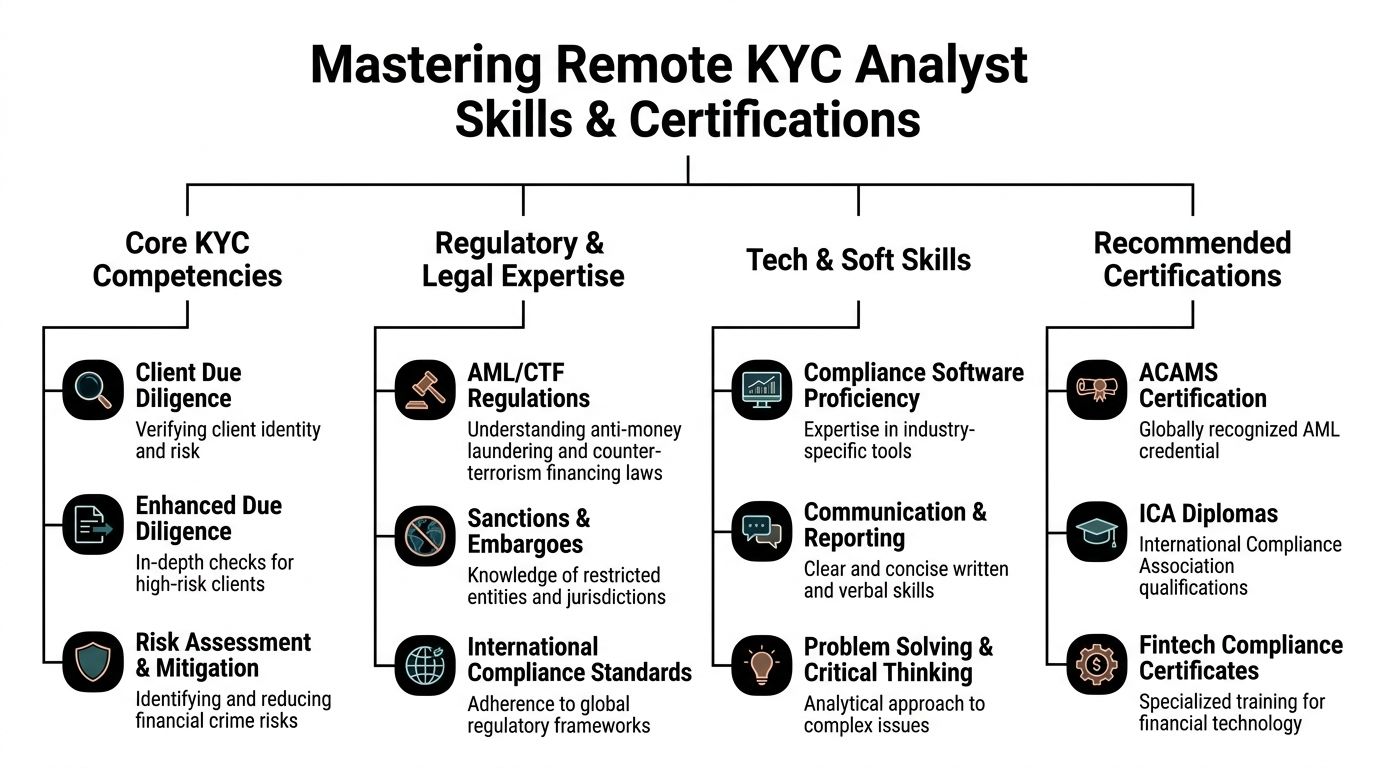
Hiring managers usually group candidates into three buckets fast. People who understand compliance basics. People who can operate the tooling. And people who can handle higher-risk, higher-value work in Web3.
If you want better remote KYC roles, build your profile in that order.
Build the compliance foundation first
A surprising number of applicants jump straight to “crypto compliance” without being reliable on the basics. That doesn't work. Before anyone trusts you with a remote queue, they need to see that you can handle standard KYC work without hand-holding.
Your foundation should include:
- Customer due diligence: Knowing how to verify identity, assess onboarding risk, and record a complete review trail.
- Enhanced due diligence: Being comfortable with higher-risk customers, adverse information, source of funds questions, and escalation triggers.
- Risk reasoning: Explaining why you approved, rejected, or escalated a case in plain language.
- Regulatory literacy: Understanding the practical relevance of FinCEN, FATF, MAS, and FIAU in roles that touch multiple markets.
Remote roles expose weak fundamentals quickly. In an office, someone may correct your logic in real time. In a distributed team, your case notes often speak for you.
Learn the operating stack
The second layer is tooling. Many resumes stay too vague here.
Don't just say “used KYC tools.” Name what you worked with. Hiring teams want candidates who already understand compliance software, case management systems, sanctions screening workflows, and identity verification platforms. If your experience is thinner here, spend time understanding how vendors structure document checks, liveness, watchlist screening, and review queues.
A practical way to sharpen this area is by identifying top identity verification platforms and comparing how they approach remote verification, fraud controls, and workflow fit. Even if you haven't used every platform directly, knowing the differences helps you talk like an operator instead of a spectator.
Practical rule: If you can't explain how a case moves from document capture to review decision to escalation, you're not ready for a strong remote interview.
Add the Web3 specialty that changes your ceiling
In this context, salary and role quality often diverge from traditional KYC paths.
In Web3, teams care about standard compliance discipline plus context around wallets, exchange exposure, source of funds narratives tied to digital assets, and unusual transaction patterns. The best candidates can discuss blockchain analytics tools such as Chainalysis or Elliptic in a grounded way, even if their role wasn't purely investigative. They understand that crypto risk assessment isn't separate from KYC. It deepens it.
That's also why job seekers looking at this niche should spend time studying the shape of crypto compliance jobs. It helps you see how KYC intersects with AML ops, sanctions, transaction monitoring, and investigations inside digital asset firms.
Why CAMS still matters in remote hiring
Certification isn't a substitute for judgment, but it does help remote candidates prove baseline credibility.
A verified benchmark from Jobgether's remote KYC analyst guidance states that candidates holding CAMS achieve a 30–40% higher interview conversion rate because the credential offers standardized regulatory validation. In practical terms, that means recruiters are more willing to move you forward when they can't meet you in person and need stronger signals early.
That same source also notes that remote Web3 and blockchain KYC roles often require 7–10 years in compliance, with at least 3 years in a managerial role for more senior openings. That doesn't mean junior candidates can't break in. It means you need to target the right level and stop applying to leadership roles with a generalist operations resume.
Crafting Your Resume and LinkedIn Profile
Most compliance resumes fail for one simple reason. They describe tasks instead of proving judgment.
Hiring managers already know what a KYC analyst is supposed to do. “Reviewed customer files” tells me nothing. “Conducted due diligence checks” tells me almost nothing. A good resume shows the kind of cases you handled, the risk environment you worked in, the tools you used, and how well you documented decisions.

Replace passive bullets with evidence
Here's the difference.
| Weak bullet | Stronger bullet |
|---|---|
| Responsible for KYC reviews | Reviewed individual and business onboarding files, documented risk factors, and escalated higher-risk cases with clear approval rationale |
| Worked on sanctions screening | Used sanctions and screening workflows to identify potential matches, resolve false positives, and record defensible disposition notes |
| Managed customer onboarding | Supported remote onboarding by verifying identity evidence, analyzing customer profiles, and coordinating follow-up requests with operations and compliance teams |
If you have measurable internal performance data that your employer allows you to share, use it carefully. If you don't, stay qualitative. Don't invent metrics. Hiring managers can usually tell when candidates are padding numbers.
What to emphasize for remote roles
Remote KYC hiring puts extra weight on how you work, not just what you know.
Your resume should show these traits clearly:
- Written judgment: Mention drafting case rationales, review notes, escalation memos, or audit-ready documentation.
- Independent execution: Show that you managed queues, reviews, or follow-ups without constant supervision.
- Cross-functional communication: Include work with fraud, onboarding, payments ops, legal, or investigations.
- Tool fluency: Name relevant systems, screening tools, case management platforms, or blockchain analytics products where applicable.
A strong summary line is more useful than a fluffy profile paragraph. Something like this works better:
KYC and AML analyst with experience in remote onboarding, enhanced due diligence, sanctions screening, and risk-based customer review across fintech and digital asset environments.
Clean up LinkedIn like a recruiter search page depends on it
Because it does.
Your LinkedIn profile should be built for search and skim. Recruiters rarely read every word. They search titles, tools, certifications, industries, and keywords tied to remote work.
Use this checklist:
- Headline: Include KYC, AML, compliance, and remote-relevant terms. Example: “KYC Analyst | AML and EDD | Remote Onboarding | Fintech and Web3 Compliance”
- About section: Keep it specific. Mention onboarding, EDD, sanctions, ongoing monitoring, and any crypto exposure.
- Skills section: Don't leave it generic. Add terms like customer due diligence, enhanced due diligence, sanctions screening, transaction monitoring, identity verification, and case management.
- Featured section: Add a certification, writing sample, or compliance-related project if relevant.
- Open to work settings: Make sure remote is selected and your target titles reflect the actual market.
Before sending applications, it's worth running your document through an AI resume scanner to catch keyword gaps, formatting issues, or vague phrasing that might weaken your first pass with recruiters or applicant tracking systems.
What not to do
Don't write your profile like an admin support role if you want analyst pay. Don't bury CAMS or other relevant credentials. Don't call everything “operations” if your real value is risk assessment. And don't list “detail-oriented” as a core skill without showing where that detail changed an outcome.
A remote KYC resume should read like someone trusted you with decisions, not just data entry.
Where to Find High-Quality Remote KYC Jobs
Where you search shapes what you think the market looks like. That's the first trap.
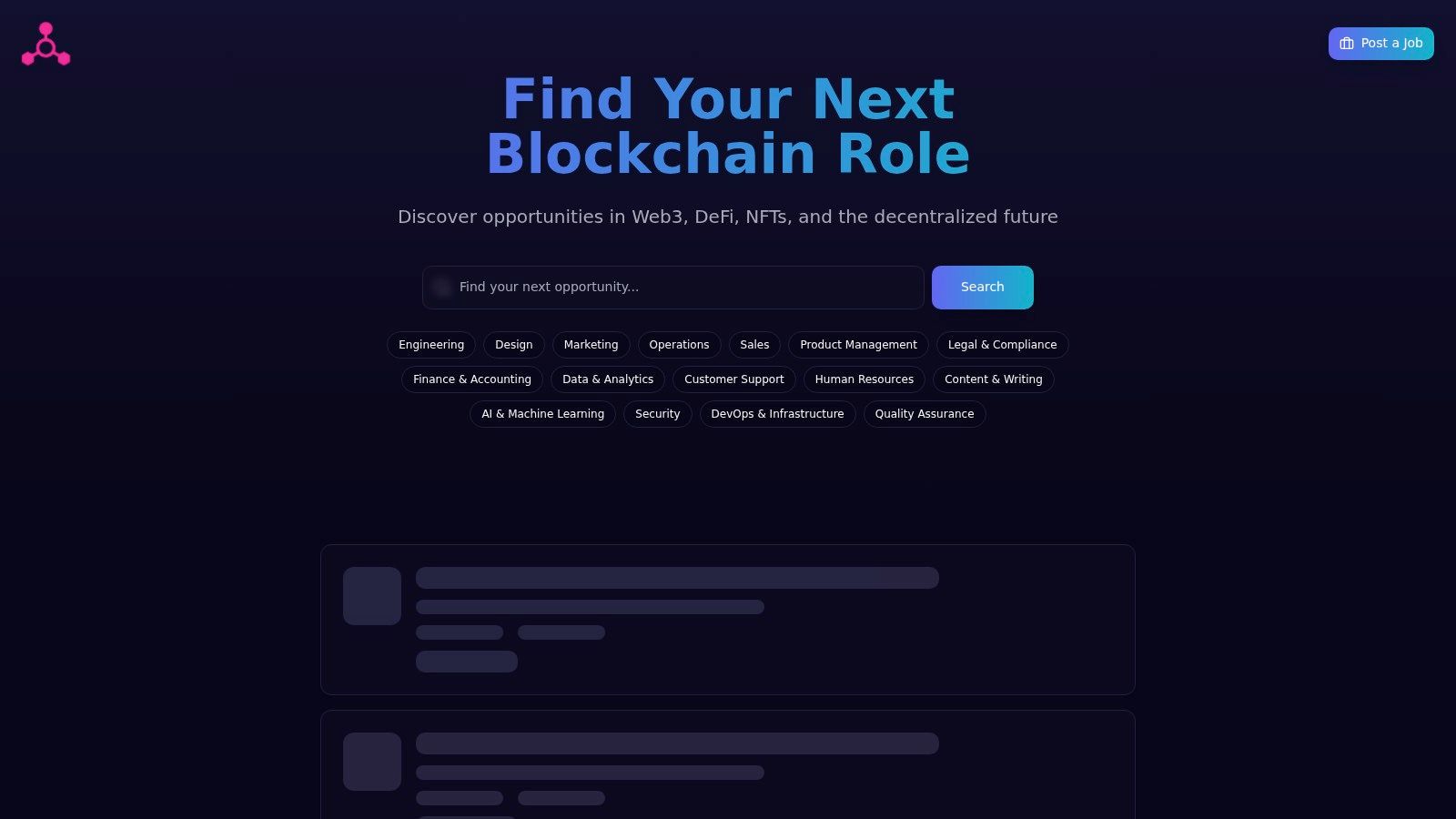
If you rely only on broad job aggregators, you'll see volume, but you won't always see the best slice of the market. Some firms post everywhere. Others keep compliance hiring tighter, especially in Web3, and use niche boards or specialist channels where the applicant pool is more relevant.
What the market looks like across platforms
The visible inventory varies a lot.
According to Indeed's remote KYC listings, Indeed listed 331 total U.S. remote openings as of July 2026, while niche platforms such as Web3.career surfaced specific Web3 roles including MoonPay's KYC Operations Analyst at $72k–$78k and Falconx's Senior Manager Global KYC at $191k–$242k. That spread shows two things. First, platform choice changes what you see. Second, senior crypto-native KYC roles can pay up to 3.4x more than entry-level operations positions.
That's why a generic search for “remote compliance” often creates the wrong impression. You end up comparing lower-complexity operations jobs to specialist KYC and AML roles that require stronger judgment.
Generalist boards versus niche boards
Here's the practical trade-off:
| Search path | What it does well | Where it falls short |
|---|---|---|
| Generalist job boards | High volume, broad title coverage, easy alerts | Mixed quality, duplicate listings, weak filtering for Web3 compliance |
| Niche Web3 and compliance platforms | Better signal, more relevant teams, stronger fit for crypto-native roles | Lower volume, requires more targeted searching and profile alignment |
If you want remote KYC analyst work in digital assets, don't search only by title. Search combinations like KYC, AML, EDD, onboarding, compliance operations, sanctions, and financial crime. A lot of strong jobs are mis-titled or bundled under broader compliance functions.
For candidates focused on distributed regulatory work, this article on remote regulatory compliance jobs is useful for spotting how employers frame adjacent roles that may still fit your background.
A networking approach that actually works
Applications alone are crowded. Direct outreach still works if it's short, informed, and not needy.
Use a message like this:
Hi [Name], I'm a KYC/AML professional with experience in remote onboarding, risk review, and enhanced due diligence. I've been following your team's work in [fintech/Web3/payments] and noticed you're building in a regulated environment. I'd love to stay on your radar for future KYC or compliance operations openings. Happy to share my background if useful.
That works better than asking for a job in the first line.
A few rules matter here:
- Target the right people: Compliance managers, financial crime leads, and talent partners who hire for regulated functions.
- Reference something real: A recent role, product line, market, or operating model.
- Keep the ask light: You're starting a conversation, not forcing one.
Most strong compliance hires don't come from “spray and pray” applications. They come from candidates who understand the role, target the right teams, and make it easy to say yes to a first conversation.
Nailing the Remote KYC Analyst Interview
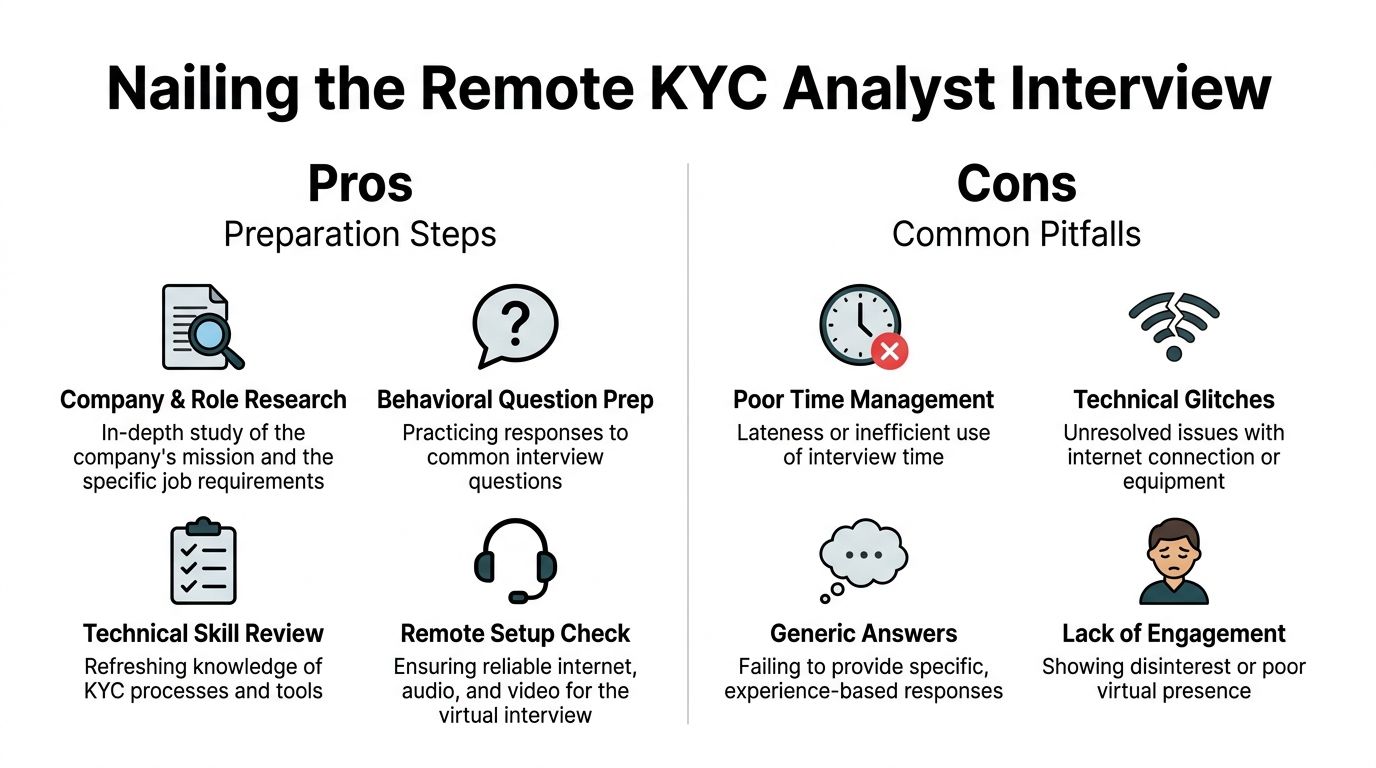
Interviews for KYC analyst jobs remote usually test three things. Can you think clearly about risk. Can you explain your reasoning under pressure. Can you work independently in a distributed environment without creating compliance drag or unnecessary escalations.
That means polished but generic answers won't carry you very far.
What hiring managers are listening for
A remote KYC interview is rarely about textbook definitions. It's about process quality.
The fastest way to lose credibility is to talk about KYC like it's clerical work. A verified benchmark from Vskills' AML and KYC remote jobs guide states that 45% of failed remote KYC applications stem from candidates treating the role as administrative data entry. The same source notes that successful analysts maintain a case resolution success rate of 85%+ with an error rate below 5%, and that senior Web3 roles benchmark at $191,000 to $242,000 annually.
That tells you what employers care about. Accuracy, judgment, throughput with quality, and defensible decisions.
Questions you should expect
You'll usually see a mix of behavioral, technical, and situational prompts.
Some common ones:
- Behavioral: “Tell me about a time you identified a risk others missed.”
- Workflow: “How do you prioritize a queue with standard and high-risk reviews?”
- Technical: “What factors push you from standard due diligence into enhanced due diligence?”
- Remote work: “How do you manage escalations when your manager is in another time zone?”
- Web3 scenario: “How would you review a customer whose activity raises concerns tied to wallet behavior or source of funds explanations?”
A good answer is specific and structured. STAR still works well here. Situation, task, action, result. Keep it crisp and focused on your reasoning.
How to answer without sounding rehearsed
Use this pattern:
- Name the risk clearly.
- Explain your review path.
- Describe the decision or escalation.
- Show what made your approach sound.
Example:
A customer profile looked complete on first pass, but the transaction context and supporting documents didn't align with the stated purpose of the account. I paused approval, reviewed the file against our internal due diligence standards, requested clarification through the proper channel, and escalated once the explanation remained inconsistent. The key point was documenting why the concern wasn't just a missing document issue but a broader risk assessment problem.
That answer works because it shows thought process, not just activity.
Here's a useful prep resource before technical rounds:
Remote interview mistakes that cost candidates
The mistakes are usually avoidable.
- Being too generic: If every answer could apply to customer support, you're not presenting as a KYC analyst.
- Overstating technical knowledge: Don't pretend deep blockchain analytics experience if you only have surface exposure.
- Weak documentation language: If you can't explain how you write or support a decision, you'll look junior.
- Confusing speed with quality: Hiring teams want efficiency, but not at the cost of missed risk.
Your strongest interview answers should make it obvious that you understand the difference between collecting information and assessing risk.
Talking about salary with confidence
Don't approach salary like a guessing game. Anchor your expectations to role scope, market, and specialization.
For traditional remote KYC roles, compensation depends heavily on company type, region, and seniority. For Web3 roles, the spread is wider because teams pay a premium for candidates who can combine core compliance judgment with crypto-native context. If a role involves global frameworks, complex onboarding, policy interpretation, or leadership responsibility, your value is not comparable to entry-level document review work.
Say it plainly: your compensation expectation depends on whether the role is queue-based operations, specialist EDD, or strategic KYC leadership. That framing sounds more credible than naming a number too early without context.
Succeeding and Advancing in Your Remote Role
Getting hired is only the start. Remote compliance careers accelerate when people become easy to trust.
That trust comes from consistency. You review files carefully, write notes that stand up to scrutiny, flag problems early, and don't disappear when a case becomes ambiguous. In remote teams, your reliability is visible in your documentation, your response habits, and the quality of your escalations.
What strong remote analysts do from day one
The analysts who progress fastest usually share a few habits:
- They document cleanly: Another reviewer can pick up the file and understand the logic.
- They escalate well: They don't push everything uphill, but they don't sit on risk.
- They communicate early: If a policy issue, backlog problem, or tooling gap is slowing reviews, they raise it before it becomes a team problem.
- They stay current: Regulations, onboarding standards, and digital asset risk patterns shift. Good analysts keep learning.
Career growth in this field usually moves in one of two directions. You go deeper into specialist work such as EDD, sanctions, investigations, or crypto compliance operations. Or you move upward into senior analyst, team lead, manager, and policy-facing roles. Both paths reward judgment more than volume.
How to keep moving up
If you want to advance, don't just become faster. Become more useful.
Volunteer for policy feedback. Ask to shadow complex reviews. Learn how legal, fraud, and transaction monitoring teams think. If you work in Web3, build enough fluency in wallet risk, blockchain analytics, and source of funds review to participate intelligently in tougher cases. That's what separates a steady analyst from someone ready for senior scope.
Remote KYC isn't a fallback career anymore. It's a serious compliance track with strong long-term value, especially for people who can operate independently and think clearly in regulated digital environments.
If you're looking for remote compliance and Web3 opportunities in one place, Blockchain Jobs is a practical place to start. It's focused on the blockchain ecosystem, includes legal and compliance roles alongside broader Web3 hiring, and makes it easier to spot remote-friendly openings without digging through generic job board noise.