Build Your Career: A Guide to the 7 Top DeFi Projects to Watch in 2026

The decentralized finance (DeFi) space is more than just token prices and yield farming; it's a rapidly maturing industry building the future of finance. For ambitious professionals, this means significant career opportunities. The challenge lies in identifying the projects with real staying power, the ones actively hiring and offering genuine career progression beyond the short-term market cycles. This guide cuts through the noise to provide a clear, actionable career roadmap.
We will analyze the top DeFi projects not just by their Total Value Locked (TVL) but through a career-focused lens. This roundup is designed specifically for individuals looking to build or advance a career in Web3, from blockchain engineers and product managers to legal and marketing professionals. Forget surface-level descriptions; this article is your deep-dive briefing document.
For each project, we provide a structured breakdown covering its core products, recent growth, and crucial developer and hiring signals. You'll get direct links to official resources, job boards, and documentation, giving you the exact information needed to prepare for interviews and understand a project's technical and cultural landscape. Consider this your go-to resource for finding and landing a job at the forefront of financial innovation. We will explore platforms like Uniswap, Aave, and MakerDAO, giving you the insights needed to make your next career move a strategic one.
1. Uniswap
As a cornerstone of decentralized finance, Uniswap is the most-used decentralized exchange (DEX) for EVM-compatible blockchains. It facilitates automated, permissionless trading of digital assets through an Automated Market Maker (AMM) model. This design replaces traditional order books with on-chain liquidity pools, enabling users to swap tokens directly from their wallets. For developers and liquidity providers, Uniswap offers deep on-chain liquidity, extensive developer tooling, and an evolving architecture that makes it a foundational layer for building other DeFi applications. Its consistent presence as a leader in trading volume and total value locked cements its position as one of the top DeFi projects to know.
Core Products & Use-Cases
The primary function of Uniswap is token swapping. Users connect their Web3 wallets (like MetaMask or the Uniswap Wallet) to the interface and can instantly trade thousands of different ERC-20 tokens. Beyond simple swaps, its core products cater to both passive users and active builders:
- Liquidity Provision: Users can deposit pairs of assets into liquidity pools to earn trading fees. Uniswap's v3 introduced "concentrated liquidity," allowing providers to specify price ranges for their capital, increasing capital efficiency and potential returns.
- Developer Integrations: A vast number of dApps, wallets, and aggregators integrate the Uniswap Protocol for their own swapping and liquidity functions. The protocol's open-source nature and robust SDKs make it a go-to for developers.
- Architecture Evolution: The upcoming Uniswap v4 introduces "hooks," which are external contracts that can execute custom logic at different points in a pool's lifecycle. This allows for the creation of highly customized pools with features like dynamic fees, on-chain limit orders, or time-weighted average market makers (TWAMMs) without altering the core protocol.
For Your Career: Understanding Uniswap's architecture, particularly the differences between v2, v3, and v4, is critical for interviews. For a product role, be prepared to discuss the user experience trade-offs of concentrated liquidity. For an engineering role, be ready to explain how v4 hooks could solve a specific DeFi problem, like impermanent loss mitigation.
Key Metrics & Growth Signals
| Metric | Data |
|---|---|
| Total Value Locked (TVL) | Consistently in the billions, a top-tier DEX across all chains. |
| Chains | Ethereum, Polygon, Arbitrum, Optimism, Base, Celo, BNB Chain, Avalanche. |
| Token | UNI (Governance) |
Uniswap Labs, the primary developer, recently drove the "UNIfication" initiative, removing its 0.15% interface fee on its web app and wallet. This move signals a focus on user acquisition and competitiveness, shifting the monetization focus to protocol-level fees determined by UNI token governance.
Hiring & Career Opportunities
Uniswap Labs and the broader Uniswap ecosystem frequently seek top talent. Roles often focus on protocol development, product innovation, and data science.
- Typical Roles: Smart Contract Engineer, Senior Protocol Engineer, Data Scientist, and Product Manager.
- What to Watch: The team values deep expertise in smart contracts, gas optimization, and economic modeling. Candidates with experience building on or integrating with previous Uniswap versions have a distinct advantage. As DeFi product management becomes more specialized, experience in this area is highly valued; you can learn more about DeFi product manager roles to see what top companies are looking for.
Resources:
- Website: https://uniswap.org
- Careers: Check the Uniswap Labs jobs page for current openings.
- Grants: The Uniswap Foundation offers grants for ecosystem development.
2. Aave
As a foundational DeFi money market, Aave allows users to participate in overcollateralized lending and borrowing across a wide array of digital assets. The protocol operates as a permissionless liquidity market where users can supply assets to earn passive interest or borrow assets against their collateral. Its algorithmic interest rate model, which responds to supply and demand, along with a transparent liquidation framework, has made it a reliable building block for both individual users and other DeFi applications. This commitment to security, transparent risk management, and continuous evolution cements its role as one of the top DeFi projects.
Core Products & Use-Cases
Aave's main purpose is to facilitate borrowing and lending. Users connect their Web3 wallets to the Aave interface, deposit supported assets as collateral, and can then borrow other assets up to a certain threshold determined by their "health factor."
- Lending & Earning Yield: Users can supply assets like ETH, WBTC, or stablecoins to the protocol to earn variable or stable interest rates. This provides a source of passive income on their holdings.
- Collateralized Borrowing: By posting collateral, users can borrow other assets. This is useful for short-term liquidity needs without selling an asset, for leveraging a position, or for shorting an asset.
- GHO Stablecoin: Aave introduced GHO, a decentralized, overcollateralized stablecoin pegged to the US Dollar. Users can mint GHO against their supplied collateral in the Aave Protocol, creating a native borrowing option.
- Risk Management & Governance: Aave features a robust governance system where AAVE token holders and their delegates vote on risk parameters, new asset listings, and protocol upgrades. Risk stewardship from partners like Chaos Labs provides active, data-driven parameter tuning.
For Your Career: For a risk or data science interview, be prepared to discuss Aave's health factor calculation and how different Loan-to-Value (LTV) and liquidation threshold parameters affect protocol risk. For a product role, consider how the introduction of GHO impacts borrowing demand for other stablecoins and the user experience trade-offs involved in managing a GHO debt position.
Key Metrics & Growth Signals
| Metric | Data |
|---|---|
| Total Value Locked (TVL) | Consistently ranked among the top lending protocols, with billions in TVL. |
| Chains | Ethereum, Polygon, Arbitrum, Optimism, Avalanche, Base, Metis. |
| Token | AAVE (Governance) |
The protocol is actively deprecating older versions like v2 and encouraging migration to v3, which introduces features like "Efficiency Mode" and "Isolation Mode" for better capital efficiency and risk isolation. The ongoing development of Aave v4 signals a focus on refining liquidation engines and improving the overall risk architecture, keeping the protocol competitive.
Hiring & Career Opportunities
The Aave Companies and the broader Aave ecosystem are always looking for professionals with a deep understanding of DeFi mechanics and risk.
- Typical Roles: Smart Contract Engineer, Risk Analyst, Data Scientist, and Business Development Manager.
- What to Watch: Experience with financial risk modeling, smart contract security, and on-chain data analysis is highly sought after. As institutional interest grows, roles focused on partnerships and compliance are also becoming more common; you can explore what DeFi institutional business development roles entail to see how this space is professionalizing.
Resources:
- Website: https://aave.com
- Careers: Check the Aave Companies career page for open positions.
- Grants: The Aave Grants DAO funds projects that build on or support the Aave ecosystem.
3. MakerDAO / Sky Ecosystem
MakerDAO stands as one of DeFi’s oldest and most resilient protocols, responsible for creating and maintaining the DAI stablecoin. Operating as a decentralized collateralized debt protocol, it allows users to mint DAI by locking up approved crypto assets in "Vaults." Now evolving with the Sky ecosystem rebranding, Maker is expanding its offerings to include new stable assets like USDS and programmatic savings products. Its long-standing presence, battle-tested security, and mature governance model make it a foundational pillar of decentralized finance and one of the top DeFi projects for anyone serious about the space.
Core Products & Use-Cases
MakerDAO’s system revolves around stablecoin issuance and savings, governed by its community of MKR token holders. While DAI remains its flagship product, the new Sky ecosystem introduces additional options for users and developers.
- Collateralized Debt Positions (Vaults): The core function allows users to deposit collateral (like ETH or WBTC) into a smart contract Vault to mint the DAI stablecoin. Users must maintain a specific collateralization ratio to avoid liquidation, paying a variable "Stability Fee" for the service.
- Decentralized Savings: Maker offers two primary savings mechanisms. The original Dai Savings Rate (DSR) allows DAI holders to earn a variable yield directly from the protocol. The new Sky Savings Rate (SSR) offers yield on the USDS stablecoin through sUSDS, an ERC-4626 tokenized vault, making it highly composable for programmatic integrations by fintech partners and dApps.
- Decentralized Governance: MKR token holders vote on critical system parameters, including Stability Fees, the DSR/SSR, and which collateral types can be used to mint stablecoins. This mature governance process is a key part of its long-term stability.
For Your Career: For a risk or finance role, understanding MakerDAO's liquidation mechanics and risk parameters (e.g., Stability Fees, Debt Ceilings) is essential. For a product or engineering role, be prepared to discuss the design choices behind the ERC-4626 standard for sUSDS and how it enables easier integration for B2B partners compared to the original DSR.
Key Metrics & Growth Signals
| Metric | Data |
|---|---|
| Total Value Locked (TVL) | Consistently holds billions in collateral, a leader in the stablecoin and lending categories. |
| Chains | Primarily Ethereum, with DAI bridged and integrated across nearly every major L1 and L2 ecosystem. |
| Token | MKR (Governance), DAI (Stablecoin), USDS (Stablecoin) |
The recent introduction of the Sky ecosystem, including the USDS stablecoin and Sky Savings Rate, marks a strategic expansion. This move targets both retail users seeking stable savings and institutional or fintech partners needing a programmable, tokenized savings layer. However, some new front-end products, like Sky.money, are georestricted and unavailable in the U.S., indicating a careful approach to regulatory compliance.
Hiring & Career Opportunities
The MakerDAO ecosystem, including its various sub-DAOs and core units, is a constant source of opportunities for experienced professionals. The protocol’s complexity demands a high level of expertise.
- Typical Roles: Smart Contract Engineer, Risk Analyst, Protocol Engineer, Quantitative Analyst, and Governance Facilitator.
- What to Watch: Deep knowledge of financial risk modeling, smart contract security, and on-chain governance is highly sought after. Candidates who can articulate the economic incentives and risk/reward trade-offs of the Maker system have a significant advantage. Roles often require demonstrating a strong understanding of Maker's extensive documentation and past governance proposals.
Resources:
- Website: https://makerdao.com
- Careers: Opportunities are often posted on the MakerDAO forum and through ecosystem teams.
- Forum: The official forum is the central hub for governance discussions and proposals.
4. Lido
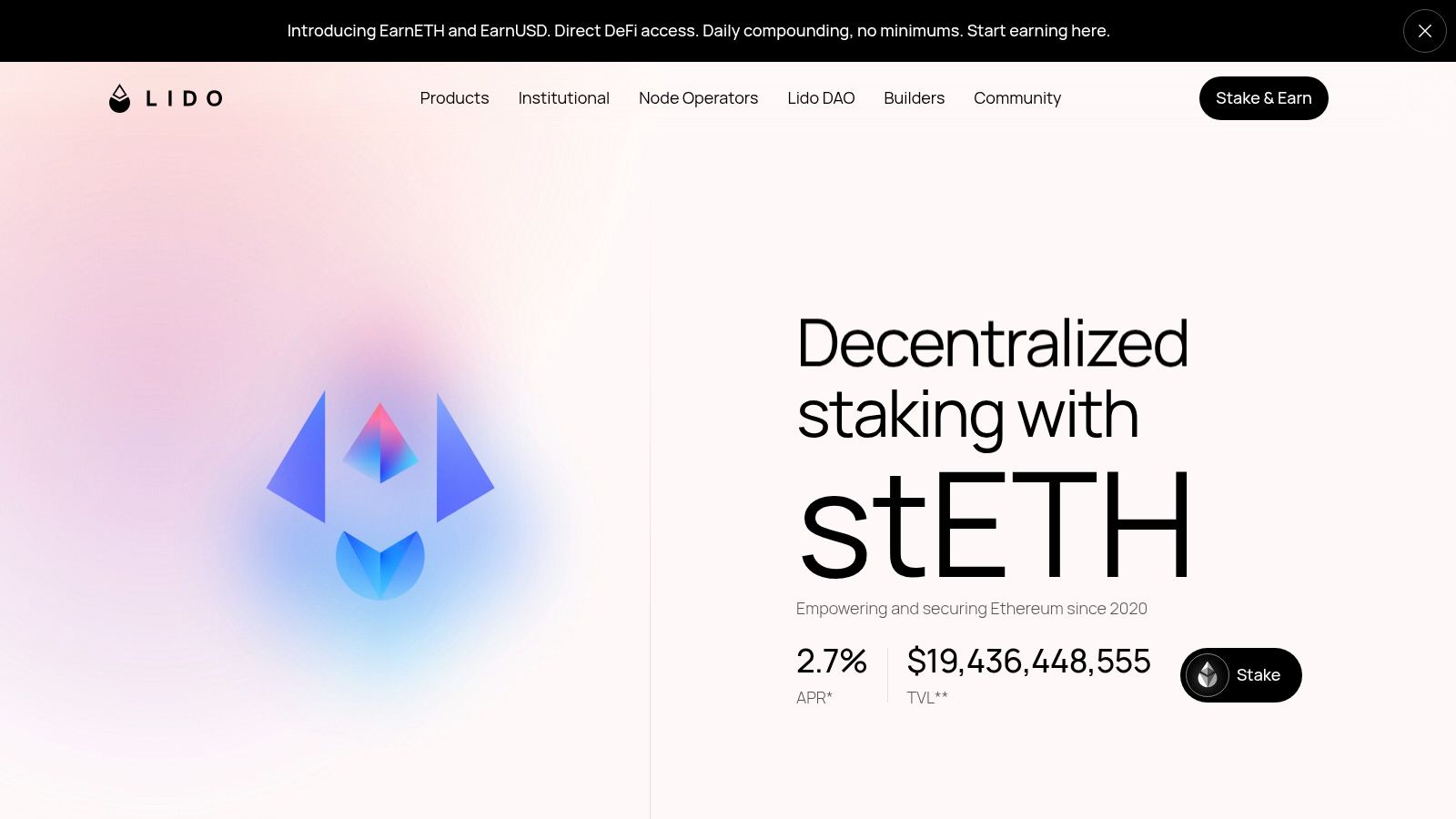
Lido is the market-leading liquid staking protocol, primarily for Ethereum, that allows users to earn staking rewards without locking up their assets or maintaining staking infrastructure. It issues a tokenized version of staked Ether, stETH (and its wrapped version, wstETH), which represents a user's staked position and accrued rewards. This design solves the illiquidity and high capital requirements of native staking, making stETH a highly composable and widely accepted form of collateral across the DeFi ecosystem. Lido’s dominance in the liquid staking sector makes it one of the top DeFi projects for anyone serious about the space.
Core Products & Use-Cases
Lido’s primary function is to simplify staking and create a liquid derivative that can be used elsewhere in DeFi. Its products are built around this core value proposition, providing broad utility for its liquid staking tokens (LSTs).
- Liquid Staking: Users deposit ETH and receive stETH in return, which automatically rebases (increases in quantity) daily to reflect staking rewards. This process is non-custodial and abstracts away the complexity of running a validator node.
- DeFi Composability: stETH and wstETH (wrapped stETH, which does not rebase but appreciates in value) are integrated into dozens of other protocols. They can be used as collateral on lending platforms like Aave and Maker, supplied to liquidity pools on DEXs like Curve, or used in more advanced yield-farming strategies.
- Protocol Governance: The Lido DAO, governed by LDO token holders, manages key protocol parameters, including the 10% fee on staking rewards, which is split between node operators and the DAO treasury. This decentralized governance model directs the protocol's future.
For Your Career: For a product management or strategy interview, be ready to discuss the "Lido dilemma" - the balance between market dominance and the risk of centralization on the Ethereum network. For engineering roles, expect questions on the mechanics of stETH rebasing versus the value-accrual model of wstETH and the architectural choices behind the upcoming Lido V2, which enables withdrawals and a more modular node operator registry.
Key Metrics & Growth Signals
| Metric | Data |
|---|---|
| Total Value Locked (TVL) | Routinely holds the #1 spot in DeFi, with tens of billions in staked value. |
| Chains | Ethereum (primary), with deployments for Polygon and Solana. |
| Token | LDO (Governance) |
Lido's growth is directly tied to the adoption of Proof-of-Stake on Ethereum. The successful implementation of withdrawals via the Shapella upgrade was a major milestone, proving the protocol's ability to complete the full staking lifecycle. The protocol's roadmap continues to evolve, with a focus on improving decentralization through initiatives like the Simple DVT Module, which aims to bring a more diverse set of node operators into the Lido set, including solo stakers.
Hiring & Career Opportunities
The Lido DAO and contributing teams regularly seek professionals to support the protocol's development and operations. Roles span smart contract engineering, research, and DAO operations management.
- Typical Roles: Protocol Engineer, Security Researcher, DAO Facilitator, and Ecosystem Grants Manager.
- What to Watch: Lido values deep understanding of Ethereum's consensus layer, smart contract security, and decentralized governance models. Experience contributing to DAOs or open-source crypto projects is a significant plus. As regulatory scrutiny on staking services increases, professionals with a background in legal and compliance are also in demand.
Resources:
- Website: https://lido.fi
- Careers: Opportunities are often posted on the Lido DAO forums and associated contributors' job boards.
- Grants: The Lido Ecosystem Grants Organisation (LEGO) funds projects that support the Lido ecosystem.
5. Curve Finance
Curve Finance is a specialized automated market maker (AMM) optimized for efficient swaps among stablecoins and other similarly priced (pegged) assets. By using a unique bonding curve formula, it offers extremely low slippage and minimal fees for large-volume trades between assets like USDC, DAI, and wrapped Bitcoin variants. This focus makes it a foundational piece of infrastructure for arbitrage bots, other DeFi protocols seeking stable liquidity, and individual users who need to swap significant sums of stable assets without price impact.

Core Products & Use-Cases
Curve's core mission is capital efficiency for pegged assets. While it started with stablecoins, its product suite has expanded significantly to build a more integrated DeFi ecosystem.
- Stable Asset Swaps: The platform's primary use case is swapping between assets that should trade at a 1:1 ratio. Its design allows for deep liquidity and is often the most cost-effective route for large stablecoin trades.
- crvUSD Stablecoin & LLAMMA: Curve developed its own overcollateralized stablecoin, crvUSD. It uses a novel lending-liquidating AMM algorithm (LLAMMA) that gradually sells and buys collateral during liquidations to reduce bad debt and market impact, a significant departure from typical auction models.
- DAO & veCRV Model: Curve pioneered the vote-escrow (ve) tokenomics model. Users lock CRV tokens to receive veCRV, which grants them boosted rewards on their liquidity provision and the right to vote on which pools receive CRV emissions ("gauge weights").
For Your Career: For a data science or quant interview, discussing the mathematical difference between Curve's Stableswap invariant and Uniswap's constant product formula (x*y=k) is a strong signal of deep knowledge. For a product role, be prepared to analyze the user-onboarding challenges of the complex veCRV system and propose simplifications.
Key Metrics & Growth Signals
| Metric | Data |
|---|---|
| Total Value Locked (TVL) | Billions across all chains, a key source of stablecoin liquidity. |
| Chains | Ethereum, Polygon, Arbitrum, Optimism, Avalanche, Fantom, Gnosis. |
| Token | CRV (Governance & Incentives) |
While Curve's user interface is known for its retro, code-focused aesthetic, this is a deliberate choice reflecting its focus on professional users and protocol integrations. The active development of crvUSD and its unique LLAMMA liquidation engine shows the team's commitment to tackling hard technical problems in DeFi, positioning Curve as more than just a DEX. Its long-standing integrations make it one of the most important top DeFi projects for stablecoin flow.
Hiring & Career Opportunities
The Curve ecosystem is more decentralized than a single development lab, with opportunities arising from the core team, related projects, and the DAO itself.
- Typical Roles: Senior Smart Contract Engineer (Solidity/Vyper), Front-end Developer, Quantitative Analyst.
- What to Watch: The team has a strong preference for developers with expertise in Vyper, the smart contract language Curve is primarily written in. A deep understanding of DeFi economic models, particularly AMM mechanics and liquidation systems, is critical. Demonstrating an ability to analyze and contribute to complex, high-stakes protocols is a key differentiator for candidates.
Resources:
- Website: https://curve.fi
- Technical Docs: Explore the documentation for crvUSD and LLAMMA.
- DAO Governance: Follow governance discussions on the Curve forum.
6. dYdX
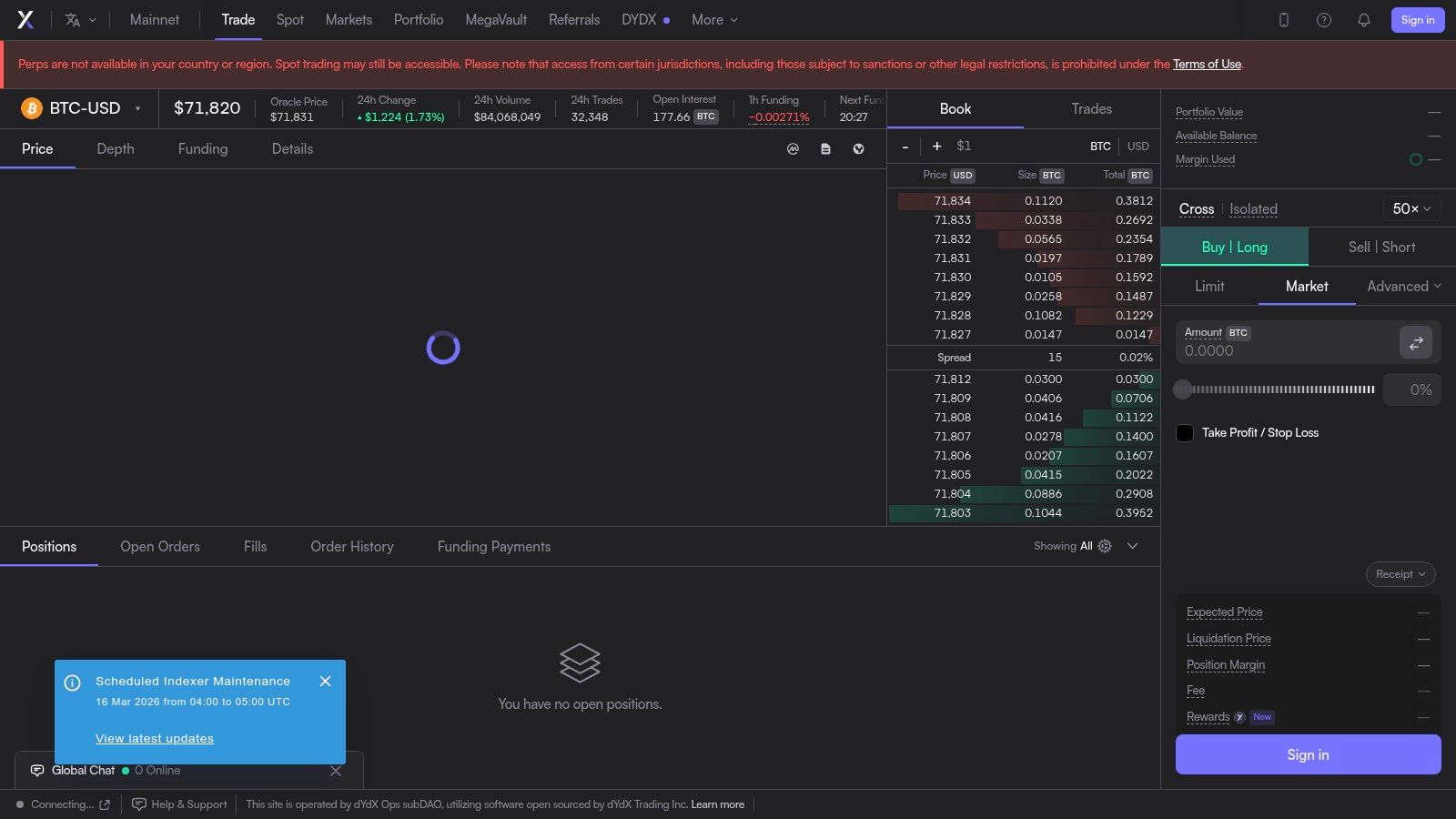
For advanced traders seeking a high-performance environment for derivatives, dYdX offers a specialized platform for perpetual futures trading. Moving beyond the limitations of general-purpose blockchains, dYdX has transitioned to its own Cosmos-based app-chain, the dYdX Chain (v4). This purpose-built architecture supports a fully on-chain order book and matching engine, designed to deliver the speed and efficiency required by professional traders. Its focus on open-source software, transparent governance, and incentives for market depth makes it a standout choice for builders and sophisticated market participants, positioning it as one of the top DeFi projects for on-chain derivatives.
Core Products & Use-Cases
dYdX is fundamentally a trading venue for perpetual contracts, offering a user experience that mirrors centralized exchanges but with the transparency of a decentralized backend. Its products are geared towards performance and capital efficiency for active traders and market makers.
- On-Chain Perpetual Trading: The core product is a decentralized order book for trading perpetual futures. The v4 architecture, built on Cosmos, allows for high throughput and low latency, processing thousands of orders per second without gas fees for placing or canceling orders.
- Staking and Security: The dYdX Chain is secured by validators who stake the DYDX token. Users can delegate their tokens to these validators to help secure the network and earn a share of the trading fees collected by the protocol.
- Tiered Trading Fees: To incentivize high-volume trading and market making, dYdX employs a fee-tier system based on 30-day trading volume. This structure rewards active participants with lower fees, creating a competitive environment for market makers. Note that front-end services are restricted in certain jurisdictions, including the U.S., per its terms of use.
For Your Career: For a quant or trading systems engineering interview, be prepared to discuss the mechanics of an on-chain order book versus an AMM. For a product role, you could be asked to outline a strategy for attracting institutional liquidity to a decentralized derivatives platform, considering the trade-offs of performance, compliance, and decentralization.
Key Metrics & Growth Signals
| Metric | Data |
|---|---|
| Total Value Locked (TVL) | Hundreds of millions, a leading perpetuals-focused DEX. |
| Chains | dYdX Chain (Cosmos SDK). |
| Token | DYDX (Staking & Governance) |
The migration to the v4 chain marked a major strategic shift, enabling full decentralization of the protocol's core infrastructure. The dYdX Trading Inc. team has committed to fully open-sourcing the chain's code and has proposed wind-down plans for the company to pass control entirely to the DAO. This move signals a strong commitment to community ownership and governance, a key differentiator in the perpetuals market.
Hiring & Career Opportunities
The dYdX Foundation and other entities within the ecosystem are often looking for individuals with deep technical and financial expertise. The focus is on building and maintaining a world-class trading system.
- Typical Roles: Protocol Engineer (Cosmos SDK, Golang), Quant Developer, Data Analyst, and Governance Specialist.
- What to Watch: Experience with high-throughput systems, order book mechanics, and Cosmos SDK development is highly prized. Candidates who can demonstrate an understanding of market microstructures and risk management for derivatives will have a significant edge. With the protocol's increasing decentralization, roles in community management and DAO governance are also becoming more critical.
Resources:
- Website: https://dydx.trade
- Careers: Look for opportunities posted by the dYdX Foundation or ecosystem companies.
- Grants: The dYdX Grants Program funds projects that enhance the ecosystem.
7. GMX
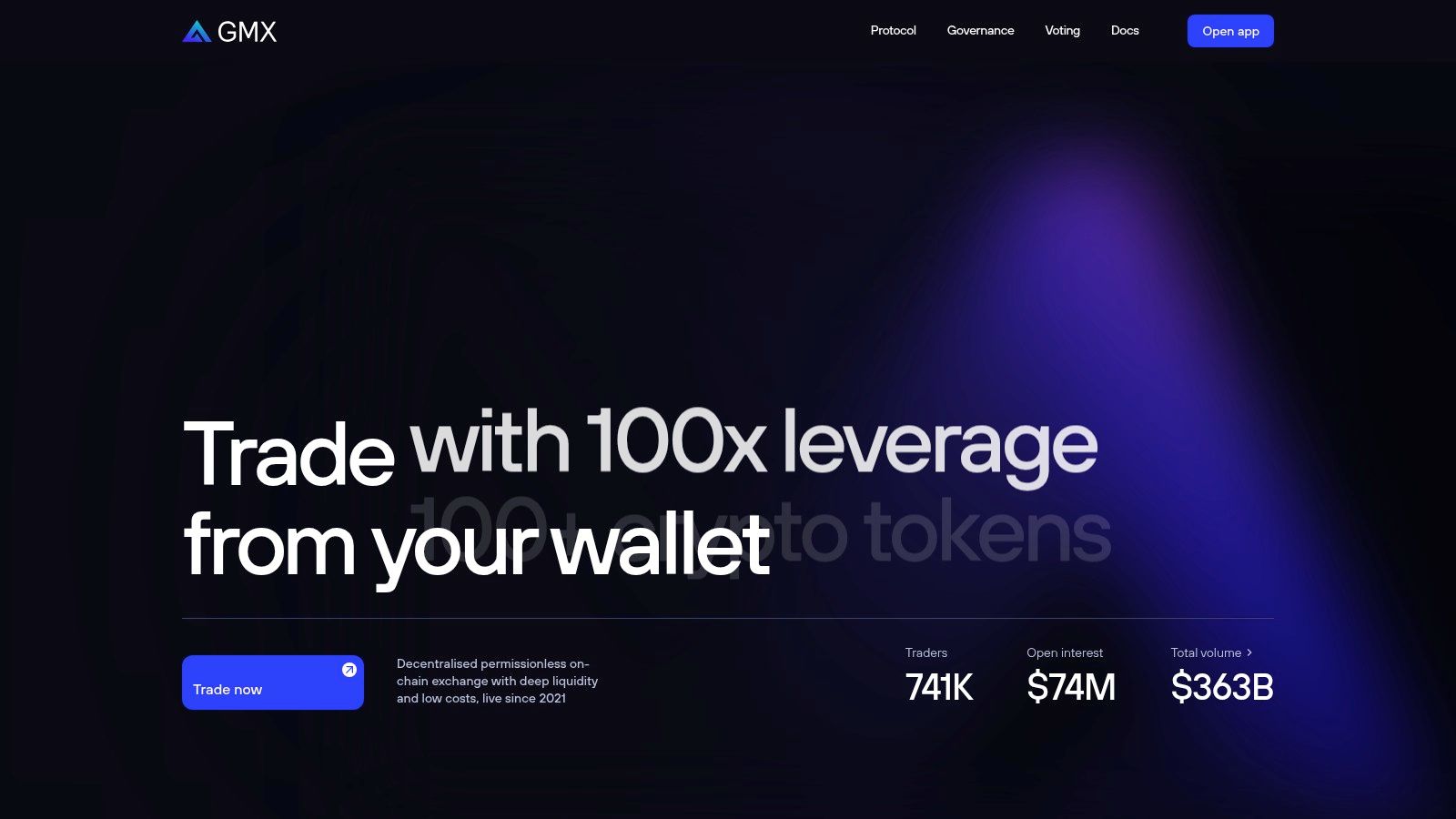
GMX is a prominent decentralized perpetuals and spot exchange, originating on the Arbitrum network. It provides on-chain derivatives trading with low slippage by using oracle-indexed pricing instead of a traditional order book model. This design allows for deterministic execution and high leverage options, making it a favored venue for advanced traders. For liquidity providers, GMX offers a single-asset pool model (GLP on v1, GM on v2) where they earn a share of platform fees from swaps, liquidations, and leverage trading, establishing it as one of the top DeFi projects for derivatives.
Core Products & Use-Cases
GMX's main appeal is its efficient leverage trading experience combined with a unique liquidity mechanism. It serves both active traders and passive liquidity providers through its interconnected product suite.
- Leverage Trading: Users can open long or short positions on major assets like BTC, ETH, and SOL with up to 50x leverage. Trades are executed against a multi-asset liquidity pool, and prices are determined by an aggregate of high-quality price feeds from oracles, minimizing the risk of price manipulation.
- Liquidity Provision (GM Pools): Instead of providing assets in pairs, users deposit single assets (like ETH or USDC) into the GMX Markets (GM) liquidity pools. In return, they receive GM tokens, which represent their share of the pool and accrue fees from all platform activities including swaps, liquidations, and borrowing.
- Developer Tooling: GMX provides robust SDKs and APIs, encouraging integration by other protocols, trading bots, and data platforms. This has fostered a rich ecosystem of third-party tools built on top of the GMX protocol.
For Your Career: For a data analytics interview, be ready to discuss how you would model the risk-reward profile of being a GLP/GM liquidity provider, considering trader PnL, funding rates, and asset price fluctuations. Product managers should be prepared to explain the UI/UX trade-offs of GMX's oracle-based model versus an order book DEX like dYdX.
Key Metrics & Growth Signals
| Metric | Data |
|---|---|
| Total Value Locked (TVL) | Hundreds of millions, a leading perpetuals DEX. |
| Chains | Arbitrum, Avalanche. |
| Token | GMX (Governance & Utility) |
A key element of GMX's model is its fee structure. LPs in the GM pools earn fees from multiple sources, but it's important to understand the risks. If traders are collectively profitable against the pool, the value of the GM tokens can decrease. This dynamic requires a level of expertise from LPs and is a critical area for anyone analyzing the protocol's health. The platform's extensive public data makes it a great subject for those looking to build a portfolio in blockchain data analytics.
Hiring & Career Opportunities
The GMX ecosystem and projects building on it regularly look for skilled contributors. The focus is often on quantitative analysis, risk management, and smart contract security.
- Typical Roles: Quantitative Analyst, Smart Contract Engineer, Risk Manager, and Data Scientist.
- What to Watch: Demonstrating an understanding of derivatives, financial risk modeling, and oracle security is a major plus. For engineers, experience with Solidity and the specific challenges of building on Layer 2 networks like Arbitrum is highly sought. Candidates who can analyze on-chain data to provide insights into trader behavior or pool risk will stand out.
Resources:
- Website: https://gmx.io
- Careers: Opportunities are often posted in the GMX Discord or through ecosystem partners.
- Grants: The GMX Grants Program funds projects that enhance the ecosystem.
Top 7 DeFi Projects — Feature Comparison
| Protocol | 🔄 Implementation complexity | ⚡ Resource & infrastructure | ⭐ Expected outcomes | 📊 Ideal use cases | 💡 Key advantages |
|---|---|---|---|---|---|
| Uniswap | Moderate — AMM basics are simple; v4 hooks and custom pools require dev expertise | Requires deep on-chain liquidity, gas budget (Ethereum) and integration with wallets/APIs | High on-chain swap liquidity and composability; gas-optimized flows on newer versions | Spot swaps, liquidity provision, dApp integrations, multi-hop routing | Largest DEX liquidity, broad tooling and governance |
| Aave | Moderate–High — lending logic, risk parameters, and migrations need careful engineering | Capital for markets, oracle feeds, risk monitoring and parameter governance | Permissionless overcollateralized lending/borrowing with dynamic rates and clear liquidations | Borrowing/lending integrations, credit markets, institutional access | Strong risk stewardship, multi-chain liquidity, audited protocol |
| MakerDAO / Sky Ecosystem | High — stablecoin mechanics, vaults and savings integrations require governance coordination | Collateral management, governance participation, integrations for tokenized savings (ERC‑4626) | Resilient stablecoin issuance and tokenized savings options (DAI/USDS, sUSDS) | Stable collateral, programmatic savings, fintech partnerships | Multi-year resilience, mature governance and savings primitives |
| Lido | Low–Moderate — staking wrapper integration is straightforward; validator coordination is required | Validator/node operator infrastructure, staking reward accounting, risk disclosures | Liquid staking tokens (stETH/wstETH) enabling ETH yield plus DeFi composability | Liquid staking users, collateralization in DeFi, yield strategies | Deepest staked-ETH liquidity, wide protocol integrations |
| Curve Finance | Moderate–High — pool parameter tuning and pool selection are nuanced | Capital-concentrated stable pools, monitoring tooling and audit resources | Very low-slippage stable/pegged-asset swaps and integrated yield opportunities (crvUSD) | Stablecoin swaps, low-slippage large trades, yield aggregation | Optimized stable swaps, veCRV incentives, deep stable liquidity |
| dYdX | High — on-chain order book perps on an app-chain require specialized engineering | High-performance chain infrastructure, matching engine, margin and liquidation systems | High-throughput on-chain perpetuals with tiered fees and on-chain governance | Advanced perpetual traders, market-makers, builders of trading tools | Purpose-built perps chain, advanced matching and governance |
| GMX | Moderate–High — perp mechanics with GLP pools and oracle indexing need careful setup | Oracle feeds, GM/GLP liquidity pools, SDKs/APIs and cross-chain deposit paths | Deterministic oracle-indexed perpetuals and LP fee income across trading activities | Perpetual traders, LPs seeking multi-source fees, programmatic integrations | Oracle-indexed execution, developer-friendly SDKs and multichain deposits |
From Prospect to Professional: Your Next Steps in DeFi
Understanding the architecture and ambitions of the projects detailed in this guide, from Uniswap to GMX, is your foundational step. We've explored the core products, metrics, and growth signals of the established leaders and determined challengers shaping decentralized finance. The consistent theme across all these top DeFi projects is a relentless push for capital efficiency, user accessibility, and decentralized governance.
For professionals aiming to build a career in this space, this knowledge is your entry point. It's not enough to simply know what Aave does; you must understand why its liquidity model is successful and what technical or product challenges it faces next. This deeper comprehension transforms you from a passive observer into a potential contributor.
Translating Knowledge into Actionable Career Steps
Your journey from prospect to professional is paved with proactive, demonstrable actions. Reading documentation is standard; contributing to it is exceptional. Watching a governance vote is passive; participating in the forum discussion that precedes it shows genuine engagement.
Here’s how you can tactically approach your job search, using the information from this article as your guide:
- Targeted Technical Contributions: For engineers, the path is clear. Identify a project that resonates with your technical skills, whether it's the EVM-based solidity work at Curve or the Cosmos SDK development for dYdX. Find a "good first issue" on their public GitHub, solve a minor bug, or improve a piece of documentation. These small, public contributions are powerful portfolio pieces that hiring managers actively look for.
- Strategic Non-Technical Engagement: For roles in product, marketing, or community, your "proof-of-work" looks different. Choose a project like MakerDAO and immerse yourself in its governance forums. Write a thoughtful proposal, create an analysis of a competitor, or produce content that explains a complex feature to a non-technical audience. This demonstrates your strategic thinking and commitment.
- Build a Niche Project: The best way to learn is by doing. Use the Uniswap v4 hooks framework, build a simple front-end for a GMX vault, or create a dashboard that tracks Lido staking rewards. This not only sharpens your skills but also creates a tangible asset to discuss during interviews, showing initiative far beyond a resume.
Selecting Your Target and Preparing for Impact
Choosing the right project is about aligning your personal skills and career goals with a protocol's needs. If you are passionate about institutional adoption and real-world assets, MakerDAO's "Endgame" plan presents immense opportunities. If you are driven by the fast-paced world of perpetuals and derivatives, dYdX or GMX should be your focus.
Key Insight for Interviews: When interviewing with any of these top DeFi projects, don't just talk about their past successes. Discuss their future. Mention a specific governance proposal, a potential risk to their model, or a new feature you believe they should build. This shows you are not just looking for a job; you are looking to make an impact.
The demand for qualified, engaged talent in DeFi has never been higher. These protocols are not just building financial tools; they are building new economic systems. They need engineers, designers, communicators, and strategists who are deeply invested in the mission. By taking these deliberate, focused steps, you position yourself as a valuable and indispensable part of that future. Your active participation is the most compelling item on your resume.
Ready to turn your knowledge into an opportunity? Blockchain Jobs curates roles directly from the top DeFi projects mentioned in this article and hundreds more. Stop sifting through noise on generic job boards and find your place in the decentralized economy by exploring openings at Blockchain Jobs.