7 Backend Engineer Remote Job Sources for Web3
You've found plenty of listings for a backend engineer remote role, but the search still isn't simple. A job can mention APIs and distributed systems while offering little blockchain relevance, awkward time-zone expectations, unclear compensation, or an interview process that doesn't test the skills you'll use on the job. You need to assess the employer as carefully as the codebase.
This roundup compares seven job sources by practical hiring value: discoverability, signal quality, application efficiency, remote fit, and career progression. Start with Blockchain Jobs when you want direct access to blockchain, DeFi, NFT, infrastructure, and adjacent Web3 roles. Broader platforms can widen your options when geography, contract type, or startup access matters. For another route into the market, you can also browse 2025 software engineer openings.
Treat every salary range as a listing-level claim. The platforms below disclose compensation unevenly, so verify base pay, equity, contract terms, location rules, and benefits with each employer.
1. Blockchain Jobs
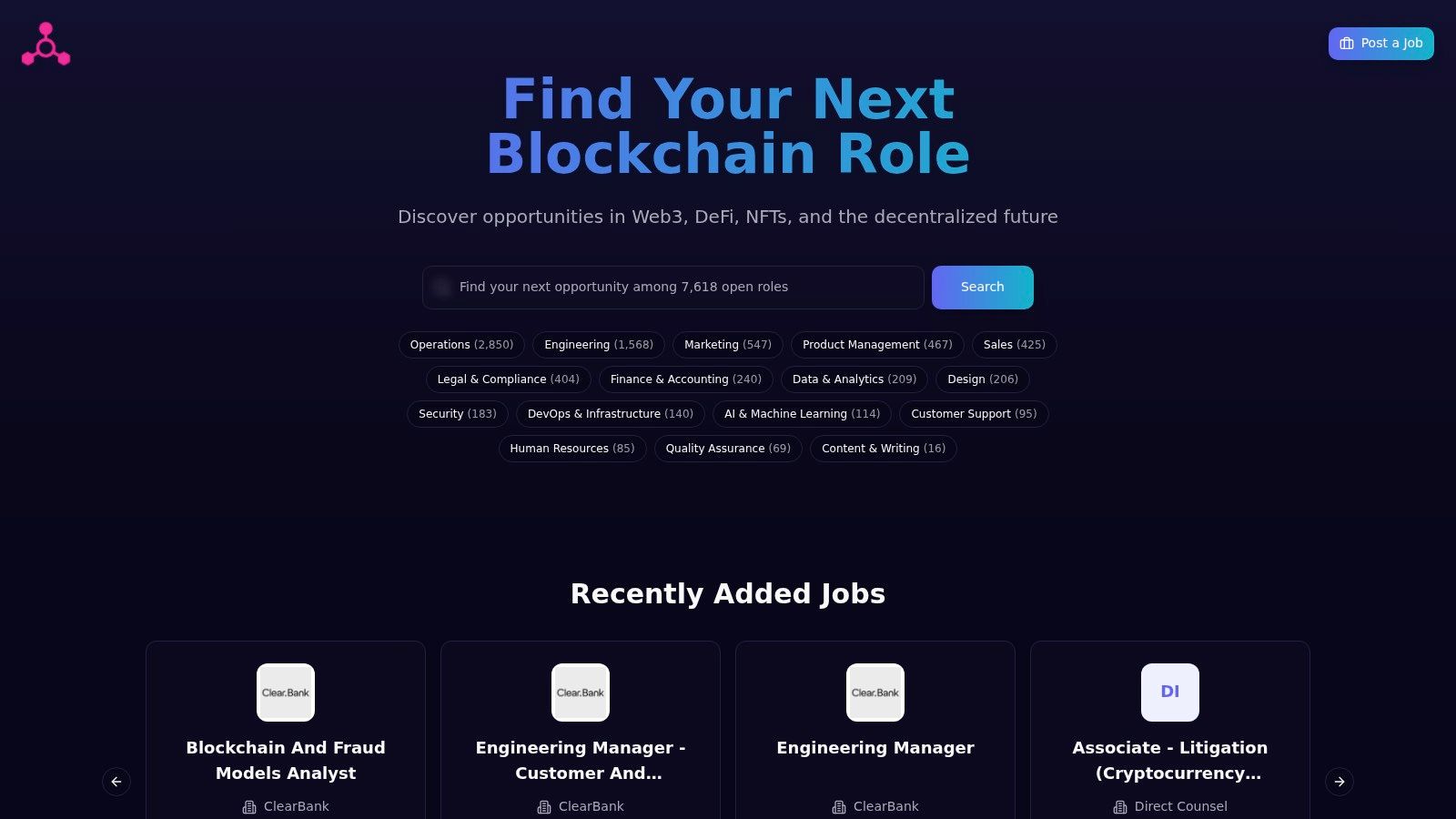
Blockchain Jobs is the strongest first stop for a backend engineer who wants Web3 relevance rather than a generic software search. Its listings are organized around the blockchain ecosystem, with categories spanning Engineering, Product, Design, Marketing, Legal & Compliance, Finance, DevOps, Security, AI and Machine Learning, Customer Support, and more. That structure cuts down the time you'd otherwise spend filtering conventional backend roles that have no connection to protocols, wallets, decentralized applications, or crypto infrastructure.
The Recently Added Jobs feed is especially useful for an active search. Current examples include Backend Engineer II at Tala, Content Editor at Mode Mobile, Senior Marketing and Community Manager at Doublezero, Product Manager at Prometheum, and Associate General Counsel at Uniswap Labs. Employers such as JumpCloud, Windranger, Everclear Foundation, and Luxor Tech also appear on the board. Those listings give candidates a practical way to compare technical scope, company maturity, and the kinds of backend systems Web3 employers are hiring to build.
Use specialization to improve interview preparation
Search by engineering category first, then read the entire posting for evidence of the system behind the title. A backend role might involve API design, data pipelines, smart-contract integrations, node infrastructure, payments, security, or reliability. Prepare stories that connect your experience to those outcomes instead of presenting a generic list of languages.
Practical rule: Apply when you can explain the product's blockchain dependency, the backend's operational risks, and the trade-offs you'd investigate during your first weeks.
Blockchain Jobs also serves employers through Post a Job, a Dashboard, and a Pricing page. The main listing content doesn't establish posting costs, so hiring teams should confirm fees directly before publishing. For candidates, the focused audience is an advantage, but popular roles may attract strong crypto-native competition. Use the board to find relevant openings quickly, then strengthen your application with architecture evidence, production ownership, and clear remote collaboration habits.
2. Hired
Hired changes the usual application dynamic. Instead of sending the same résumé into a large queue, you build a structured profile covering skills, experience, location preferences, remote preferences, and desired pay. Employers then send interview requests that include a bid salary range, giving you an early compensation signal before you commit to the process.
That makes Hired particularly useful for a backend engineer comparing opportunities in a crowded market. You can quickly identify whether an employer's initial offer fits your target and reserve interview preparation for roles with a credible compensation case. The platform's focus on software engineering also keeps the search closer to your technical background than a broad general-purpose job board would.
Treat the bid as an opening position
A bid salary range is useful, but it isn't a binding offer. The final package can change after technical interviews, scope discussions, location review, and seniority calibration. Ask whether the range represents base salary only, whether equity or bonuses sit outside it, and whether the employer uses location-adjusted compensation.
Use your profile to signal the work that matters in remote blockchain hiring:
- Backend ownership: Show services you designed, operated, or improved in production.
- Distributed-systems judgment: Explain consistency, retries, queues, observability, and failure recovery.
- Web3 relevance: Name protocol integrations, custody systems, transaction processing, indexing, or security-sensitive work where applicable.
- Remote execution: Describe how you document decisions, coordinate asynchronously, and handle reviews across time zones.
For a focused example of a backend opportunity, review this backend engineer new grad listing. Even when Hired provides the better compensation signal, a specialized board can reveal the vocabulary and technical themes crypto employers use in their postings. Combine both sources rather than relying on employer outreach alone.

3. Wellfound
Wellfound is the right choice when you want startup access with more offer detail than a typical job board provides. Its remote-only filter works alongside role and stack filters, helping you target backend openings by technical fit rather than searching every startup role at once. The platform also supports a single profile and direct messaging with founders or hiring teams, which can shorten the distance between your application and the person defining the role.
Compensation and equity disclosures are central to the platform's value. Listings need compensation information to appear in relevant filtered searches, and Wellfound publishes role-specific compensation data, including information for remote backend roles. That helps you compare a startup offer's cash component with its equity rather than treating a vague “competitive package” as sufficient information.
Investigate the company behind the range
Startup transparency doesn't remove startup risk. A backend engineer should ask who owns the codebase, how the company funds infrastructure, whether the team has production customers, and how the role changes as the company grows. Equity requires even more diligence. Clarify the instrument, vesting terms, exercise rules, dilution language, and what happens if the company changes direction.
Use the interview to test whether the team understands remote engineering as an operating model. Ask how design decisions are documented, how incidents are handled, how much overlap the team expects, and who can approve a production change without waiting for another time zone. A startup that advertises remote work but depends on constant synchronous access may create unnecessary friction.
Wellfound works best for candidates who want direct access to founders and are willing to evaluate business risk alongside technical scope. Shortlist roles where the backend problem is specific, the compensation breakdown is readable, and the hiring team can explain what success looks like beyond shipping the first version.
4. We Work Remotely
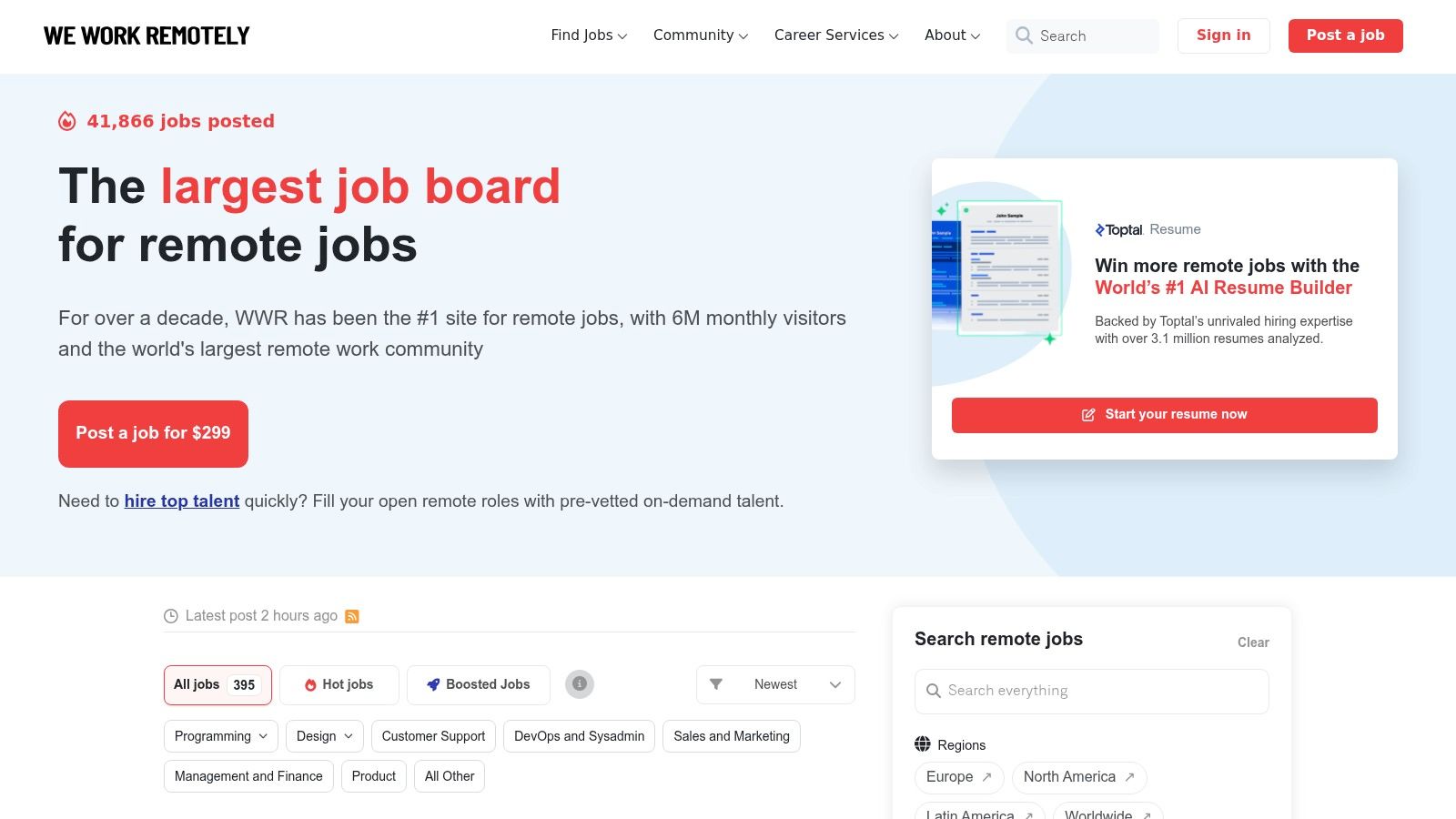
We Work Remotely is useful when remote status is your first filter. Its dedicated Back-End Programming category keeps the search centered on backend roles, while labels for time zones, contract work, and full-time employment help you remove obvious mismatches before applying. That matters because “remote” can mean anywhere in the world, a specific region, or a narrow overlap window.
The board includes roles from startups and established companies, so it can expand your search beyond crypto-native employers. A conventional infrastructure, payments, data, or security role may still strengthen your path into blockchain if it gives you ownership of high-throughput services, reliability, distributed data, or financial workflows. Read the technical responsibilities rather than rejecting a role solely because the company doesn't use Web3 language.
Screen for actual remote compatibility
Paid employer posts can reduce low-quality spam, but they don't make every listing a strong match. Check the employment location, required work authorization, expected overlap, travel obligations, and whether the role is remote or remote within a defined region. A posting that says “remote” without explaining those conditions deserves a direct question before you spend time on an assessment.
Use the listing to prepare targeted interview questions:
- Operational scope: Who owns deployments, alerts, incident response, and rollback decisions?
- Technical environment: Which languages, databases, queues, cloud systems, and observability tools support the service?
- Collaboration model: Does the team rely on written design reviews or frequent live meetings?
- Career path: Can the role grow toward architecture, platform ownership, or technical leadership?
We Work Remotely can include duplicates that appear elsewhere, so don't treat repeated exposure as independent validation. Compare the original employer page, inspect the company's engineering footprint, and confirm the compensation structure before moving forward.
5. Remote OK
Remote OK suits engineers who want a large, frequently updated search with detailed filtering. Tags can cover the role, stack, time-zone fit, and salary, while a Verified label connects a post with a company domain. For backend candidates, filtering around technologies such as Python, Go, or Node can reduce irrelevant results and surface roles that match the systems you can discuss confidently.
Volume creates both value and work. You'll find more possibilities, but you'll also need a stricter process for identifying duplicate, outdated, vague, or poorly scoped listings. Salary prompts and notes about legal requirements in U.S. states can improve the information available in a posting, but you still need to verify whether the displayed amount is base pay, total compensation, or a location-adjusted band.
Build a fast rejection system
Reject a listing early if it hides the employer, avoids explaining the backend problem, or gives no credible indication of location eligibility. Keep a role when it identifies the product, stack, team responsibilities, and interview contact, even if it requires a compensation conversation.
For remote blockchain searches, use remote engineering roles on Blockchain Jobs as a specialization check after scanning broader results. If a Remote OK role mentions custody, payments, ledgers, indexing, identity, or distributed infrastructure, compare its technical scope with Web3 postings rather than assuming the title tells you enough.
A strong application answers the hiring team's question before the interview begins: “Can this person own the backend system we need, from design through reliable operation?”
Remote OK is best for candidates who can manage a high-volume funnel. Save only roles that pass your filters, tailor the top applications, and track employer responses. If the platform's interface or filters behave inconsistently, use the listing's own tags and the employer's career page as your final source of truth.
6. Y Combinator Work at a Startup
Y Combinator's Work at a Startup is designed for candidates who want venture-backed startup access without creating a separate search process for every company. You build one profile and can apply across the YC network, while listings often provide startup context such as the batch or stage. That context helps a backend engineer judge whether a role calls for rapid product delivery, platform scale, data infrastructure, or early technical ownership.
The platform is a strong fit for engineers targeting work in infrastructure, data, fintech, AI, and related technical areas. Those roles can also lead toward blockchain later, particularly when they involve distributed systems, financial transaction flows, cryptography-adjacent infrastructure, or high-integrity data.
Evaluate risk before accepting technical excitement
Startup context is useful, but it isn't a substitute for diligence. Ask about runway, revenue, hiring plans, engineering headcount, current customers, and the reason the role is open. A compelling backend challenge can still become a poor career move if the company lacks a clear product or expects one engineer to carry an entire platform without support.
Compensation and equity vary substantially between startups, so compare the complete package. Ask for the base salary, equity terms, benefits, contract structure, location rules, and review process in writing. If the company hires across borders, clarify who employs you, who handles payroll, and how intellectual-property assignment works.
Use the single profile to maintain a consistent core narrative, then customize each application around the startup's actual stage. Early teams want evidence that you can make sound decisions with incomplete information. More established startups may focus on scale, service ownership, reliability, and how you help other engineers work effectively.
7. Arc.dev
Arc.dev takes a developer-first approach to remote hiring. Its backend and stack categories are built around engineering roles, and candidates can pursue an optional vetted status through communication and technical assessments. Employers also receive sourcing and hiring tools designed to increase candidate exposure and shorten the path to interviews.
That screening can improve the quality of the signal attached to your profile. A hiring team doesn't have to infer everything from a résumé when your technical reasoning and communication have already been assessed. Arc supports both full-time and contract placements, with an emphasis on developers who can work in U.S.-friendly time zones.
Turn vetting into interview evidence
Vetted status can help experienced engineers stand out, but it isn't a guarantee of a job. The process may favor engineers with substantial experience and strong English communication, which can make early-career candidates less visible. If you're newer to the field, compensate with a concise portfolio, readable repositories, clear technical writing, and projects that demonstrate end-to-end ownership.
Prepare for assessment work by practicing out loud. Explain why you chose a database, how you'd handle retries, what happens during a partial failure, and how you'd monitor the service after deployment. For blockchain teams, add transaction integrity, key-management boundaries, chain reorganization concerns, and integration failure modes when they fit the role.
Interview signal: Remote teams hire more confidently when you explain your reasoning, surface uncertainty early, and leave behind documentation another engineer can use.
Arc is particularly useful when you're open to contract work as well as employment. Confirm the engagement type, payment schedule, tax responsibilities, intellectual-property terms, expected availability, and conversion possibilities before accepting. For a wider engineering search with direct Web3 relevance, use the Blockchain Jobs engineering category alongside Arc rather than treating either platform as complete on its own.
Top 7 Remote Backend Engineer Job Boards Comparison
| Item | 🔄 Setup / Complexity | ⚡ Resource Requirements | ⭐📊 Expected Outcomes | 💡 Ideal Use Cases | ⭐ Key Advantages |
|---|---|---|---|---|---|
| Blockchain Jobs | Low, simple posting/apply flow 🔄 | Moderate, paid employer tools, account for pricing details ⚡ | High relevance for Web3 roles; concentrated applicant pool ⭐⭐⭐⭐📊 | Hiring or searching exclusively for blockchain/Web3 roles 💡 | Niche specialization; curated, recent listings; employer tools ⭐ |
| Hired | Medium, structured profiles and employer bids 🔄 | Moderate, employers pay to access candidates; candidates build detailed profiles ⚡ | High-quality matches for core engineers; faster employer-initiated outreach ⭐⭐⭐⭐📊 | Backend engineers wanting transparent pay signals and proactive outreach 💡 | Upfront bid salaries; curated marketplace; strong engineering focus ⭐ |
| Wellfound (AngelList) | Low–Medium, standard profile + filters 🔄 | Low, free candidate access; employers pay for listings ⚡ | High transparency on salary/equity; many startup matches ⭐⭐⭐⭐📊 | Engineers targeting US startups with disclosed compensation 💡 | Compensation/equity disclosure; strong startup inventory ⭐ |
| We Work Remotely | Low, straightforward remote-only board 🔄 | Low, free for jobseekers; paid employer posts ⚡ | Moderate, consistent volume of remote engineering roles; potential duplicates ⭐⭐⭐📊 | Finding fully remote backend roles across time zones 💡 | Remote-only focus; long-established board with steady listings ⭐ |
| Remote OK | Low, tag-based search and filters 🔄 | Low, candidate free; employers pay to post ⚡ | Moderate–High, large inventory with verification to reduce risk ⭐⭐⭐📊 | Active searches needing stack/timezone filters and verified employers 💡 | Robust tagging, verified-domain badge, frequent updates ⭐ |
| Y Combinator, Work at a Startup | Medium, single profile applies to many startups 🔄 | Low, candidate-facing is free; profile prep required ⚡ | High access to vetted YC startups; outcomes vary by company stage ⭐⭐⭐⭐📊 | Engineers targeting YC-backed, venture-backed startups 💡 | One-profile apply; startup context (batch/stage) visible ⭐ |
| Arc.dev | Medium, optional vetted track and assessments 🔄 | Low–Moderate, free to use; time investment for vetting ⚡ | High for vetted developers; lower visibility for early-career candidates ⭐⭐⭐⭐📊 | Developer-focused remote backend roles, US-friendly time zones 💡 | Developer-centric experience; vetted status boosts visibility ⭐ |
Turn Listings Into a Stronger Web3 Career
Start with Blockchain Jobs when blockchain relevance is essential. Its category structure and fresh listings help you find protocol, infrastructure, DeFi, NFT, security, and adjacent roles without sorting through a general technology feed. Expand to Hired when you want employer-initiated outreach and an early salary signal, Wellfound when startup compensation and equity visibility matter, and We Work Remotely or Remote OK when remote status and broader technical coverage are the priority.
Use Y Combinator's Work at a Startup for concentrated access to venture-backed companies, then use Arc.dev when a developer-focused vetting path can strengthen your profile. Don't apply everywhere. Maintain a shortlist scored against blockchain relevance, remote expectations, time-zone compatibility, disclosed compensation, employer credibility, and technical ownership.
Your application should make backend outcomes easy to verify. Replace a generic technology list with evidence of services shipped, databases operated, latency or reliability problems investigated, integrations maintained, and production incidents handled. If you've worked with blockchain systems, explain what the chain added to the architecture and which responsibilities remained in the backend. If you haven't, show adjacent experience with payments, distributed data, event processing, security, or infrastructure.
Prepare for remote interviews as a working session, not a quiz. Test screen sharing, use a readable editor, close private tabs and notifications, and practice explaining your code while you write it. Be ready to discuss architecture decisions, reliability trade-offs, observability, deployment safety, and asynchronous collaboration. Remote teams need to see how you think when nobody is sitting beside you.
Compensation deserves its own diligence. Remote developer work is now mainstream, with 32.4% of developers working fully remote globally in 2025, while 45% of U.S. developers worked fully remote, according to the 2025 Stack Overflow survey coverage. A 2026 analysis of U.S. backend postings found 56,311 unique openings over 90 days, with 39% offering remote or hybrid work and 22% fully remote; a broader dataset recorded 202,254 unique backend postings over 90 days, with 42% offering some flexible location and 24% fully remote. Review the remote software engineering market analysis for that context, but verify every offer directly.
Salary bands vary by level and source. One 2026 aggregation of 62 employers placed the U.S. backend median at $162,000, with most roles between $140,000 and $190,000, and staff roles around $212,000 median, as reported by Interview Hack's backend salary data. Another guide lists junior roles at $60,000 to $95,000, mid-level roles at $95,000 to $145,000, senior roles at $140,000 to $220,000, and staff or principal roles at $200,000 to $300,000 or more, with experience bands from 0 to 2, 3 to 5, 5 to 8, and 8 or more years, respectively, in the RemoteStack salary guide. These figures are reference points, not guarantees. Ask about location adjustments, employment type, equity, benefits, taxes, and contract protections.
Finally, treat every application and interview as progression data. Improve the profile when employers repeatedly ask for the same missing evidence. Strengthen architecture stories when technical rounds expose gaps. Target roles with more ownership as your scope grows, because remote backend careers advance through the ability to design, operate, communicate, and lead, not through titles alone.
Blockchain Jobs gives backend engineers a focused way to find fresh Web3 roles across blockchain, DeFi, NFTs, infrastructure, security, and related categories, including remote-friendly opportunities. Visit Blockchain Jobs to search specialized openings, compare technical scope, and move from a broad remote search to a stronger crypto career shortlist.