The 10 Best Wallet on Chain Picks for Web3 Careers 2026

You're probably in one of two spots right now. Either you're using whatever wallet got you through your first swap and NFT mint, or you're far enough into Web3 that wallet choice is starting to hurt your workflow. Failed simulations, awkward multisig approvals, poor mobile signing, bad network handling, and messy portfolio visibility all become real bottlenecks once you move from casual usage into building, auditing, ops, or product work.
That's why the best wallet on chain isn't just a convenience pick. It's a skills decision. The wallet you use shapes how you learn account abstraction, transaction simulation, treasury controls, mobile UX, passkey onboarding, chain-specific asset handling, and how dApps connect in production. Those are hiring signals now, not side trivia.
That matters even more because blockchain hiring got bigger and tougher at the same time. Global blockchain hiring rose by about 47% year over year in 2025, reaching roughly 66,500 active roles worldwide, but employers became more selective about autonomy and decision quality according to this 2025 blockchain hiring analysis. If you want better interviews, better projects, and better compensation, wallet fluency is a practical advantage.
1. MetaMask
If you build on EVM chains, MetaMask is still the baseline. It's the wallet most junior developers start with, but it's also the wallet senior engineers keep around because dApp compatibility matters more than taste. When something breaks in production, teams usually test against MetaMask first.
That dominance isn't abstract. MetaMask has 143 million users in 2025, making it the most widely adopted on-chain wallet for DeFi and NFT interactions according to CoinLaw's wallet adoption data. For career growth, that means knowing MetaMask isn't optional if you're interviewing for EVM product, frontend, protocol, or growth roles.
Where it helps your career
MetaMask is strong because it covers the boring realities of Web3 work. You get wallet connection patterns, transaction prompts, extension behavior, portfolio visibility across EVM networks, and staking flows that mirror what users touch.
The developer side matters too. Snaps, Connect, Embedded Wallets, and Smart Accounts Kit expose you to extensibility patterns that show up in hiring loops for wallet, infrastructure, and consumer crypto products.
- Best fit: EVM builders, QA testers, protocol PMs, and frontend engineers who need broad dApp compatibility.
- Career signal: You understand wallet injection, signing UX, chain switching, and user-facing transaction flows.
- Main trade-off: It can feel heavy. Power users often bypass in-app swap routes and go straight to DEXs.
A practical shortcut is to learn both the default wallet flow and the edge cases. Know what happens when multiple wallets are installed, when a chain isn't configured, and when a token appears in the UI but not in the user's mental model of risk.
For adjacent tooling, it's also worth skimming this guide to MetaMask-enabled crypto cards because card rails and wallet UX are starting to converge in consumer crypto products.
2. Coinbase Wallet + Coinbase Smart Wallet
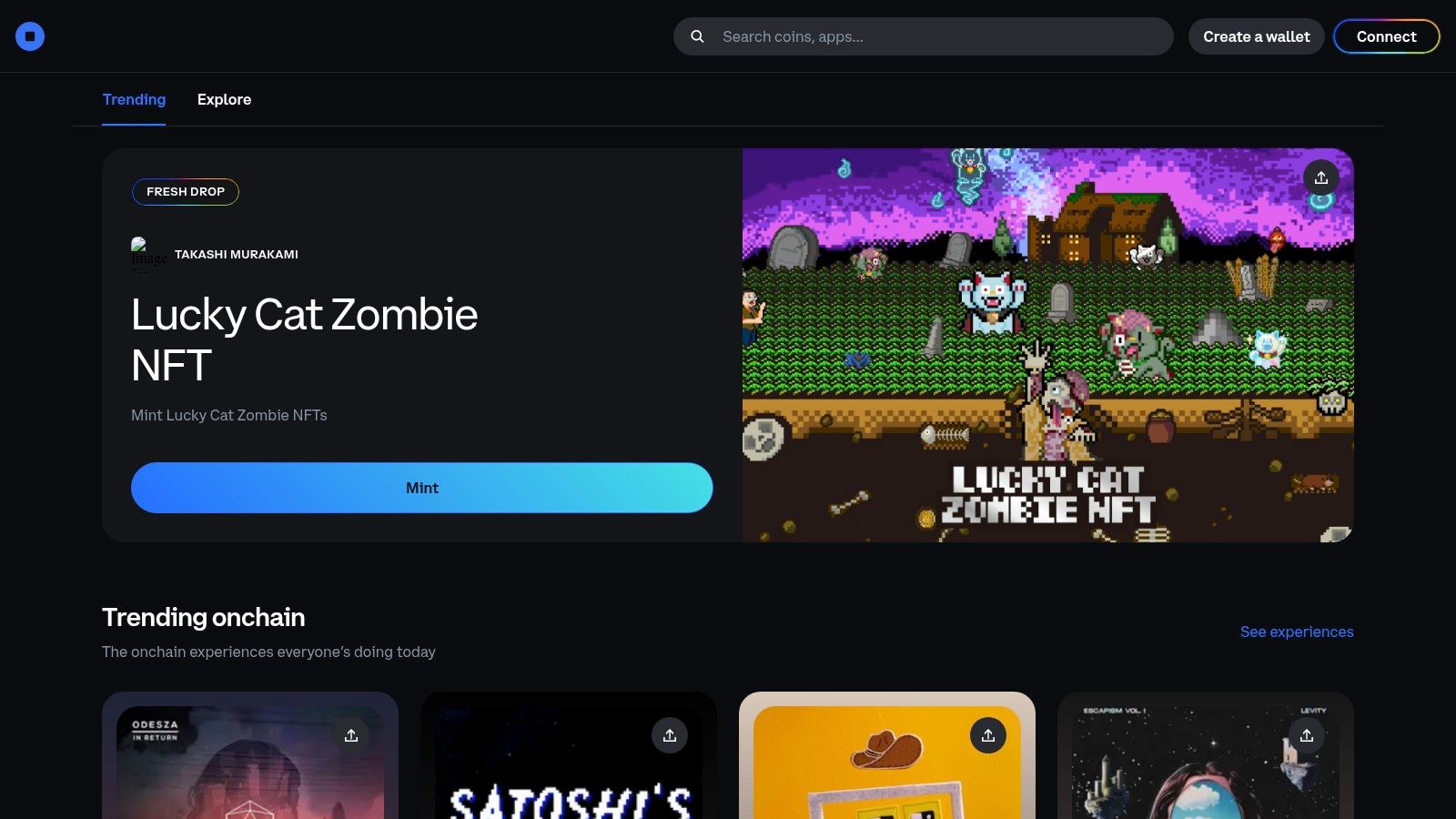
Coinbase Wallet is the wallet I point people to when they need self-custody without a steep onboarding cliff. The passkey-based Smart Wallet flow is especially useful if you care about product design, activation, and reducing user drop-off before first transaction.
That makes it more than a consumer wallet. It's a good lens into where onboarding is heading for mainstream Web3 apps. If you work in product, growth, or frontend engineering, you should understand why removing extension installs changes conversion and support burden, even if you describe that impact qualitatively.
What it teaches well
Coinbase Wallet and Smart Wallet are useful for studying account setup abstraction, unified portfolio views, and multichain trading across Ethereum, Solana, Base, and other EVM L2s. Those are core patterns in modern wallet product work.
Smooth onboarding is a technical feature. Teams that ignore that usually end up pushing complexity into support, recovery, and failed transaction handling.
This wallet is a strong fit if you're building for users who aren't already crypto-native. The trade-off is that some of its newer smart account experiences are still maturing, and power users often end up pairing it with third-party analytics, bridge tools, or deeper DeFi interfaces.
Use Coinbase Wallet if your work sits near consumer apps, embedded wallets, onboarding funnels, or Base-heavy ecosystems. For interview prep, be ready to explain the difference between self-custody convenience and operational control. Those aren't the same thing.
Visit the Coinbase Wallet website.
3. Safe
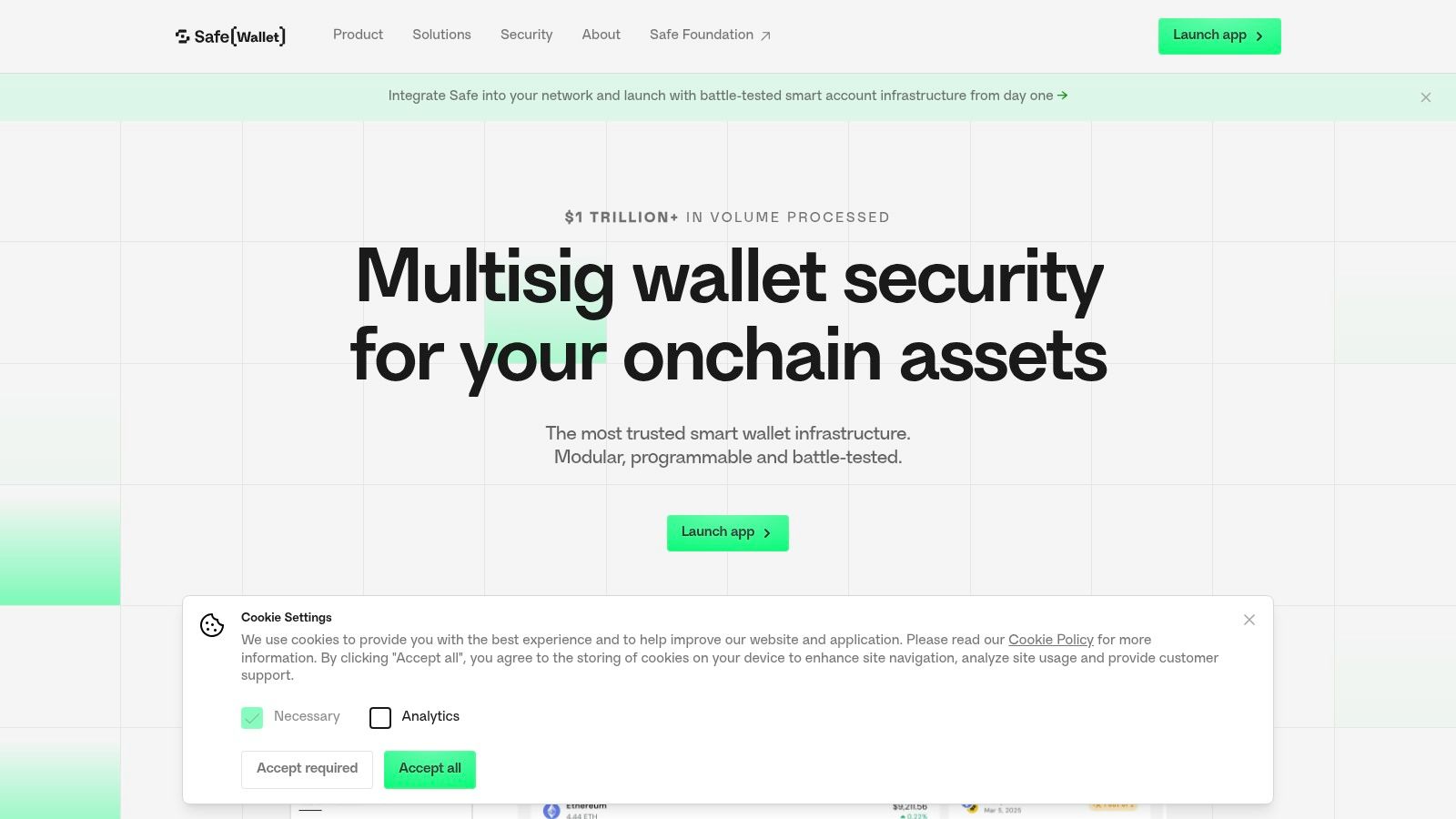
Safe is the answer when “best wallet on chain” really means treasury security, team controls, or operational rigor. Single-signature wallets are fine for testing and small balances. They're not how serious teams should manage protocol funds, grants, payroll, or recovery paths.
If you want security, protocol ops, or DAO infrastructure roles, Safe is one of the highest-value tools to learn. Multisig ownership, policy design, modules, guards, and role separation all map directly to real production responsibilities.
Why hiring managers care about Safe experience
Technical roles now make up over 50% of crypto jobs in 2025, and exchanges, public blockchain infrastructure, and DeFi protocols absorb about 70% of the workforce according to Gate Research's 2025 crypto employment market report. Safe sits right inside those worlds because treasury management and operational controls are not edge cases there. They're daily work.
If you can explain how a Safe setup should differ for a DAO treasury versus a startup ops wallet, you already sound more senior than most candidates.
- Best fit: DAOs, protocol teams, finance ops, security engineers, and founders.
- What it teaches: Account abstraction in practice, signer policy design, operational security, approval workflows.
- Main drawback: More setup, more gas, more ceremony. Small teams often underestimate the overhead.
Practical rule: If a team controls meaningful assets and still uses a single hot wallet for treasury actions, that's a process failure, not just a tooling choice.
If this is your lane, look at roles like this Senior Security Engineer in digital asset custody. Safe experience won't replace security depth, but it does prove you understand how custody controls work in practice.
Use the Safe website to explore modules, guards, and treasury flows.
4. Rabby Wallet
Rabby is what I recommend when someone already knows MetaMask and wants fewer avoidable mistakes in DeFi. It's developer-first in the right ways. Auto-network detection removes friction. Pre-sign simulation and approval management reduce common errors. Hardware wallet support is solid.
That combination makes Rabby one of the best wallets on chain for learning how advanced users evaluate risk before signing. If you're interviewing for DeFi, wallet, or security-adjacent roles, that matters.
What works and what doesn't
Rabby is better than many mainstream wallets at surfacing transaction risk in context. That's practical, not cosmetic. Junior developers often focus on whether a transaction can execute. Better engineers ask what permissions it grants, what contracts it touches, and how users can revoke exposure later.
Its EIP-6963 multi-wallet support is also useful if you work on frontend wallet interoperability. That's a real implementation detail teams run into once users have multiple extensions installed.
- Best fit: DeFi traders, auditors, frontend engineers, and power users on EVM chains.
- Strongest feature: Transaction simulation before signing.
- Limitation: It's still more browser and desktop oriented than some mobile-first competitors, and it doesn't aim for broad non-EVM coverage.
Rabby is the wallet that teaches caution without making every action feel slow. That's a good product lesson. Strong UX doesn't mean hiding risk. It means exposing it at the right time.
Try the Rabby Wallet site.
5. Phantom
Phantom started as a Solana wallet, and that heritage still shows in the best way. Signing feels fast, NFT handling is polished, and the mobile and extension UX are cleaner than many wallets that expanded too quickly. It now reaches across Solana, Ethereum, Base, Sui, and more, which makes it useful if your work crosses ecosystems.
For career progression, Phantom is worth learning if you're even slightly Solana-curious. Too many EVM-native developers stay blind to what good wallet performance and cleaner consumer UX look like outside their stack.
The real trade-off
Phantom is strong for cross-chain swaps and bridging in-app, but abstractions can hide important mechanics. That becomes risky once you deal with stablecoins, custody assumptions, and native versus bridged asset behavior.
A major weak spot in many wallet comparisons is USDC handling. Circle is sunsetting bridged USDC on most chains by 2026, and a lot of wallet advice still ignores native versus bridged compatibility according to this custody and multi-chain USDC comparison. If you use Phantom or any cross-chain wallet, you need to know what version of an asset the user holds on each chain.
Native versus bridged USDC isn't trivia. It affects security assumptions, protocol compatibility, and yield access.
Phantom is a great wallet for product people, Solana builders, NFT teams, and anyone studying smoother signing flows. It's less compelling if your work depends on deep EVM developer controls or advanced transaction tooling.
Start with the Phantom website.
6. Rainbow
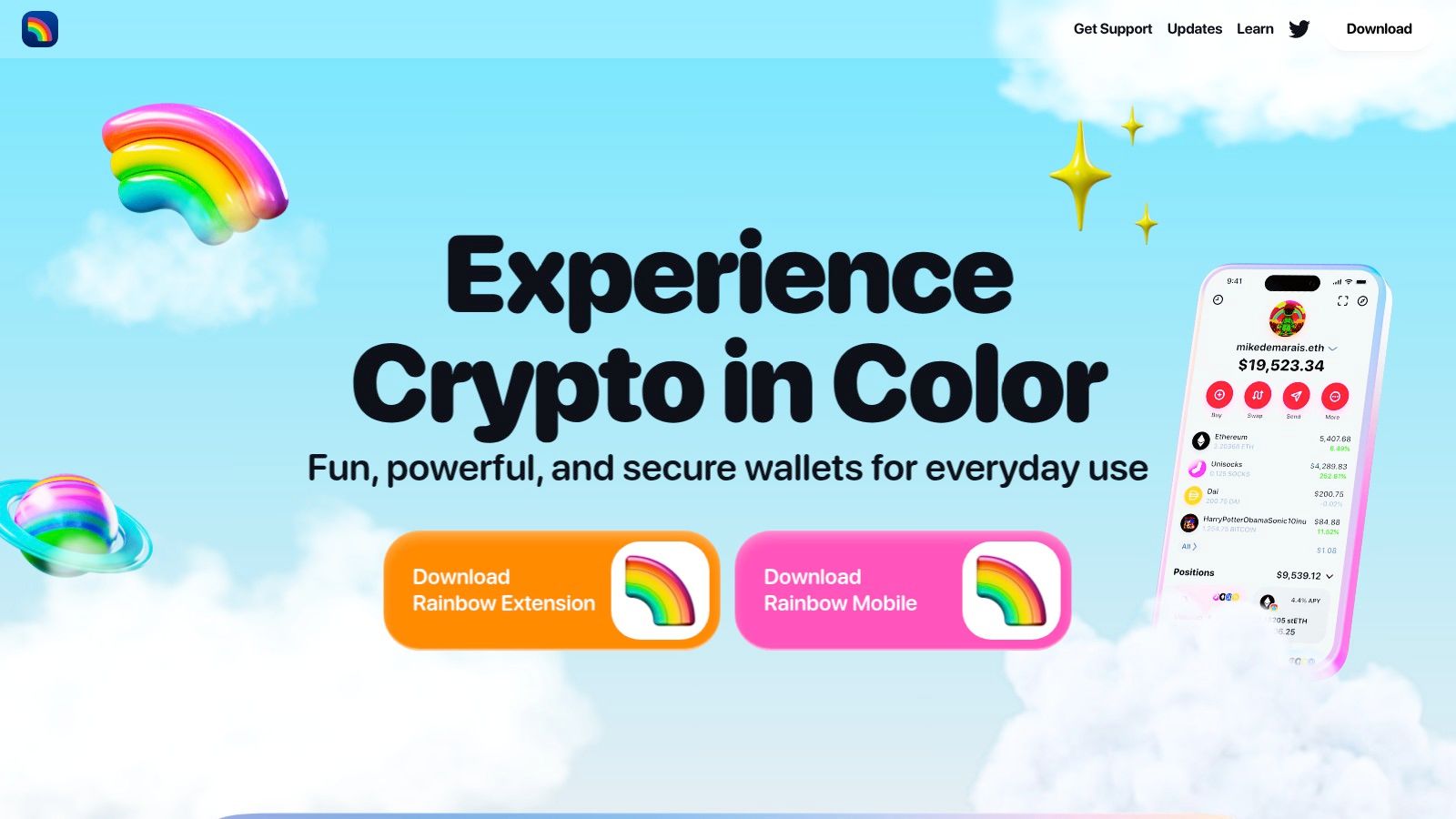
Rainbow is one of the clearest examples of product taste in wallet design. It's approachable without feeling toy-like, and that's harder than it looks. If you work in UX, consumer growth, or product management, Rainbow is worth studying because it makes intimidating actions feel understandable.
Its strongest value isn't raw power. It's clarity. Portfolio views, NFT presentation, onboarding guidance, and swap aggregation all work together in a way that teaches good product sequencing.
Good wallet design is employable
Rainbow's aggregated swaps and cross-chain flows are useful, but the bigger lesson is how it communicates them. A lot of wallet products are built by engineers for existing crypto users. Rainbow pushes harder toward helping users understand what they're doing.
That's a useful lens if you're targeting mobile wallet teams. Roles like this Lead Software Engineer for mobile development in crypto wallets reward people who can think beyond protocol support and into interaction design, safety messaging, and quote transparency.
- Best fit: Product-minded users, mobile teams, NFT-heavy users, and designers studying wallet UX.
- What works: Great onboarding and strong visual hierarchy.
- Watch out for: Compare swap and bridge quotes. Convenience layers can mask route differences.
Rainbow is not the wallet I'd pick for treasury controls or deep developer experimentation. It is one of the best wallets on chain for learning how polished UX changes adoption friction.
Explore it on the Rainbow website.
7. Trust Wallet
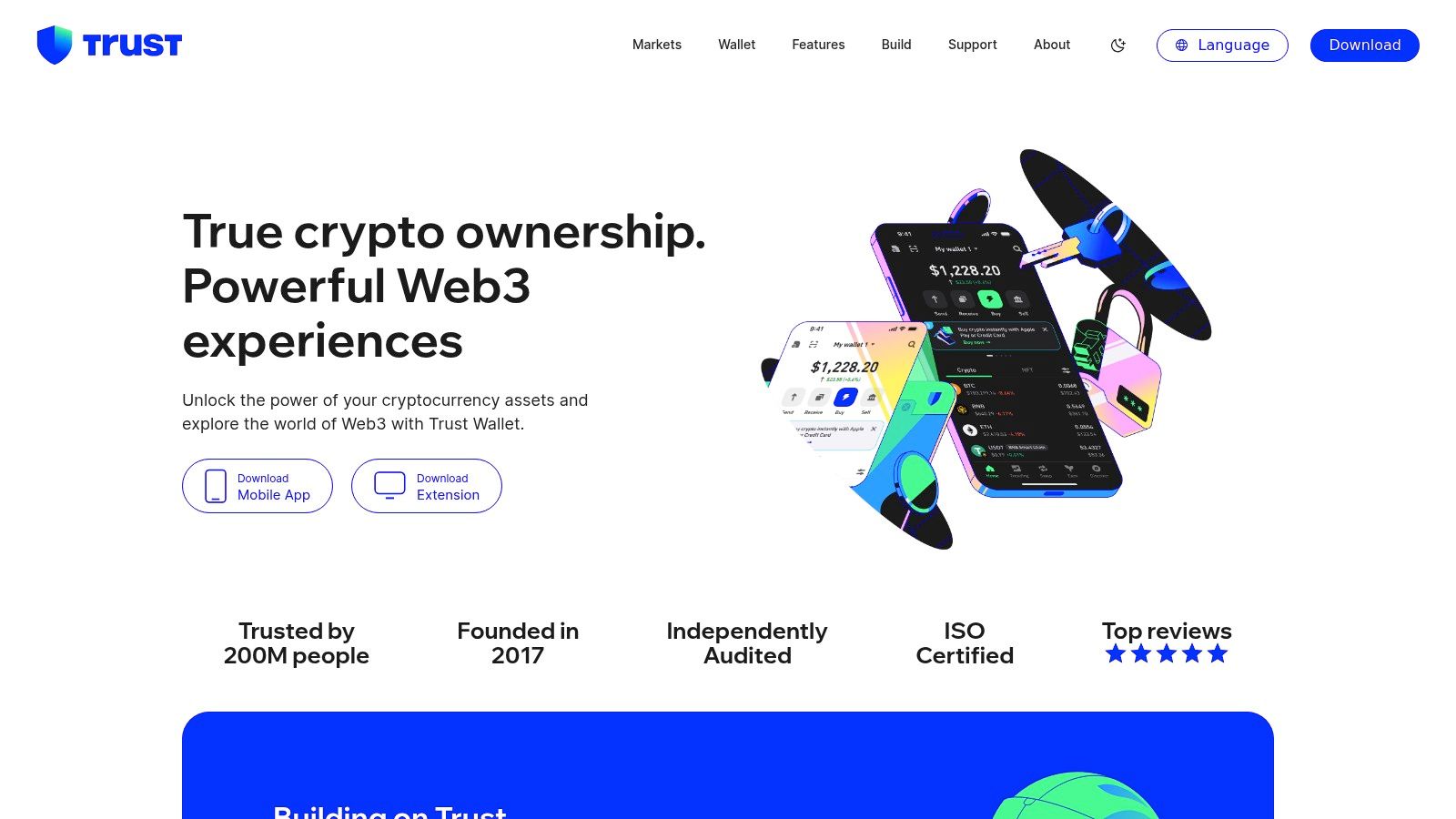
Trust Wallet earns its place because broad chain coverage still matters. If your daily work spans many L1s and L2s, a wallet that can keep pace without constant context switching is useful. Its mobile app is mature, the browser extension closes the gap for desktop use, and built-in staking helps users stay inside one interface.
This is the kind of wallet that teaches operational range. Not every role is deep protocol engineering. Some jobs require handling partnerships, support, QA, and ecosystem operations across multiple chains. Trust Wallet fits that reality.
Where it's strong
Trust Wallet is a practical pick for people who need one app to cover a lot of networks and wallet contexts. Multi-wallet management, staking support, and developer integration paths like WalletConnect and deep linking make it relevant for product and integration work.
The wider context is that wallet competition at scale is brutal. Binance Wallet has surged to 44 million weekly swaps and $27 billion in volume, leading with over 90% of swaps and volume at peak moments according to Dune data on crypto wallets. You don't need to use Binance Wallet for that stat to matter. It shows how wallets are now judged not just on storage, but on execution, liquidity access, and embedded transaction volume.
Trust Wallet's trade-off is that advanced EVM developer controls are more basic than what Rabby, Safe, or Frame offer. It's breadth over precision. That's fine if your work rewards ecosystem coverage more than surgical control.
Visit the Trust Wallet website.
8. Zerion Wallet
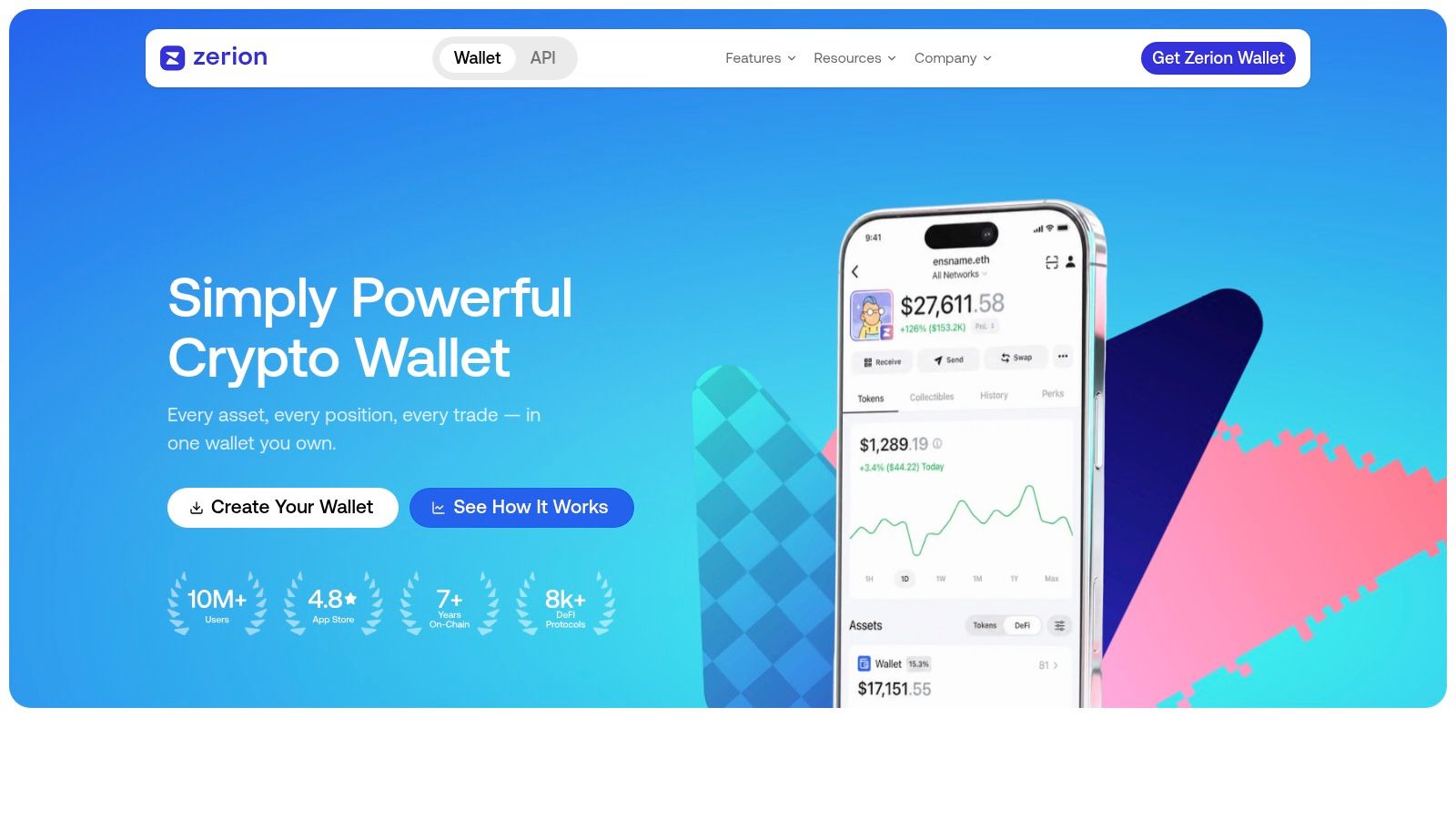
Zerion is for people whose wallet is also a monitoring console. If you hold positions across protocols, LPs, tokens, and NFTs, basic wallet views stop being enough. Zerion's strength is visibility. It helps users see what they own and where they're exposed.
That sounds like a convenience feature. It's not. Portfolio intelligence is a product problem, a data problem, and a support problem. If users can't understand their positions, they make worse decisions and open more support tickets.
Why this matters for your skill set
Zerion is especially useful if you're building dashboards, alerts, notifications, watch-only views, or protocol discovery surfaces. It teaches how to present messy on-chain state in a way a human can act on.
Candidates with stack-specific and sector-specific knowledge are standing out more in 2025, especially in areas like interoperability and specialized infrastructure, according to RecruitBlock's overview of crypto hiring trends. Zerion aligns with that shift because it pushes you toward understanding protocol indexing, wallet state interpretation, and cross-network position visibility.
- Best fit: Portfolio app builders, product analysts, DeFi-native users, and designers working on information architecture.
- Useful feature: Watch-only mode for monitoring without signing risk.
- Limitation: It isn't the wallet for strict signing policy or treasury controls.
If you're looking for roles that blend wallet UX and engineering, this Digital Assets Web3 Engineer opening is the kind of job where Zerion-style portfolio thinking becomes relevant.
Explore the Zerion Wallet website.
9. Frame
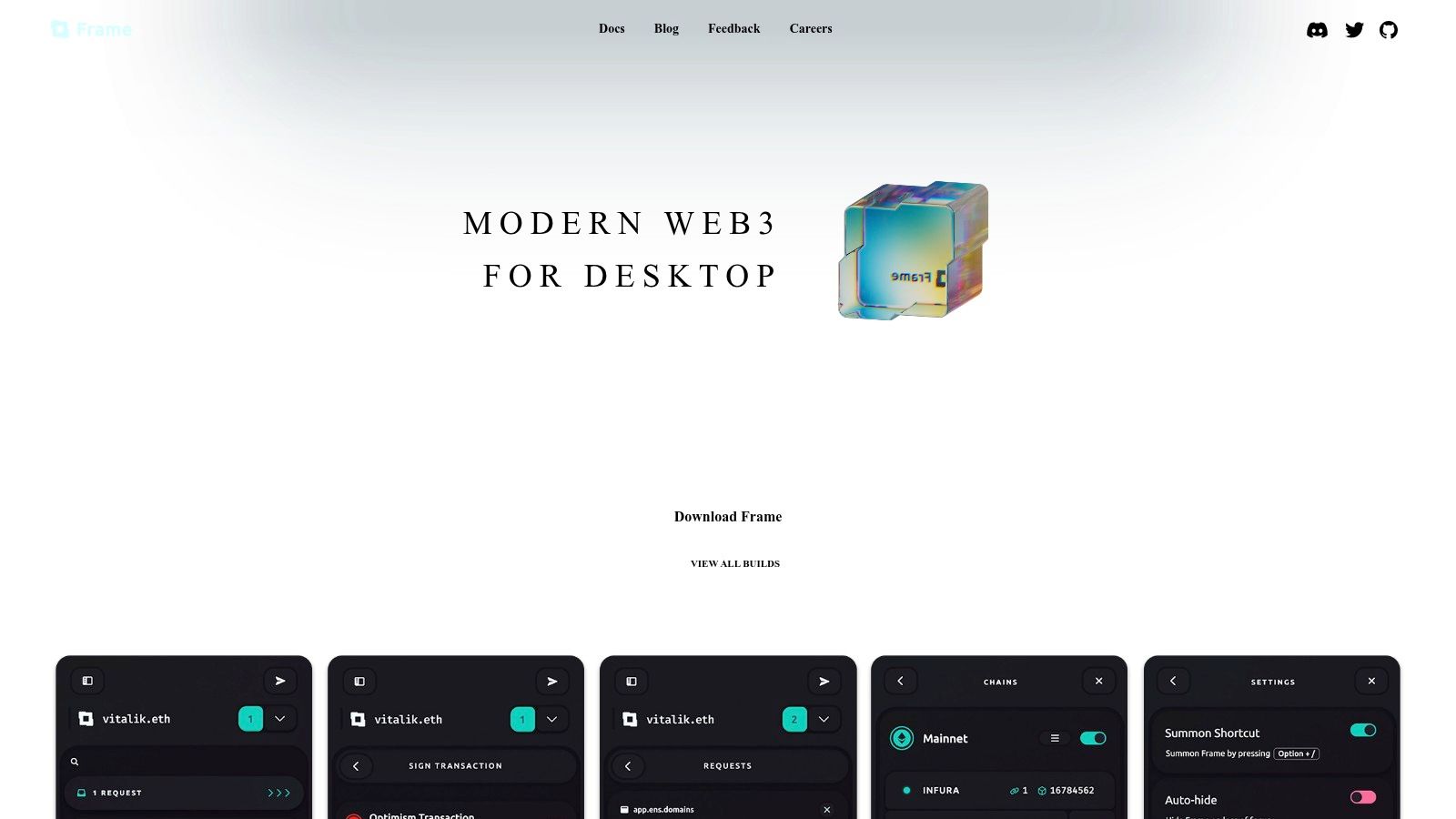
Frame is the wallet for people who want control more than convenience. It's desktop-first, open-source, and pairs well with hardware wallets. That makes it less mainstream, but also more appealing to developers who want a native control center for signing and network management.
I wouldn't hand Frame to a beginner. I would absolutely hand it to a developer who's tired of extension-centric assumptions and wants cleaner separation between browser activity and key handling.
Why experienced builders like it
Frame works well when your workflow is deliberate. You manage accounts carefully, sign with hardware when possible, and don't mind that some dApps still expect a browser extension first. That trade-off is acceptable for engineers, auditors, and power users who prioritize safer signing practices.
A wallet can be slower and still be better if it reduces the chance of signing the wrong thing.
Frame also builds good habits. It nudges you toward explicit control over accounts and networks instead of relying on whatever the browser happens to inject. That's useful if you want to move into security, smart contract review, or protocol ops.
Its downside is obvious. No mobile app, smaller ecosystem, and less compatibility with dApps that assume MetaMask-like behavior. If your daily job depends on broad user testing, Frame can't be your only wallet. But as a specialist tool, it's excellent.
Check the Frame website.
10. Argent
Argent is the wallet to study if you think seed phrases are a usability tax and account abstraction is the long-term fix. Guardians, social recovery, session keys, and a Starknet-first design make it one of the most opinionated wallets on this list. That's exactly why it's valuable.
A lot of candidates say they understand account abstraction. Fewer can explain how recovery, permissions, and session-based spending improve UX without collapsing security assumptions. Argent helps close that gap.
The career angle
If you want wallet infrastructure, smart account, or L2-focused roles, Argent is one of the best wallets on chain to explore seriously. It makes abstract concepts concrete. You can see how recovery differs from seed phrase custody, how session keys reduce repetitive approvals, and how a smart wallet can support a cleaner user journey.
This also aligns with where specialization is paying off. U.S. blockchain developers earn an average annual salary of $146,250 in 2025, with entry-level roles around $121,000 and senior roles reaching up to $187,000 according to Algorand's overview of blockchain developer salary and job outlook. If you want to push toward the upper end of that range, generic wallet familiarity won't do much. Specialized knowledge around smart accounts, security models, and L2 UX will.
- Best fit: Starknet builders, AA-focused teams, wallet product engineers, and security-conscious users.
- Big upside: Recovery and permissions are much better than standard seed-phrase-only flows.
- Main limitation: Starknet-first means some mainstream EVM habits don't transfer cleanly.
Use the Argent website to study how smart wallet UX differs from standard hot wallet behavior.
Top 10 On-Chain Wallets Comparison
| Wallet | ✨ Core features | ★ UX / Quality | 💰 Price / Value | 👥 Target audience | 🏆 Unique selling points |
|---|---|---|---|---|---|
| MetaMask | Portfolio, staking, Snaps & Smart Accounts Kit | ★★★★★ | 💰 Free (in‑app swap fees via partners) | 👥 Builders & power users | 🏆 Best EVM dapp compatibility; extensible dev ecosystem |
| Coinbase Wallet + Smart Wallet | Passkey smart accounts, multichain trading, unified portfolio | ★★★★ | 💰 Free (custody tools by Coinbase) | 👥 Newcomers & US users | 🏆 Smooth onboarding (passkeys); strong Base/L2 support |
| Safe (formerly Gnosis Safe) | Multisig smart accounts, modules & guards, SafeApps | ★★★★★ | 💰 Free OSS (gas/setup costs apply) | 👥 DAOs, teams, treasuries | 🏆 Enterprise-grade multisig & policy controls |
| Rabby Wallet | Auto-network, tx simulation, approval manager, HW support | ★★★★ | 💰 Free (open-source) | 👥 DeFi traders & developers | 🏆 Transaction simulation & approval safety tools |
| Phantom | Cross-chain swaps, Solana-first UX, NFT handling | ★★★★ | 💰 Free (swap/bridge fees apply) | 👥 Solana + EVM NFT users | 🏆 Fast Solana signing; polished mobile/browser UX |
| Rainbow | Aggregated swaps, cross-chain bridges, NFT-centric UI | ★★★★ | 💰 Free (aggregator fees possible) | 👥 Product-minded & NFT collectors | 🏆 Friendly onboarding & best‑quote swap routing |
| Trust Wallet | Wide chain support, staking, mobile + extension parity | ★★★★ | 💰 Free | 👥 Multi‑chain users & mobile-first | 🏆 One of the largest chain coverages; built-in staking |
| Zerion Wallet | DeFi & NFT portfolio tracking, notifications, watch-only | ★★★★ | 💰 Free | 👥 Portfolio managers & investors | 🏆 Unified visibility of positions & protocol activity |
| Frame | Native desktop, hardware‑wallet integrations, open-source | ★★★★ | 💰 Free | 👥 Desktop power users & devs | 🏆 Native desktop control center + secure HW signing |
| Argent | Smart-wallet (AA), guardians, social recovery, session keys | ★★★★ | 💰 Free | 👥 Users wanting seedless recovery & Starknet | 🏆 Best-in-class account-abstraction UX and recovery |
Final Thoughts
The best wallet on chain depends on what job you're trying to become qualified for. If you're building EVM apps and need maximum compatibility, MetaMask is still the default reference point. If you care about onboarding and mainstream UX, Coinbase Wallet and Rainbow teach better lessons. If you want to work in treasury, security, or DAO ops, Safe is the one to learn thoroughly. If your focus is DeFi risk handling, Rabby is stronger than many broader wallets. If Solana, NFT UX, or cleaner mobile flows matter, Phantom deserves real attention. If you need portfolio intelligence, Zerion helps. If you prefer hardware-backed desktop control, use Frame. If account abstraction is your lane, study Argent.
The bigger point is this: wallet choice is not just about where you store tokens. It determines how you experience signing, approvals, recovery, cross-chain friction, simulation, staking, custody, and dApp interoperability. Those are the same issues teams hire for across engineering, product, design, support, and security.
That's especially true because technical efficiency and multi-chain breadth are now major differentiators in the wallet market. OKX Wallet, for example, supports over 100 blockchains and 500,000+ tokens, with 5 million active users across 10,000+ dApps directly in the interface according to this overview of OKX Wallet's multi-chain activity. Even if OKX isn't your daily wallet, the lesson is clear. Hiring teams expect candidates to think across chains, assets, and user flows, not just within one favorite ecosystem.
Best Wallet is another useful example of market positioning. It's a non-custodial wallet that integrates DeFi, staking, and early-stage token opportunities with its native utility token at the center of the ecosystem, as described on CoinMarketCap's Best Wallet profile. That model appeals to users who want self-custody plus built-in access to on-chain opportunities. It also shows how wallets are increasingly becoming economic platforms, not just interfaces.
For career progression, don't just pick one wallet and stop there. Build a wallet stack. Keep MetaMask for baseline compatibility. Add Safe if you want treasury and security credibility. Add Rabby or Frame if you care about safer signing. Add Phantom if you want cross-ecosystem perspective. Add Argent if you want account abstraction literacy. Then test real workflows, not just token transfers. Swap, bridge, stake, connect to dApps, inspect approvals, recover accounts, and compare what each wallet makes easy versus dangerous.
If you also work on growth or community, there's a lesson there too. Wallet adoption doesn't happen by accident. Distribution, messaging, and product loops matter, whether that means onboarding copy, referral mechanics, or even unconventional channels like distributing branded meme content to reach crypto-native audiences where they already pay attention.
If you're turning wallet knowledge into a better role, Blockchain Jobs is one of the fastest ways to map that skill set to real openings across engineering, product, security, design, marketing, legal, operations, and more. Use it to see which teams are hiring for multisig custody, wallet UX, mobile crypto apps, protocol infrastructure, and cross-chain systems, then tailor your portfolio around the wallets and workflows those roles use.