
Galaxy Digital Careers: Roles, Pay, and Hiring Process

Galaxy Digital's headcount grew from 134 in 2020 to 638 in December 2025, and it still had 94 active job postings in 2025. That means the firm is still expanding, even after the 15% to 20% workforce cut it previously planned, so candidates should treat Galaxy Digital careers as selective, not frozen.
If you're targeting galaxy digital careers, don't approach it like a broad crypto startup search. Galaxy looks more like an institutional finance platform that happens to live in digital assets, and that changes everything about the roles, the interview bar, and the kind of experience that gets attention.
What Galaxy Digital Does and Why It Matters for Job Seekers
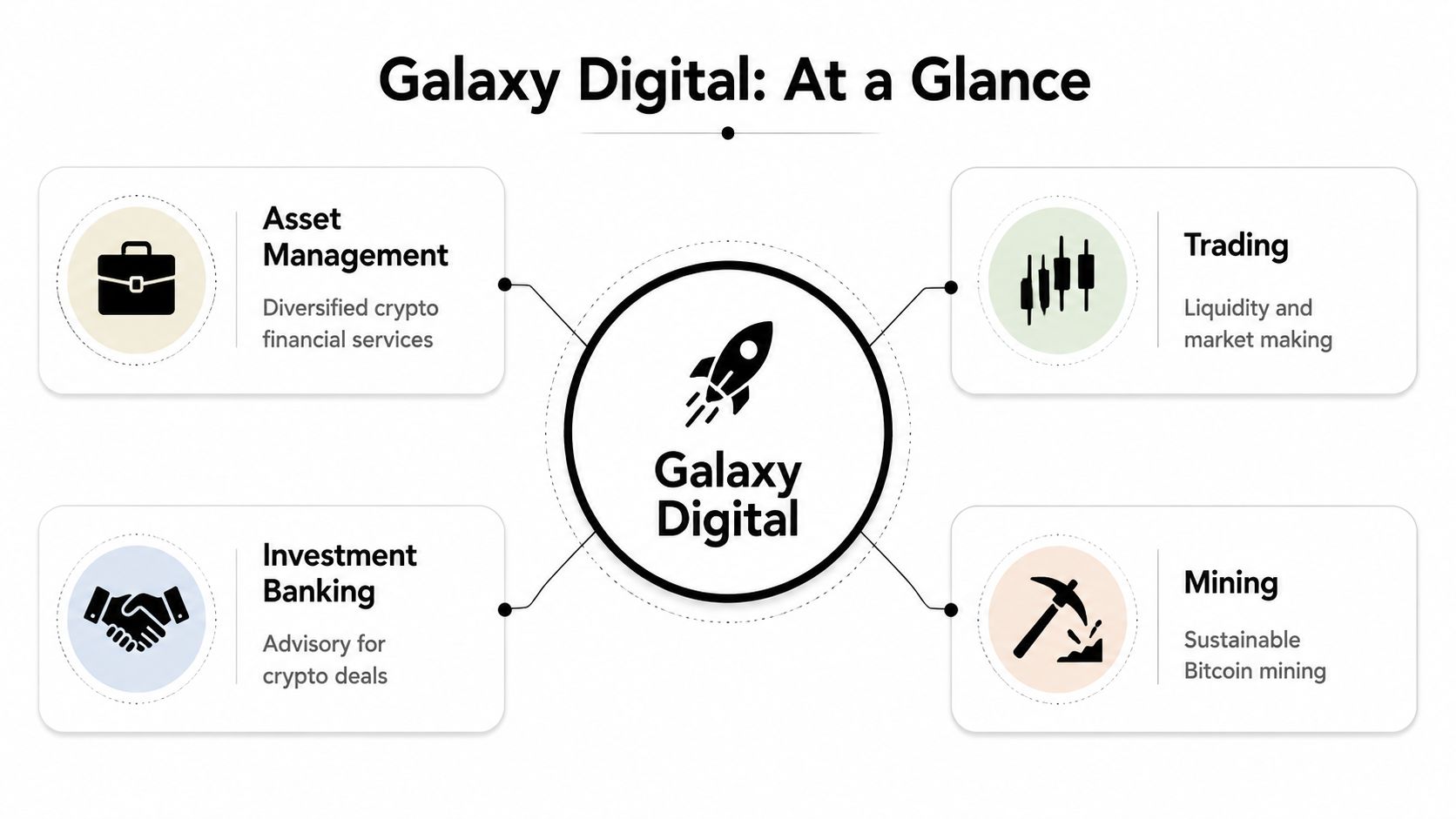
Galaxy Digital is easiest to understand as a hybrid of trading desk, asset manager, investment bank, and infrastructure company. That mix matters because the hiring profile follows the business model, not the brand story. If you come from consumer crypto, you may be too far from the work Galaxy needs.
The company's public footprint shows a business that keeps adding people at scale, with headcount rising from 134 in 2020 to 528 in 2024, then reaching 638 in December 2025 according to StockAnalysis employee data for Galaxy Digital. That's not the pattern of a company standing still. It's the pattern of a firm building institutional capacity across products, controls, and technical systems.
What candidates should take from that is simple. Galaxy Digital careers reward people who understand regulated workflows, production systems, and financial-market discipline. A smart contract engineer, a backend developer, a legal counsel, and an operations specialist all fit because each one supports a different piece of the same machine.
Practical rule: if your resume sounds like a retail-crypto marketer's resume, you're probably not speaking Galaxy's language yet.
For job seekers, the right first question is not “Is Galaxy hiring?” It's “Which part of the business matches my background, and how much seniority do they expect?” The answer shapes whether you should apply now or spend a few months building a tighter fit.
For a broader view of Web3 employers, the internal market context is worth comparing against Blockchain Jobs' company directory, because Galaxy sits in a more institutional lane than most crypto employers.
How Galaxy Digital's Business Lines Shape Its Hiring
Galaxy's structure matters because the company doesn't hire from one unified pool. It hires across Trading and Research, Asset Management, Digital Infrastructure, Ventures, and corporate functions like Legal and Operations. It is a financial firm with several specialized engines, each one pulling talent for a different problem.
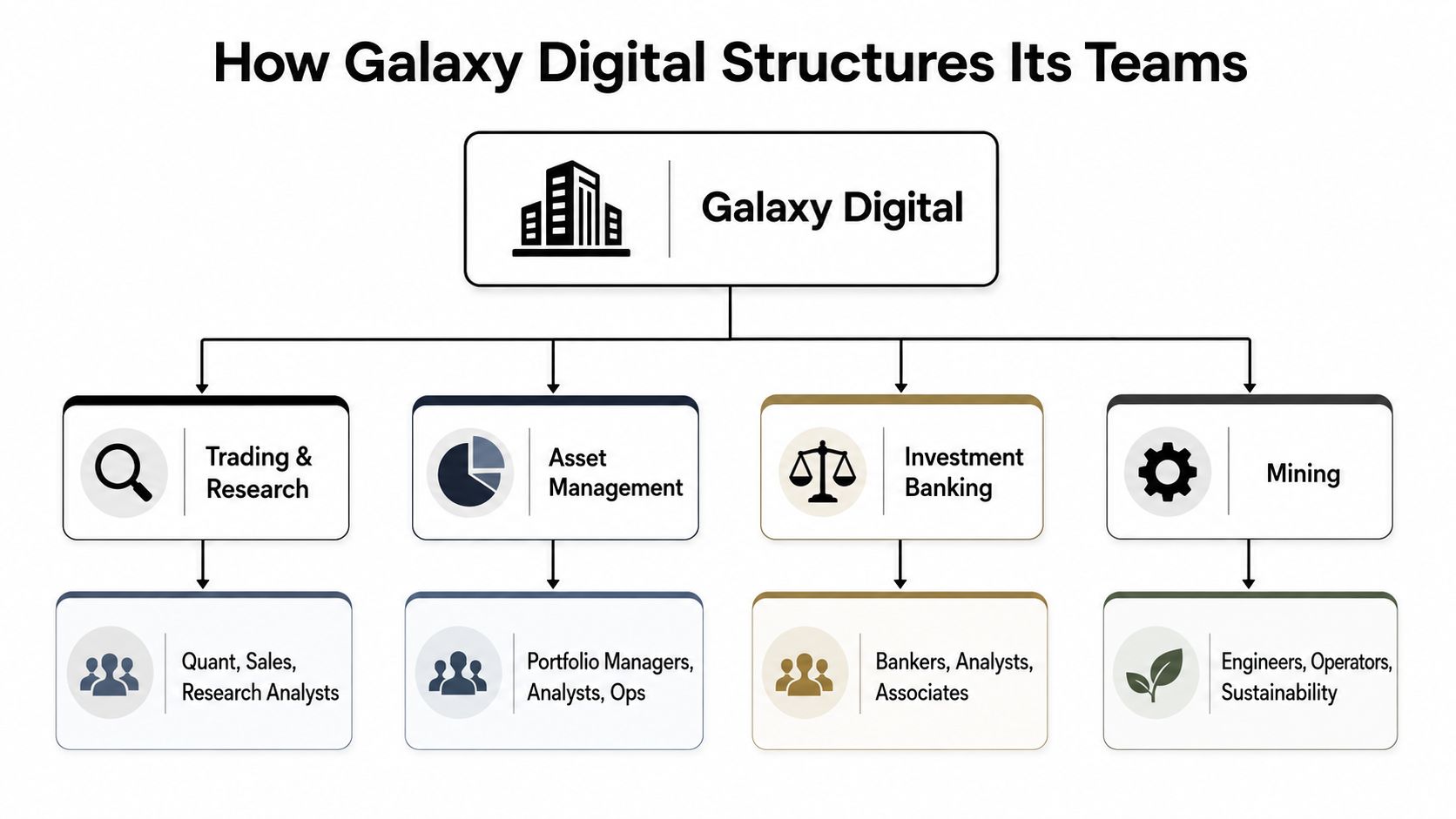
Trading and Research sits closest to market-making, liquidity, and product execution. That means hires there usually need to understand market structure, fast decision-making, and the practical mechanics of crypto venues. Asset Management, by contrast, is more like a traditional fund platform, so candidates need to show comfort with portfolio thinking, client expectations, and operational rigor.
Digital Infrastructure is where the engineering intensity shows up most clearly. A Senior Smart Contract Engineer or VP, Protocol / Backend Engineer isn't supporting a generic app, they're helping keep the systems behind settlement, custody, and protocol interaction reliable. That's why Galaxy's technical hiring reads more like institutional fintech than like a consumer Web3 startup.
Corporate functions matter too, and they're not an afterthought. Legal and Operations are part of the operating model, not a side function, because a firm like Galaxy has to move across custody, settlements, partnerships, and compliance without breaking process. That's also why a candidate with financial-regulatory experience can sometimes beat a more crypto-native applicant who lacks institutional context.
For finance-oriented applicants, the most useful comparison point is the finance and accounting role category on Blockchain Jobs, because it shows how Galaxy-like companies often split work between core finance, legal, and operational control roles.
Galaxy is not looking for “general interest in Web3.” It's looking for people who can survive in a regulated, production-heavy environment.
The Most Common Galaxy Digital Roles and Teams
Galaxy's hiring mix points in one direction. The strongest demand sits in engineering, then spills into operations, legal, and a smaller set of support functions. Job-board listings on Kibo show dozens of open roles, with Engineering as the largest group and examples such as Senior Production Support Engineer, Lead Backend Developer - Mortgage, and VP, Security Engineering (Data Centers). A separate job-board snapshot shows nearly 50 active jobs across engineering, operations, and legal, with Engineering clearly leading, followed by Operations and Legal.
That spread matters for candidates. Galaxy is hiring builders, but it is hiring builders who can keep systems steady under real load and real scrutiny. The senior production-support posting on Kibo makes that plain, because it focuses on production environments, incident response, and improvements across crypto trading and settlement systems. That is the kind of work institutional crypto firms need.
The titles worth searching first are the ones that match that hiring pattern.
- Senior Smart Contract Engineer, a blockchain-native role tied to protocol and contract review work.
- Senior Backend Developer, usually a fit for people who have shipped production APIs or settlement-adjacent systems.
- VP, Protocol / Backend Engineer, a senior lane for candidates who have led infrastructure or backend teams.
- Blockchain Security Lead, a clear signal that Galaxy values security depth, not just feature delivery.
- Senior Production Support Engineer, the clearest clue that operations and incident handling matter.
- Corporate Counsel APAC, proof that legal talent sits inside the core operating stack.
For finance-oriented applicants, the most useful comparison point is the finance and accounting role category on Blockchain Jobs, because it shows how Galaxy-like companies split work between core finance, legal, and operational control roles.
The internal logic is simple. Engineering gets the most openings because Galaxy's products are technical. Legal and operations stay in the mix because the firm sits in a regulated market and supports institutional workflows every day.
That means first-timers should be selective. Generic crypto enthusiasm will not carry an application. The candidates who move forward usually show production ownership, financial systems awareness, or hands-on security and compliance experience. A background in regulated operations can beat a flashier crypto-only resume if the role touches settlement, controls, or client-facing process.
For candidates weighing benefits against these roles, Benely's 2026 benefits list is a useful benchmark for what modern employee packages tend to include, but Galaxy's real pull is still role fit and operating credibility.
Salary Bands, Compensation, and Benefits at Galaxy Digital
Public compensation data suggests Galaxy pays like an institutional firm, not like a scrappy token startup. Independent listing data from web3.career's Galaxy Digital page shows distinct bands by function, and that spread is wide enough that you need to apply with realistic expectations.
| Role Category | Example Title | Published Range | Notes |
|---|---|---|---|
| Infrastructure and SRE | Site Reliability Engineer Blockchain Infrastructure | $90k–$100k | Lower base band for infrastructure reliability work |
| Security | Security Engineer DevSecOps | $157k–$175k | Security compensation rises sharply with specialization |
| Legal | Corporate Counsel APAC | $84k–$171k | Region and seniority drive wide variation |
| Product and Trading Leadership | VP Director, Product Manager Trading | $105k–$120k | Senior product roles sit in a different band from engineering |
| Senior disclosed listings aggregate | 18 Galaxy listings with disclosed pay | $171,667 to $219,722, median around $196,250 | Signals senior technical pay can land materially higher |
That table tells you what matters in negotiations. Function changes the pay band, and seniority changes it again. A security engineer and a legal counsel may both be strong hires, but they won't price the same way because the market values their risk profiles differently.
If you want a benefits benchmark outside Galaxy, Benely's 2026 benefits list is a useful way to compare what strong employers are offering in the current market. The point isn't that every company will match it. The point is that candidates should know whether a role's base pay, remote setup, and total package justify the opportunity cost.
Negotiation rule: don't discuss “market rate” in the abstract. Anchor your ask to the role family, region, and whether the listing is truly senior or just title-inflated.
Galaxy's compensation story is also a reminder that not every opening is a prestige role. Some jobs are clearly better paid because they require deeper expertise, while others are attractive because they offer entry into an institutional crypto platform with real scale.
The Galaxy Digital Hiring Process From Application to Offer
Galaxy's process usually follows a familiar path, but the interview bar changes by function. Recruiter screen, hiring manager interview, technical or functional assessment, cross-functional panel, reference checks, then offer. Senior searches can take a 3 to 6 week process, while narrower roles can move faster.
The first filter is usually technical or functional judgment. Engineers should expect a system-design discussion or a deep technical interview focused on production reliability, security, and integration risk. Legal candidates should expect scenario-based questions around regulatory exposure, custody, and cross-border constraints. Operations candidates should be ready for incident-response and vendor-management questions. If you are preparing for the behavioral side, review how to answer behavioral questions before the interview loop starts.
What the process is really testing
Galaxy is checking whether you can operate in a setting where mistakes can affect trading, settlement, or compliance. Interviewers want practical judgment, not generic crypto enthusiasm. They also want candidates who can explain tradeoffs clearly and stay calm when the situation gets messy.
That distinction matters for applicants. Candidates with backgrounds in institutional finance, trading systems, security, or regulated operations usually have a cleaner path. Candidates coming from consumer crypto need to prove they can work with more structure, tighter controls, and less improvisation.
The post-layoff context also shapes the process. Galaxy publicly planned a significant workforce reduction, which means some openings are replacements rather than brand-new headcount. That usually makes hiring more selective, even if the careers page looks active. A role can still be real, but the company is more likely to screen for immediate impact and low ramp risk.
Compensation signals matter here too, because process intensity often tracks role value. More specialized functions tend to draw sharper screening and stronger pay, while broader operational roles can be easier entry points for candidates trying to get inside a scaled crypto platform. In Galaxy's case, that means applicants should read the role family carefully before assuming every listing offers the same path or the same economics.
A busy careers page does not mean the funnel is wide. It often means the company is replacing, reshaping, and tightening the bar.
Interview Questions and Preparation Tips by Function
Galaxy interviews tend to get specific fast. General enthusiasm won't carry you far, because the company hires for systems, regulation, and operational ownership. You need to prepare by function, not by vague “crypto interview” advice.
Protocol and smart contract engineering
Expect questions around Solidity, EVM behavior, security review, and contract failure modes. You may also be asked how you'd reduce risk in protocol interactions or how you'd test for edge cases in on-chain logic.
Prep tip: bring one example where you found a bug, prevented a bad deployment, or improved contract safety. If you can talk through the tradeoff between speed and safety, you'll sound like someone Galaxy can trust.
Backend and infrastructure
Backend interviews usually revolve around system design for trading, settlement, APIs, or data pipelines. You should be able to explain how you'd design for low latency, fault tolerance, observability, and rollback.
Prep tip: rehearse a design story that includes incident handling. Galaxy cares a lot about whether you understand production systems, not just feature work.
Legal and compliance
Legal candidates should be ready for regulatory scenarios involving securities, custody, vendor risk, and cross-border operations. The goal is to see whether you can think commercially without getting sloppy on compliance.
Prep tip: show how you handle ambiguity. If you've worked with business teams before, explain how you translated legal risk into practical guidance instead of just saying no.
Operations and support
Operations interviews often focus on incident response, vendor coordination, and workflow discipline. You may get asked how you'd respond when a key service fails or a trading workflow breaks down.
Prep tip: use a behavioral framework from how to answer behavioral questions and make every example concrete. Galaxy wants evidence that you can stay calm when a process is on fire.
The qualification bar can be surprisingly specific in some support roles. A Galaxy events listing, for example, requires 3+ years of experience in events plus familiarity with Salesforce or HubSpot and tools like Cvent or Eventbrite. That kind of detail is a reminder to read the posting carefully before you apply.
How to Apply, Where to Find Openings, and Resume Tips
Galaxy roles appear in a few places, and serious candidates should check all of them. The official careers page at galaxy.com/careers is the cleanest source, the Greenhouse board shows the public pipeline, and niche crypto job boards help you spot openings faster and compare them against similar roles elsewhere. Start with the company site, then cross-check the listings instead of trusting one feed.
Resume strategy matters more here than it does at many crypto companies. Lead with regulated-finance experience, production-system ownership, or security depth. If you have worked on trading systems, lending systems, data pipelines, custody workflows, or incident response, put that near the top and use precise language. Galaxy reviewers want a profile that looks useful on day one, not a stack of Web3 buzzwords.
Quantify what you owned. Say what scale you handled, what systems you supported, and what broke when things went wrong. If you improved reliability, shortened response times, or fixed a recurring process failure, make that visible in plain English. A Galaxy reviewer is looking for judgment under pressure.
Use the public board as a screening tool, not just a place to click apply. Galaxy's public board currently lists numerous jobs, and that volume tells you there are multiple entry points if your profile is aligned. The board also shows roles like Executive Assistant, Trading & Research, FP&A Data Engineer, and Vice President, Senior Backend Developer - Lending/Commercial (Mumbai), which shows the company hires across technical and business-support tracks. If you want to compare what is live in the U.S. market, check Galaxy-related U.S. openings and filter out the noise before you spend time tailoring.
If you are comparing channels, use LinkedIn to get hired in 2026 is worth reading alongside your search, because referrals and recruiter visibility still matter in a specialized market like this. LinkedIn helps when your profile matches the role family and you want your experience to surface in front of the right recruiter.
There is also a simple rule for first-timers. Do not spray applications at Galaxy unless your background maps cleanly to the posting. The strongest candidates for Galaxy Digital careers are the ones who can say, in one sentence, why they fit an institutional digital-asset business, and then back it up with concrete work history.
Your Realistic Path Into Galaxy Digital
Galaxy Digital is still hiring, but the bar is sharper than the headline count suggests. The company has expanded aggressively, yet the restructuring context means some roles are replacement hires and some are highly selective specialist openings. That combination favors candidates who already know how institutional systems behave.
Engineers need to show they can own production systems, security, or protocol work with real accountability. Legal and compliance candidates need regulated-finance experience and the ability to translate risk into action. Operations candidates need to prove they understand institutional workflows, not just admin work.
That's why first-timers should be realistic. Galaxy is not the best place to start if you're trying to break into crypto with no adjacent experience. It's much better for candidates who can connect the dots between fintech, trading infrastructure, custody, compliance, and software reliability.
My blunt advice is this. Apply only when your background maps cleanly to the role family, and don't waste time on generic applications. The strongest candidates for Galaxy Digital careers are the ones who can say, in one sentence, exactly why their experience makes them useful in an institutional digital-asset business.
If you're ready to look at open roles with a recruiter's eye, start with Blockchain Jobs. It's built for Web3 candidates who want current openings across engineering, legal, operations, and finance, which makes it a practical place to compare Galaxy roles against the rest of the market. Use it to find the right opening, then apply with a resume that speaks Galaxy's language.